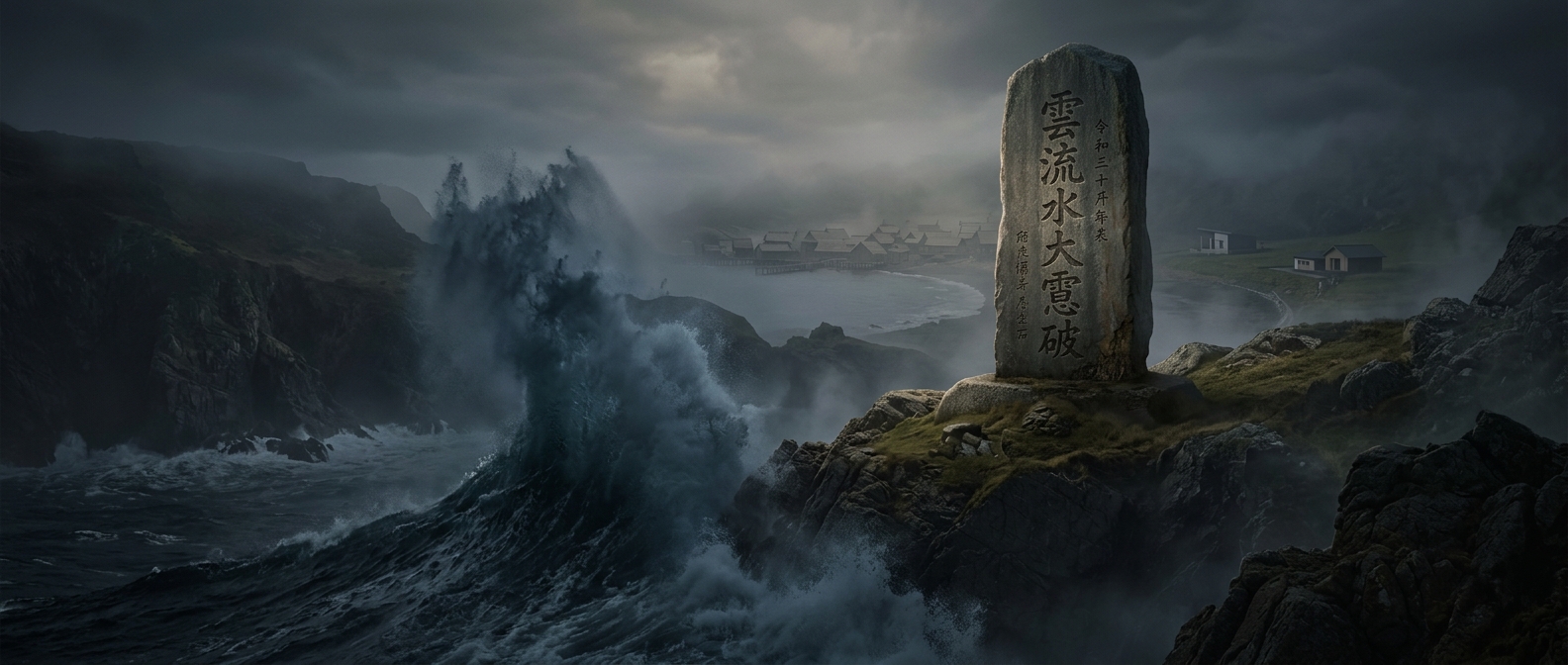
Stone warnings recorded where the water had reached
Along parts of Japan’s tsunami-prone coast, stone markers preserve a practical kind of local memory. Some mark the height or inland reach of an earlier tsunami; others warn residents to build homes above a stated elevation. The message was not abstract: a future wave could reach the ground where people were standing, so homes and lives should be kept uphill.
A marker could outlast the people who experienced the disaster. In places where written records, family memories, or population patterns changed over time, the stone kept the warning in the landscape, visible to people deciding where to settle or rebuild. Its placement also made the danger concrete: the line between a safe building site and a risky one was tied to a remembered event, not just a distant possibility.
A warning can be remembered—and still ignored
The markers are records of particular waves, not guarantees that all future tsunamis will stop at the same elevation. But their guidance could still shape where communities built. In some cases, modern development spread below the elevations the stones identified, putting buildings in areas the old warnings had urged people to avoid.
That contrast is what makes the stones striking. They do not prevent a tsunami; they preserve hard-won knowledge about where its water once went. When a community builds below a marker, the warning remains visible even as the decisions around it change.