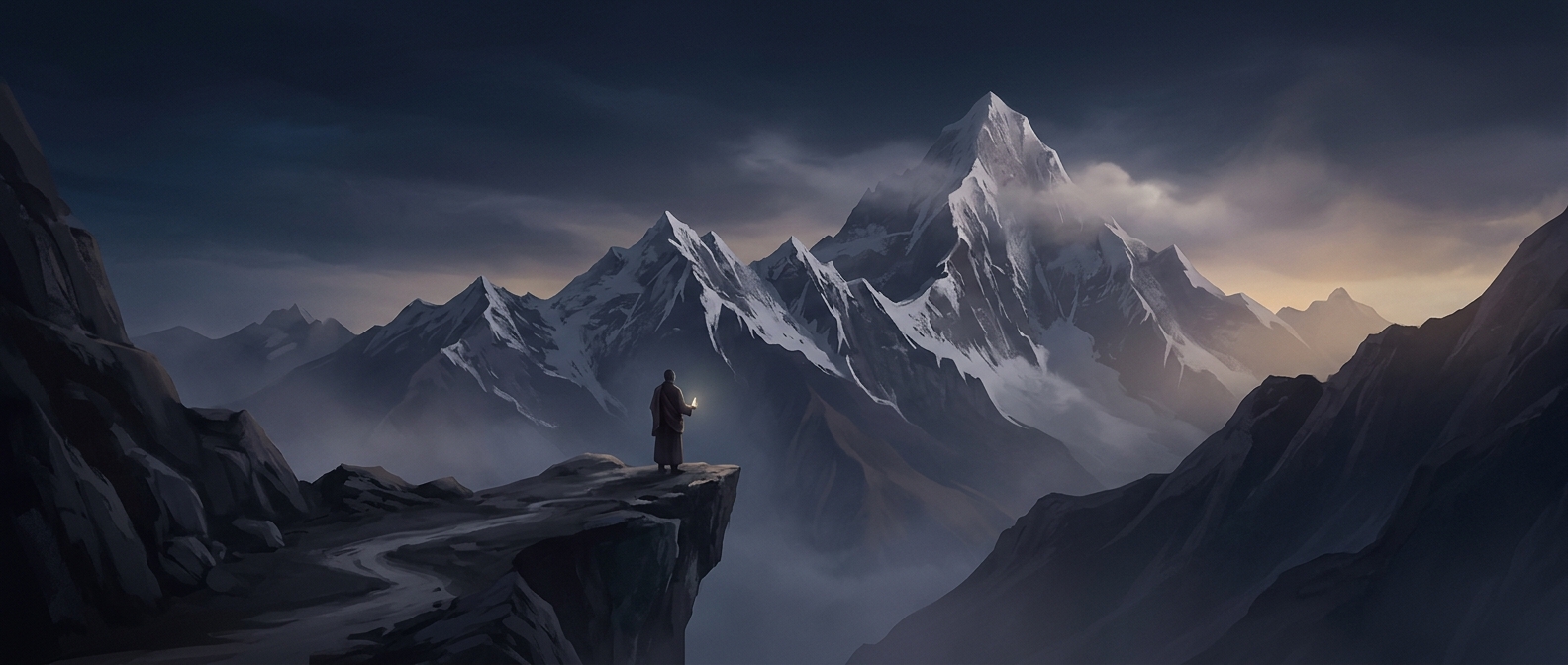
When a summit is also a sacred place
In Bhutanese religious traditions, mountains can be understood not as empty wilderness but as places inhabited by protective deities and other spiritual beings. Climbing to a summit may therefore mean more than reaching a high point: it can bring people into a place that local communities regard as spiritually significant.
That understanding shapes the country’s approach to mountaineering. Bhutan has barred climbing above a set elevation, and later prohibited mountaineering altogether. The restriction turns a spiritual boundary into a practical one: teams cannot treat a high peak as an ordinary sporting objective, even if they have the equipment and skill to attempt it.
Why Gangkhar Puensum remains unclimbed
At about 7,570 meters (24,836 feet), Gangkhar Puensum is widely described as the highest mountain never successfully climbed. Its status is not simply a measure of difficulty. Bhutanese restrictions have closed off the usual path by which climbers establish a first ascent: organizing an expedition, gaining permission, and attempting the summit.
The distinction matters. An unclimbed mountain can be a challenge that remains open for a future team; here, the absence of a summit ascent also reflects a national choice about what should remain undisturbed. The mountain’s height makes that choice visible from far beyond Bhutan, but its meaning begins with how the country understands the landscape around it.
A summit that might elsewhere become a record-setting destination is, in Bhutan, a place where not going up is part of the point.