How Limestone Becomes a Hidden Cave System
The Yucatán is built largely from limestone, a rock that can be slowly eaten away by water. Rain absorbs carbon dioxide from the air and soil, making it mildly acidic. As it seeps through cracks, it dissolves the rock and gradually widens those passages into underground cavities. In places, cavities join into long, branching cave systems.
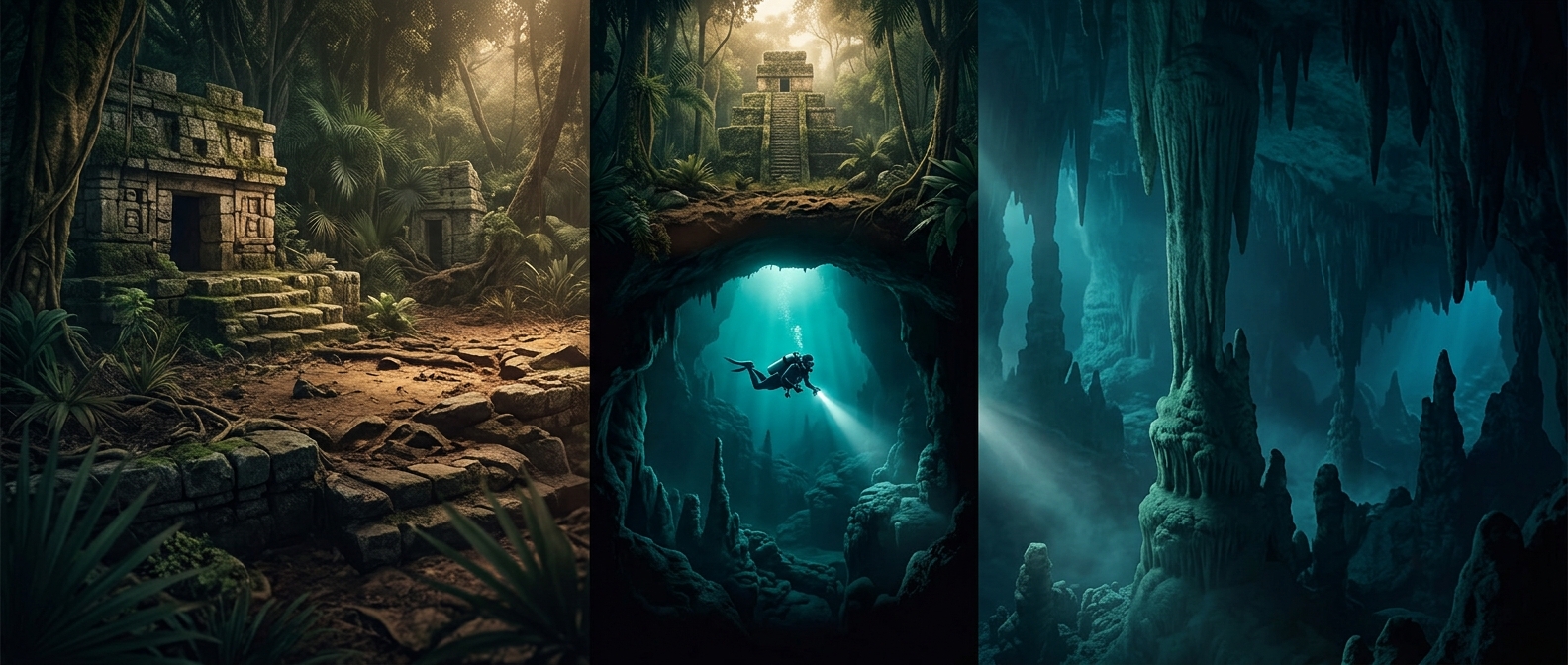
When the rock above a cavity becomes too thin to support its own weight, the ceiling can collapse. The resulting depression is a cenote: an opening where the water table is exposed. In the Yucatán, rainwater and groundwater fill these openings and the caves beneath them.
Why the Pools Connect—and Matter
The limestone is porous and fractured, so water can move through it rather than remaining in a network of surface streams. That makes a cenote more than an isolated pool: it may be one entrance to a much larger, flooded passage. The water often looks exceptionally clear because it has filtered through rock and contains relatively little suspended soil.
This underground plumbing also shaped life aboveground. Where rivers are scarce, cenotes provide direct access to groundwater, making them valuable sources of water for communities. A jungle pool can therefore mark both a geological collapse and a practical doorway into the region’s hidden freshwater system.