A field became a volcano
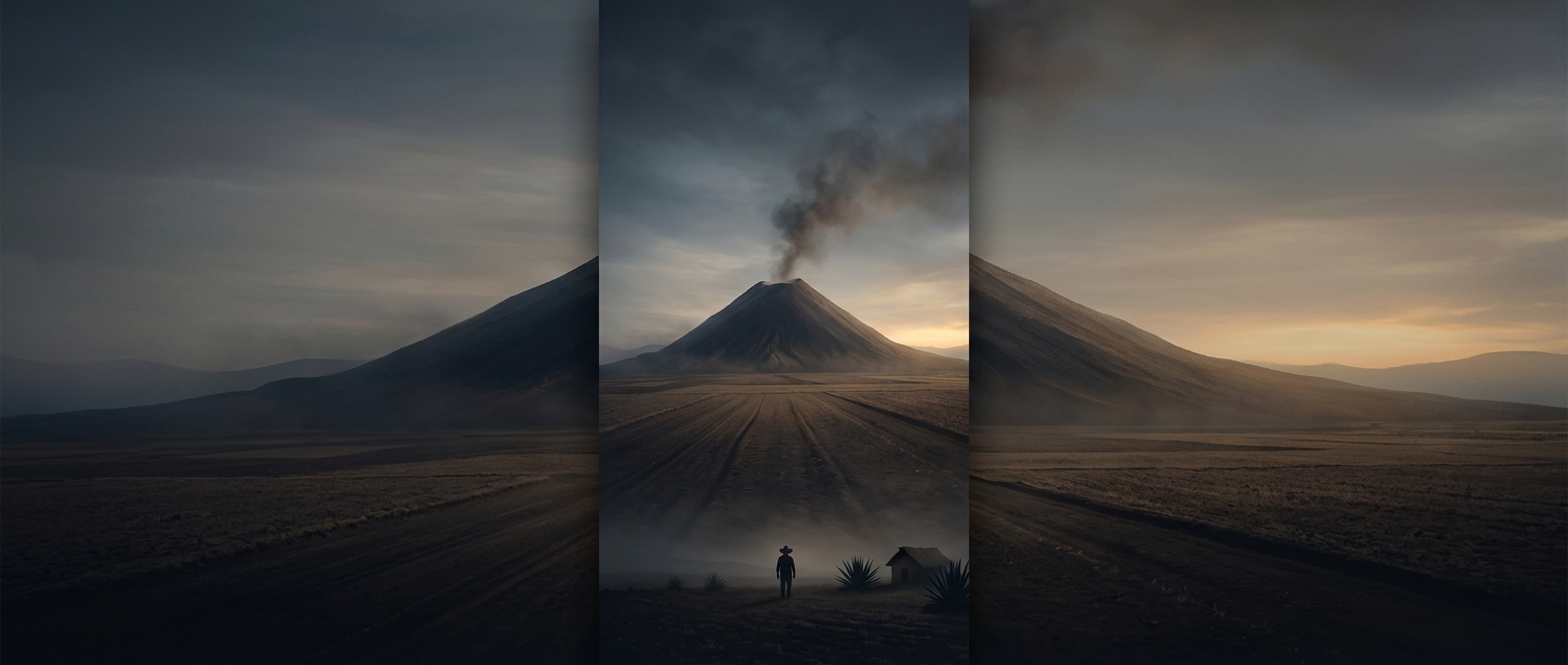
On February 20, 1943, a crack opened in a field near the village of Paricutín, in the Mexican state of Michoacán. The farmer, Dionisio Pulido, saw smoke and ash rise from the ground. Within hours, the opening was throwing out glowing rock and ash. What began as a fissure—a narrow split in the ground—soon built a cone around itself.
This was not a mountain suddenly pushed upward as one solid mass. Magma, molten rock beneath Earth’s surface, had found a route through the crust. As it rose, expanding gases helped blast fragments into the air. The fragments piled up around the vent, creating a steep-sided cinder cone; lava also flowed outward, covering nearby land.
Growth, destruction, and a new landscape
The eruption continued intermittently for nine years. Each burst of ash and rock added to the cone, while lava spread across fields and settlements. By the time activity ended in 1952, the volcano had grown about 1,000 feet above the surrounding land. The growing cone and its lava flows transformed a familiar farming landscape into a volcanic one.
The nearby village of San Juan Parangaricutiro was largely buried. Residents were evacuated and resettled, while the church’s upper portion remained visible above the hardened lava—a stark marker of how far the flow had advanced.
Paricutín matters because people watched a volcano emerge and develop within a human lifetime. Its growth was not just a geological event measured in rock and height: it forced families from their homes and permanently remade the ground they had lived on.