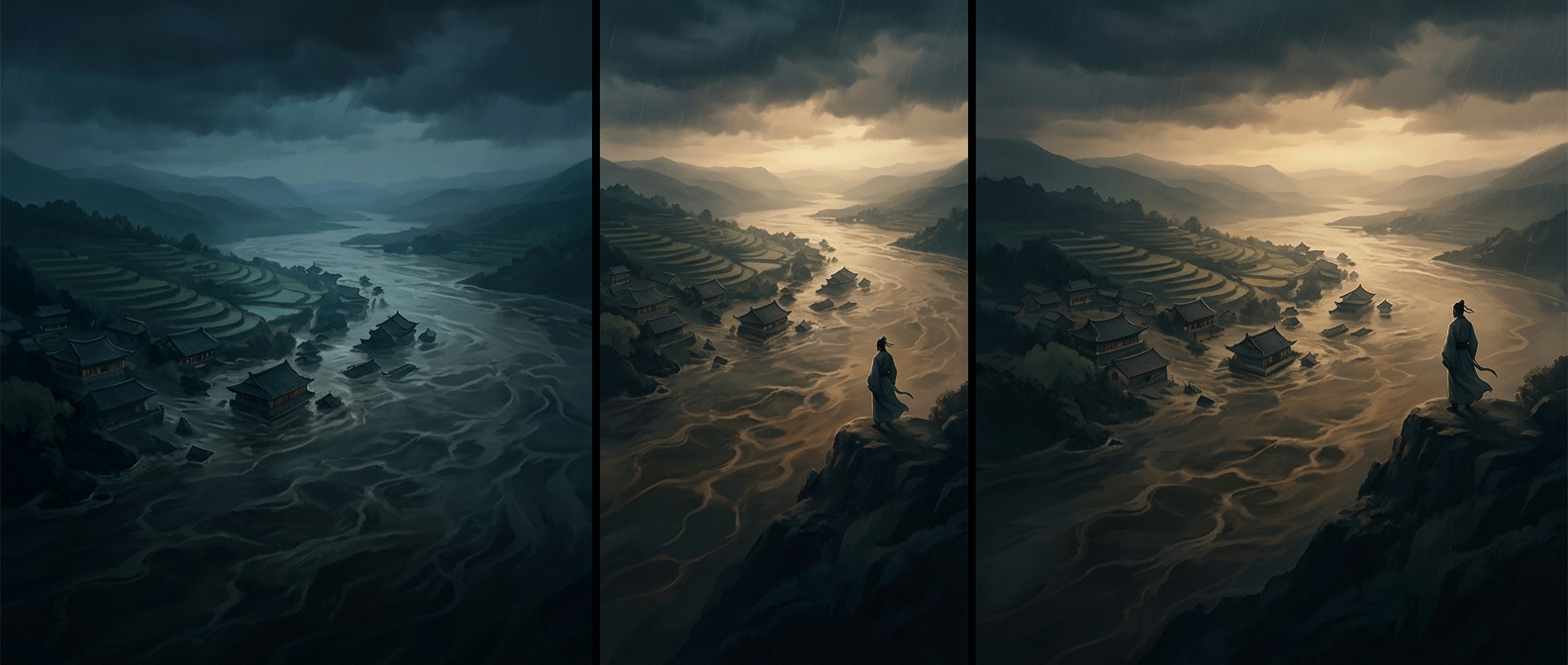
Why the 1931 Yangtze–Huai Flood Became a Humanitarian Disaster
The rivers’ banks were only the first line of defense. Across the Yangtze and Huai basins, broad, low-lying plains made farming possible—but also left villages and fields exposed when water spread beyond the channels. After drought and heavy winter snow, the rivers rose amid exceptionally severe flooding. Once water overtopped embankments, it could cover large areas rather than drain quickly away.
The Damage Continued After the Water Arrived
Flood deaths were not limited to people swept away or trapped in buildings. Submerged fields meant lost crops, while damaged homes and roads made it harder to find food, move supplies, or reach medical help. Stagnant water and crowded conditions also allowed illness to spread. In this way, the flood’s impact continued long after the first inundation: a disaster that began with rising rivers became a crisis of hunger, displacement, and disease.
Why the Death Toll Is an Estimate
The often-cited total of three to four million reflects the scale of the catastrophe, but it is not a precise count of people who drowned. In a disaster spread across a vast region, deaths from flooding and its aftermath were difficult to separate and record. The distinction matters: the flood’s deadliest force was not only the water itself, but the breakdown of the food, shelter, and health systems people depended on once the water covered the land.