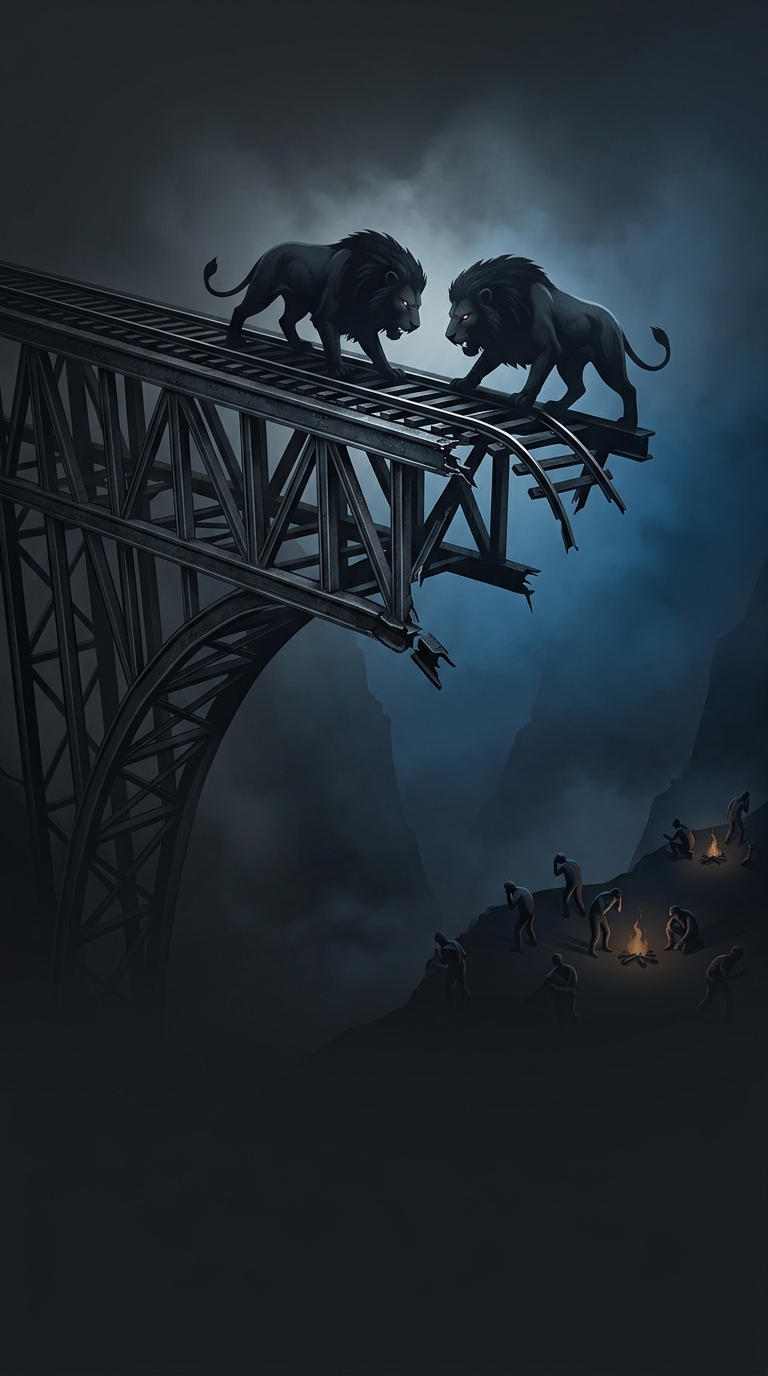
A bridge became the bottleneck
In 1898, railway crews building the line from the Kenyan coast inland reached the Tsavo River. The bridge there was not a minor convenience: until it was finished, the railway could not carry trains across the river, making the worksite a critical bottleneck on the route.
Then two lions began attacking people in the construction camps. The danger was especially acute after dark, when workers sleeping in temporary shelters had little protection. Repeated attacks made it difficult to keep crews at the site, and many workers fled. With labor scattered and the bridge unfinished, construction stalled.
Why the attacks stopped the work
A railway project depends on more than tracks and engineering plans. It needs a large workforce living close enough to build the line, move materials, and keep the work advancing. When the camps no longer felt safe, the threat reached beyond individual victims: it disrupted the labor supply on which the whole construction effort depended.
The attacks lasted for months. Railway engineer John Henry Patterson eventually killed both lions in December 1898. Their deaths removed the immediate danger, allowing the crews to return and the bridge work to continue.
A delay with a lasting legacy
The episode became known as the Tsavo man-eaters. Accounts of how many people the lions killed have differed, so a precise toll should be treated cautiously. What is clear is that the attacks were serious enough to drive workers away and halt a strategically important project for a time.
The striking detail is how a pair of predators could interrupt an imperial railway: not by damaging the bridge, but by making it too dangerous for the people needed to build it.