A tree shaped like a gesture of mourning
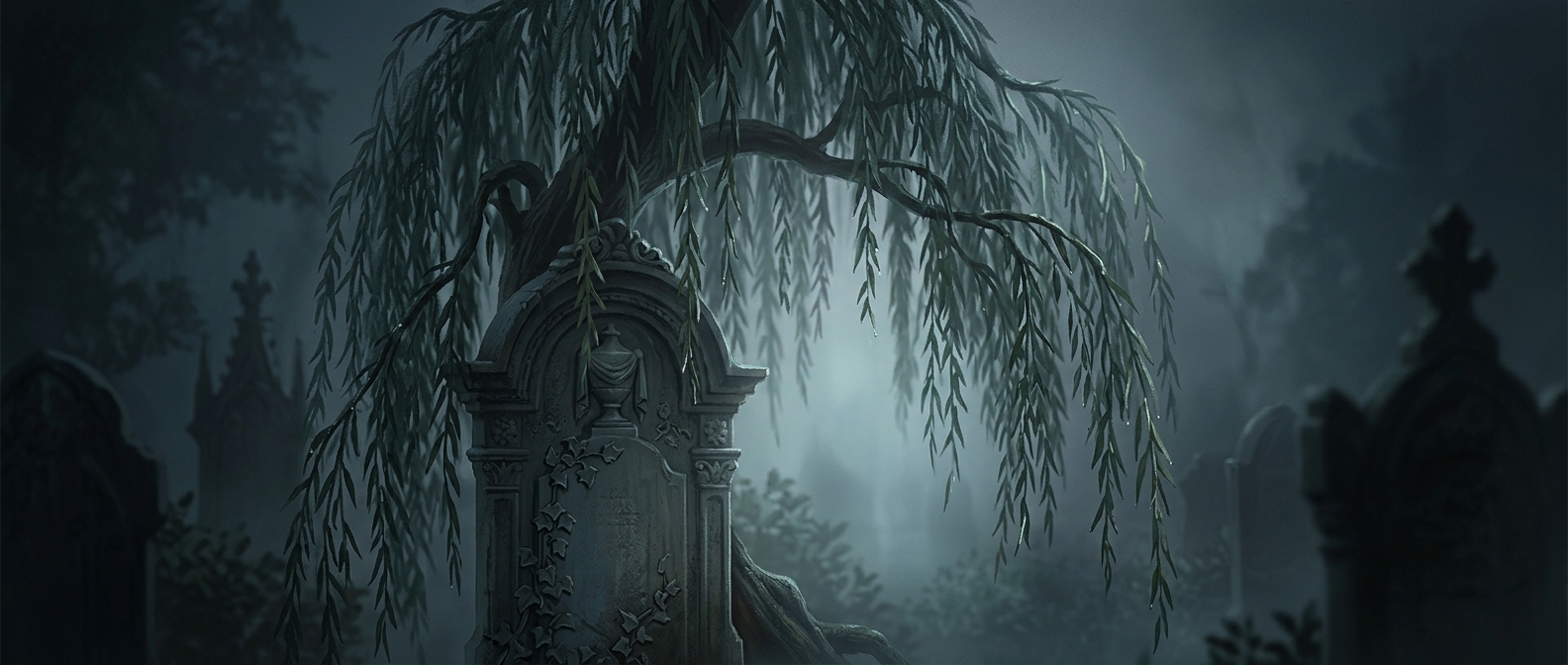
A weeping willow makes grief visible without words. Its long, flexible twigs hang toward the ground, creating a silhouette that resembles a bowed head or a person with lowered shoulders. In a cemetery, that shape could turn an abstract feeling into part of the landscape: sorrow seemed to be expressed by the tree itself.
The effect was especially useful in the Victorian era, when memorials often relied on recognizable symbols. Willows appeared not only as living trees but also in mourning imagery on gravestones, sometimes beside an urn or other emblem of death. Their drooping form made them easy to read as signs of loss.
A cemetery meant to be experienced
Victorian cemetery design increasingly treated burial grounds as landscaped places to walk, reflect, and remember—not merely rows of graves. Trees helped give these spaces shade, variety, and a quieter atmosphere. A willow’s spreading branches could soften the hard lines of stone monuments while reinforcing the solemn mood visitors expected.
That symbolism did not mean every willow had a single, fixed message. Its meaning came from the setting and from a visual language people already recognized. In a cemetery, the willow’s posture did much of the commemorative work: it made mourning part of the scenery.