A Ninja’s Best Disguise Was Ordinary Clothing
The historical spies and infiltrators now commonly called ninjas were known in their own time as shinobi—people who carried out covert tasks such as gathering information, sneaking into enemy territory, or setting fires. Their work depended less on a distinctive uniform than on going unnoticed. In daylight, that usually meant wearing clothes that fit the place and role they needed to pass as: a traveler, a worker, or someone else who belonged there.
A conspicuous outfit could defeat the purpose. Ordinary garments helped a shinobi blend into a crowd, while practical choices—such as clothing that allowed quiet movement—could help during a nighttime mission. There was no single standard costume for every person or operation; clothing depended on the setting and the task.
Why Black Became the Ninja Color
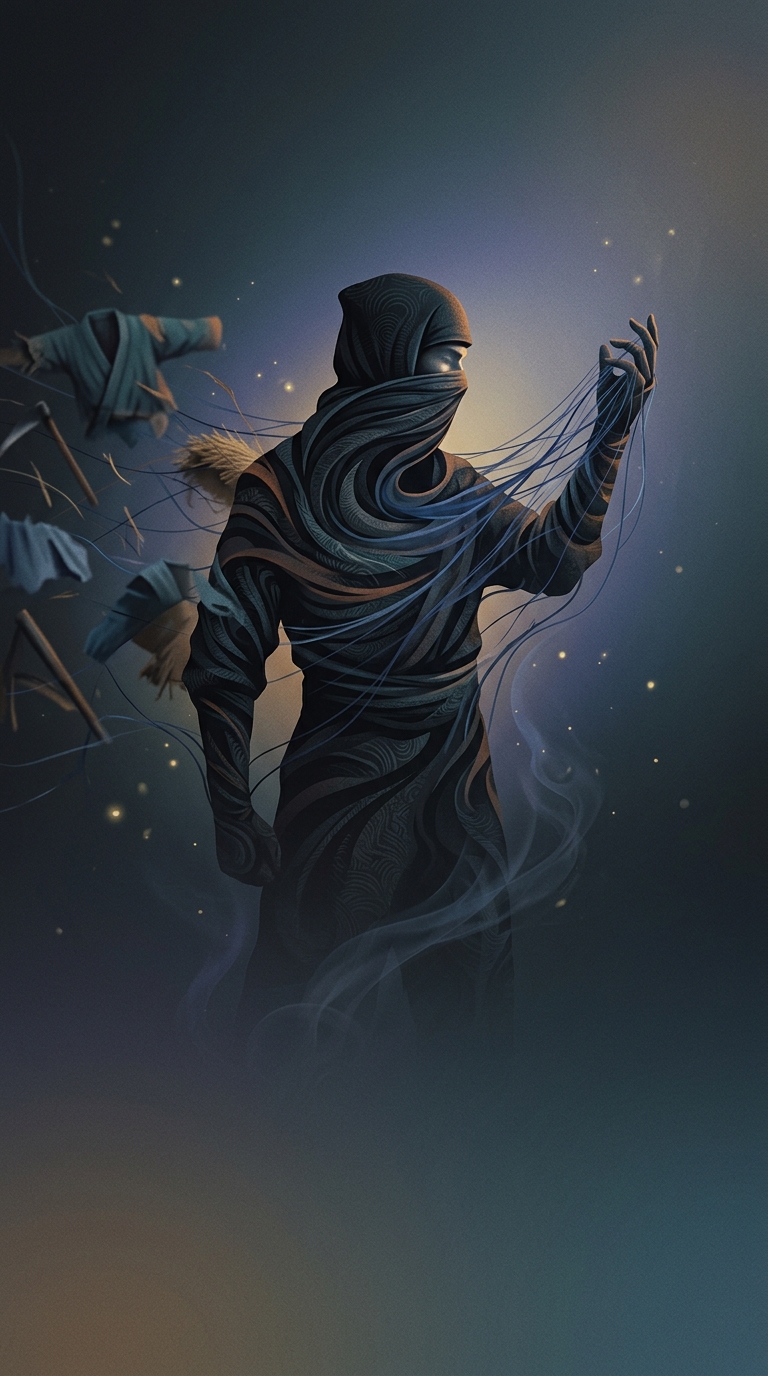
The familiar head-to-toe black suit owes much to stage convention, not a universal historical uniform. In Japanese theater, stagehands called kuroko wore black so audiences would treat them as invisible while they moved scenery or handled props. Performers portraying hidden figures could use the same visual shorthand: black told the audience, quickly and clearly, “this person is concealed.”
That image proved useful in later storytelling, but real concealment was less theatrical. A person dressed identically to a stagehand would stand out in many everyday settings. The effective disguise was not “ninja black”; it was whatever looked unremarkable to the people who might see them.