A crown dispute became a struggle over French territory
The war’s familiar dates, 1337 to 1453, mark a conflict that changed shape over more than a century. English kings had a dynastic route to the French throne: Edward III was the grandson of the French king Philip IV through his mother. When the French crown passed instead to Philip VI, Edward’s claim became one source of conflict—but not the only one.
English kings also ruled lands in southwestern France, especially Aquitaine, while owing the French king formal allegiance for those holdings. That arrangement left two crowns competing over who had authority there. In 1337, Philip VI moved to confiscate Aquitaine, helping turn a tangled dispute over rights and territory into open war.
Why the fighting came in waves
The conflict was not a permanent campaign. Armies fought, truces interrupted the violence, and political circumstances shifted. A truce could pause battles without settling who should rule, so the dispute resurfaced under later kings and new conditions.
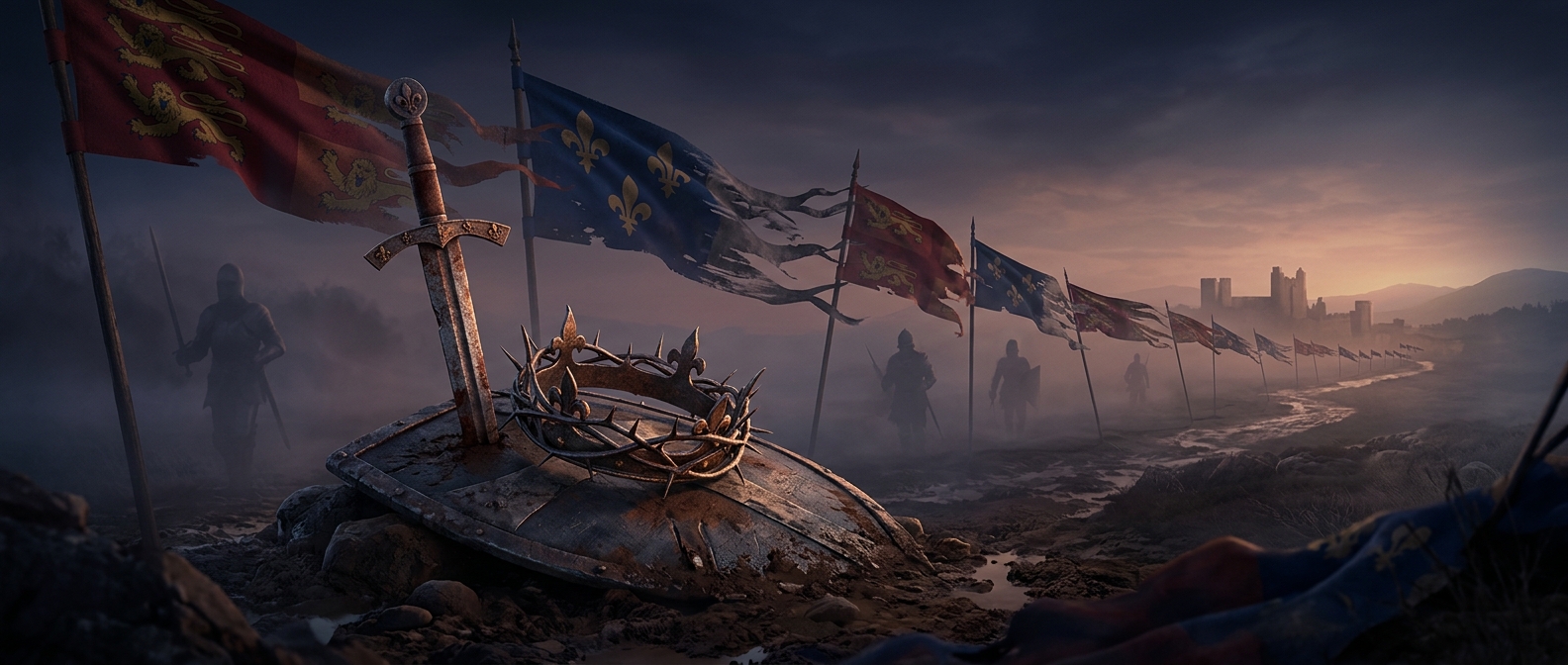
At different moments, the English sought territory and recognition of their claims; the French sought to defend the kingdom and recover lands. Major victories could bring English gains, but holding them required continued military and political effort. The long intervals and changing fortunes are why “the Hundred Years’ War” is best understood as a series of connected conflicts, not one uninterrupted war.
The name compresses a changing map
By the fighting’s end in 1453, the English had lost nearly all their holdings in France, while the French monarchy had strengthened its control over the kingdom. The war’s consequence was not simply a winner in a family dispute: it helped reshape the balance of power between the two crowns. Its neat name hides that slow transformation—and the generations who lived through separate bursts of fighting rather than 116 continuous years of battle.