When Ice Turned Ships Into Prizes
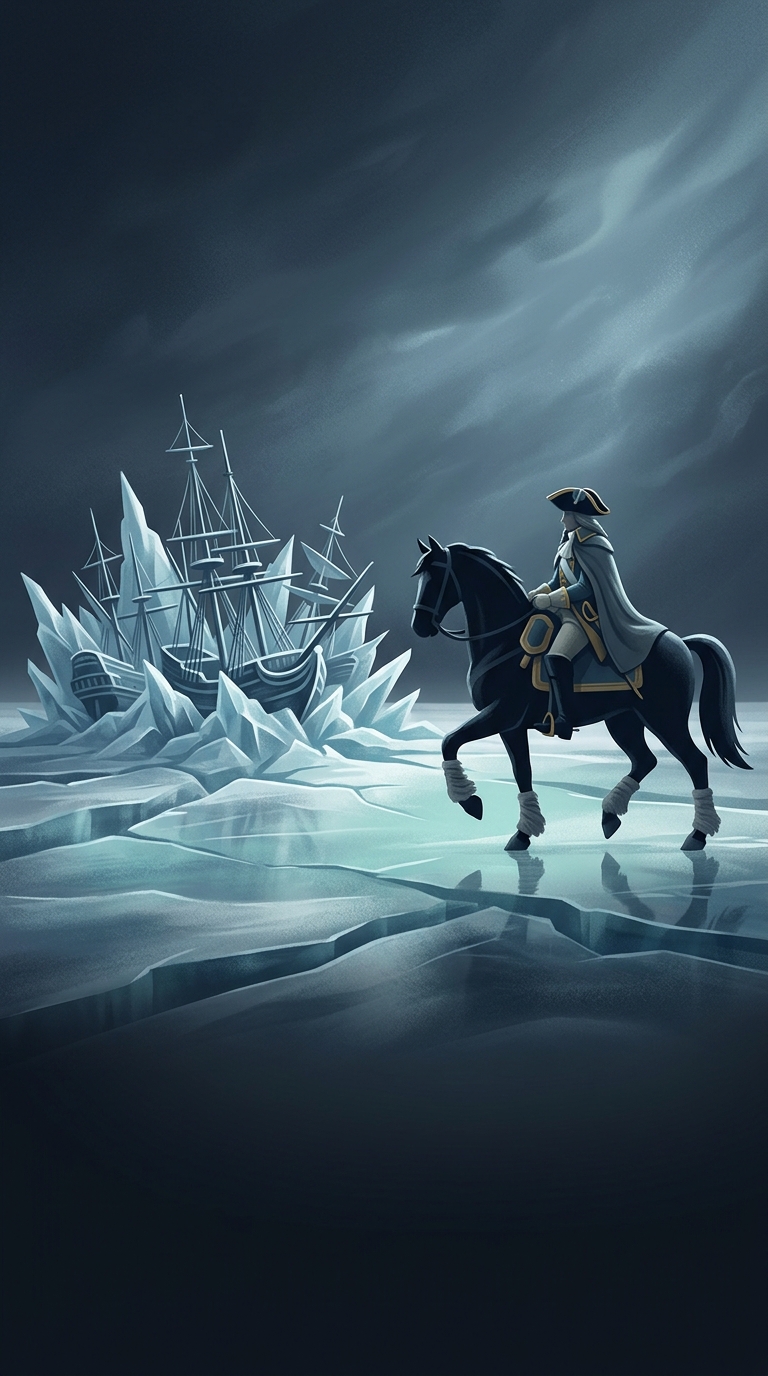
In January 1795, French troops entered the Dutch Republic during a severe winter. Near Den Helder, a Dutch fleet lay trapped by ice. Warships depended on open water to maneuver or escape; frozen sea left them effectively anchored in place. French cavalry could cross the ice, bringing soldiers to ships that normally would have been protected by the water around them.
A Surrender, Not a Ship-to-Ship Battle
The episode is often told as a cavalry charge against the fleet. The striking fact is that mounted French troops reached the immobilized vessels over the ice and secured their surrender. The ships were not defeated in a conventional naval engagement: their inability to move, combined with the arrival of French forces, made resistance a poor bet.
That distinction explains why the event was so unusual. Cavalry was built for speed on land, not for fighting ships. But the frozen surface temporarily erased the boundary between the two domains. The fleet’s guns and crews could not compensate for the loss of mobility when soldiers could approach across what had been open water.
The Winter Changed the Balance
The capture was part of a larger French advance into the Netherlands, not an isolated contest between horsemen and sailors. Yet it offers a vivid example of how weather can overturn military advantages: a fleet that would ordinarily be difficult for cavalry to reach became accessible, while the ice that trapped it served as a road for its attackers. For a short time, the frozen sea made the cavalry the more mobile force—and the ships its prisoners.