How an eruption could recolor a distant sunset
A volcanic eruption can inject fine ash and sulfur-containing gases high into the atmosphere. The gases gradually form tiny sulfate particles that may spread far beyond the volcano. When sunlight passes through this hazy layer, the particles scatter and filter parts of the light before it reaches the ground.
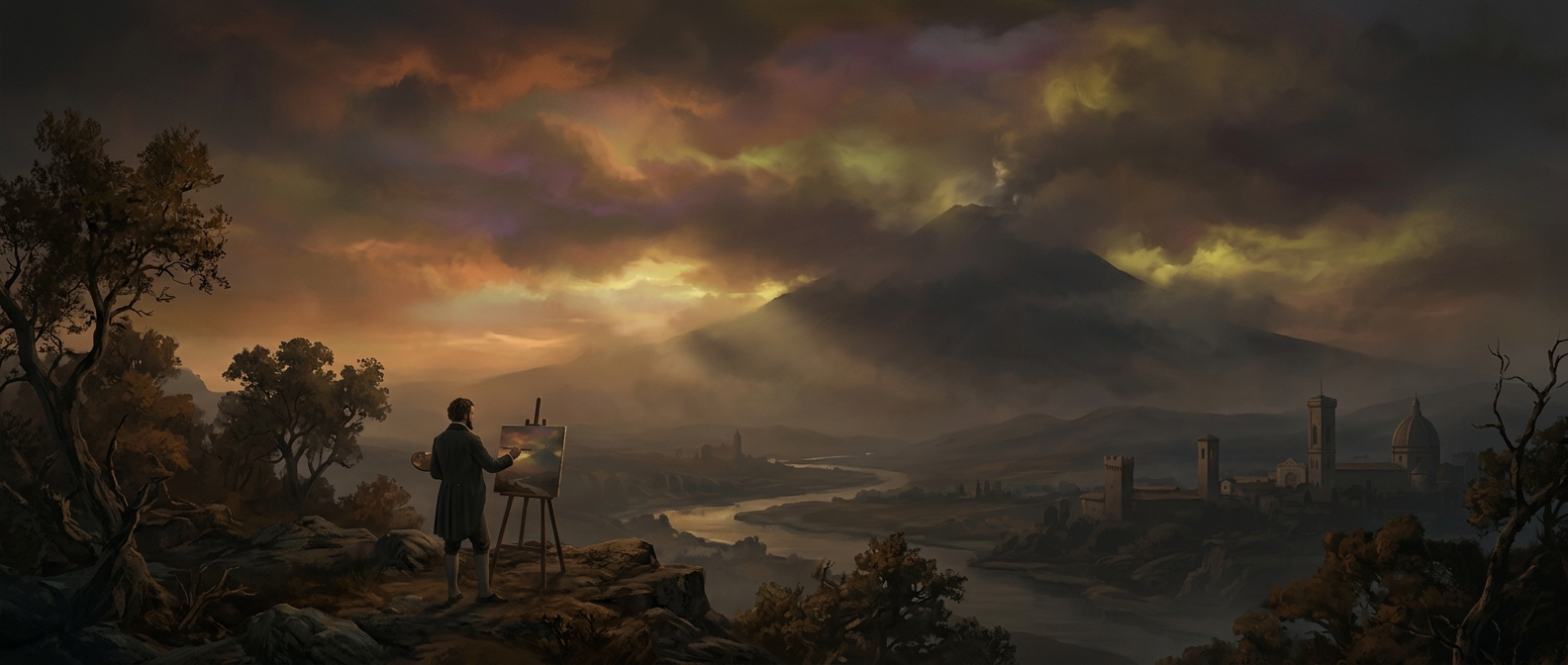
At sunset, sunlight already travels through a much thicker slice of atmosphere than it does at midday. Add volcanic particles, and the balance of colors can shift further. Depending on the particles, clouds, and viewing conditions, the result may look unusually yellow, orange, or red—not one uniform volcanic color.
What a painter could preserve
A painter did not need to know what was in the air to notice that the evening light had changed. A yellowed sky could alter the apparent colors of clouds, water, buildings, and distant hills, making the whole scene look unfamiliar. Paintings could preserve that visual impression long after the aerosols had dispersed.
That makes an old sunset image a useful clue, but not a measurement of an eruption. A canvas records an artist’s view and choices; it cannot by itself identify the volcano, the particles, or the precise date. Historians and scientists can compare such images with other records to investigate whether unusual skies followed a major eruption.
The striking consequence is that a distant geological event could leave a trace in an ordinary landscape painting: not as a picture of the volcano, but as a changed color overhead.