How feathers made color move
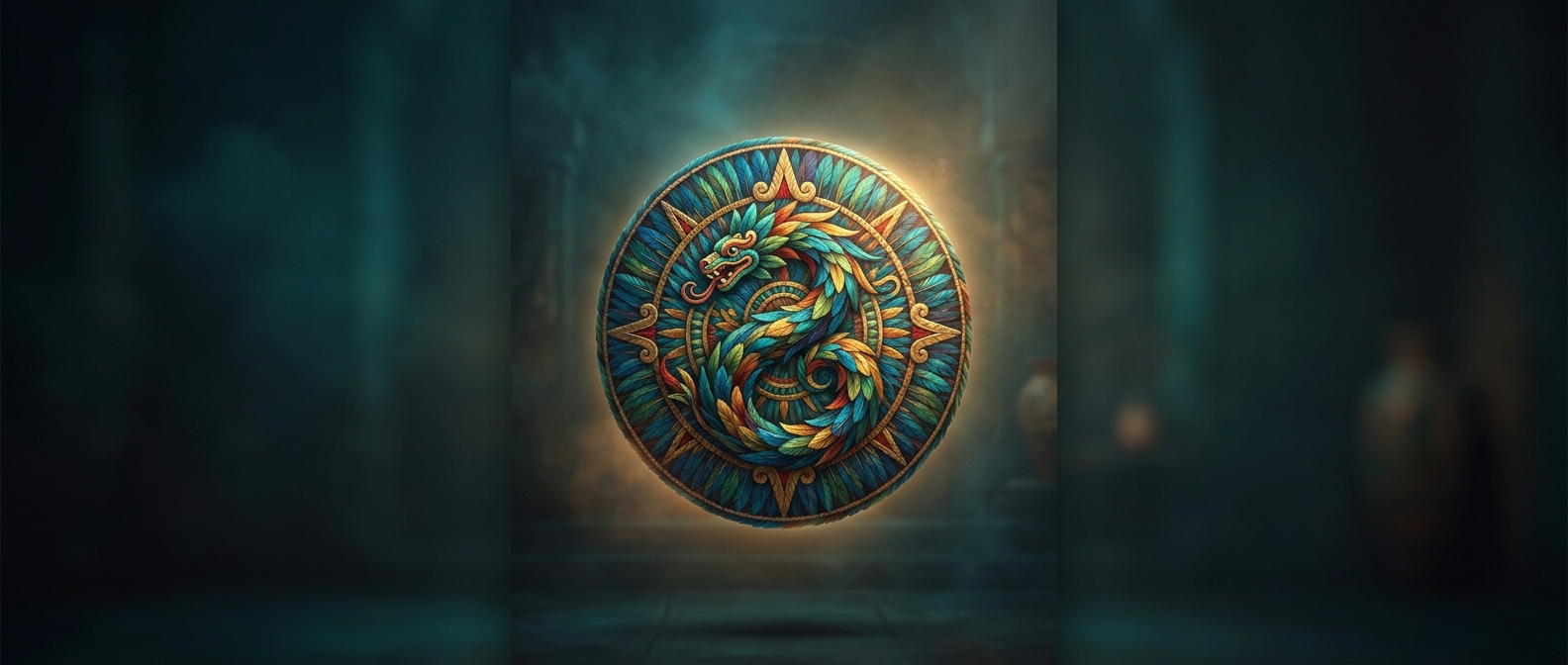
Amanteca—specialist featherworkers in the Aztec world—built images by selecting and placing feathers piece by piece. The color did not come from pigment. In iridescent feathers, microscopic structures interact with light, reflecting some wavelengths more strongly than others. Change the viewing angle, and the reflected light changes too: a patch that looks green may flash blue or gold.
That shifting effect made feather mosaics unlike painted surfaces. To create a recognizable pattern, an artisan had to control not only each feather’s hue but also its direction. A small change in how feathers lay could alter the shimmer across a shield or headdress.
A demanding art with valuable materials
Featherwork required both patience and access to birds whose plumage offered vivid colors and sheen. Some feathers came from tropical regions beyond the highland center of the Aztec Empire, reaching artisans through exchange and tribute. The finished objects therefore embodied more than technical skill: they also gathered rare materials and long-distance connections into a single surface.
Shields, headdresses, and other feathered objects could signal rank, religious meaning, or political importance, depending on their design and use. Their brilliance was not a fixed decoration. The object changed as its wearer moved and as an observer shifted position, making light itself part of the artwork.