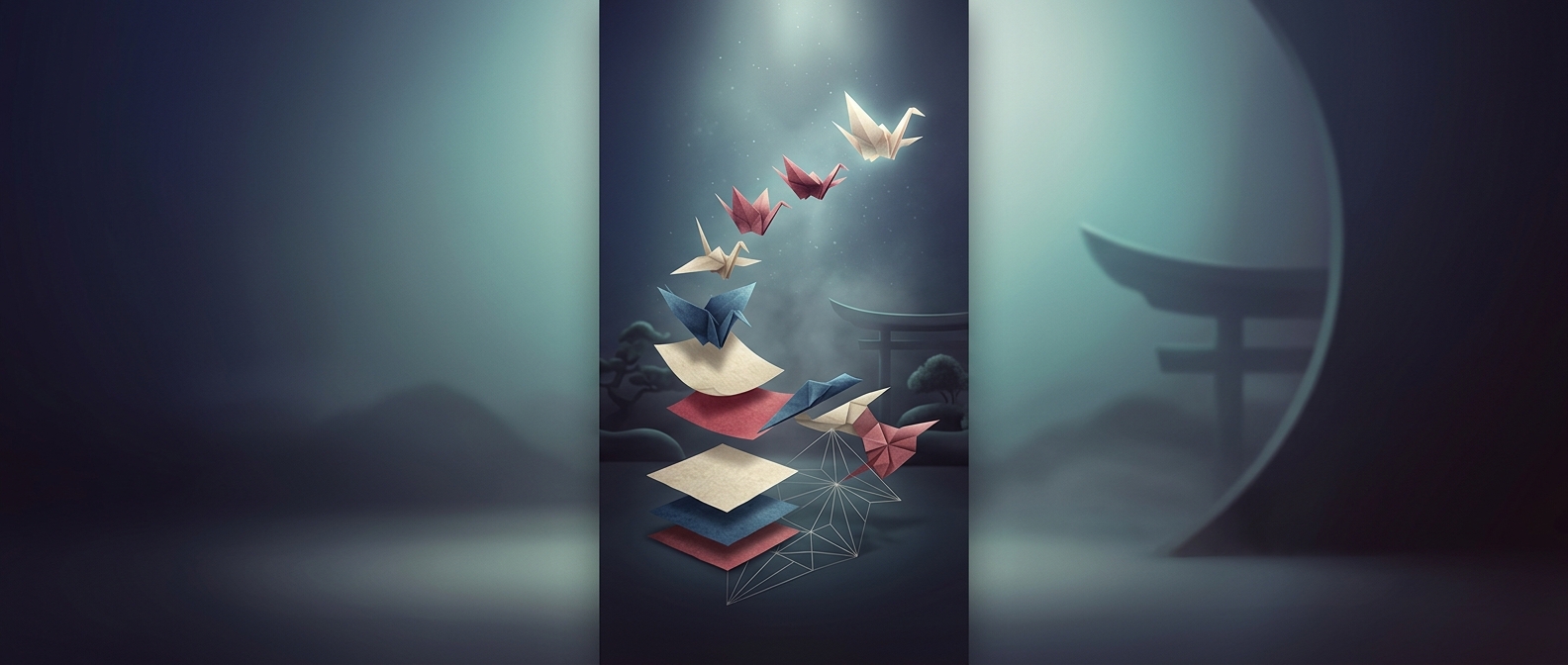
The crease is the sculpture’s structure
A folded figure holds its shape because each crease turns a flat sheet into a set of connected panels. A mountain fold raises a ridge; a valley fold pushes a groove inward. Together, these bends create hinges that can be opened, collapsed, and locked against neighboring layers. The paper is not merely decorated: its surface becomes the structure supporting the finished form.
That makes folding a problem of sequence. A simple-looking move may depend on several earlier creases, which act like a map for later folds. Changing the order can send the paper into a different shape—or leave layers that will not lie flat.
From formal folding to figures
In Japan, folded paper had uses beyond making animals and toys. Carefully folded forms appeared in ceremonial and gift-related settings, where the fold itself could signal care, respect, or occasion. As paper became more available, folding also developed as a way to make recognizable figures, from birds to creatures of the imagination.
The contrast is striking: the same material and basic action can serve either a formal purpose or play. A crane or frog is not cut out and assembled from pieces; its parts emerge from the original sheet as the folds redirect its edges and corners.
One sheet imposes a useful limit
Working without scissors or glue forces the design to conserve its material. Every wing, leg, or beak must come from the square, and thick stacks of folds can become difficult to shape. Folders therefore rely on careful planning as much as dexterity: a successful model distributes layers and creases so the paper can still move where the design requires.
That constraint is why a finished figure can seem far more elaborate than its starting material. The transformation is built into the crease pattern, one decision at a time.