Why Palace Figures Look Strong Even at Rest
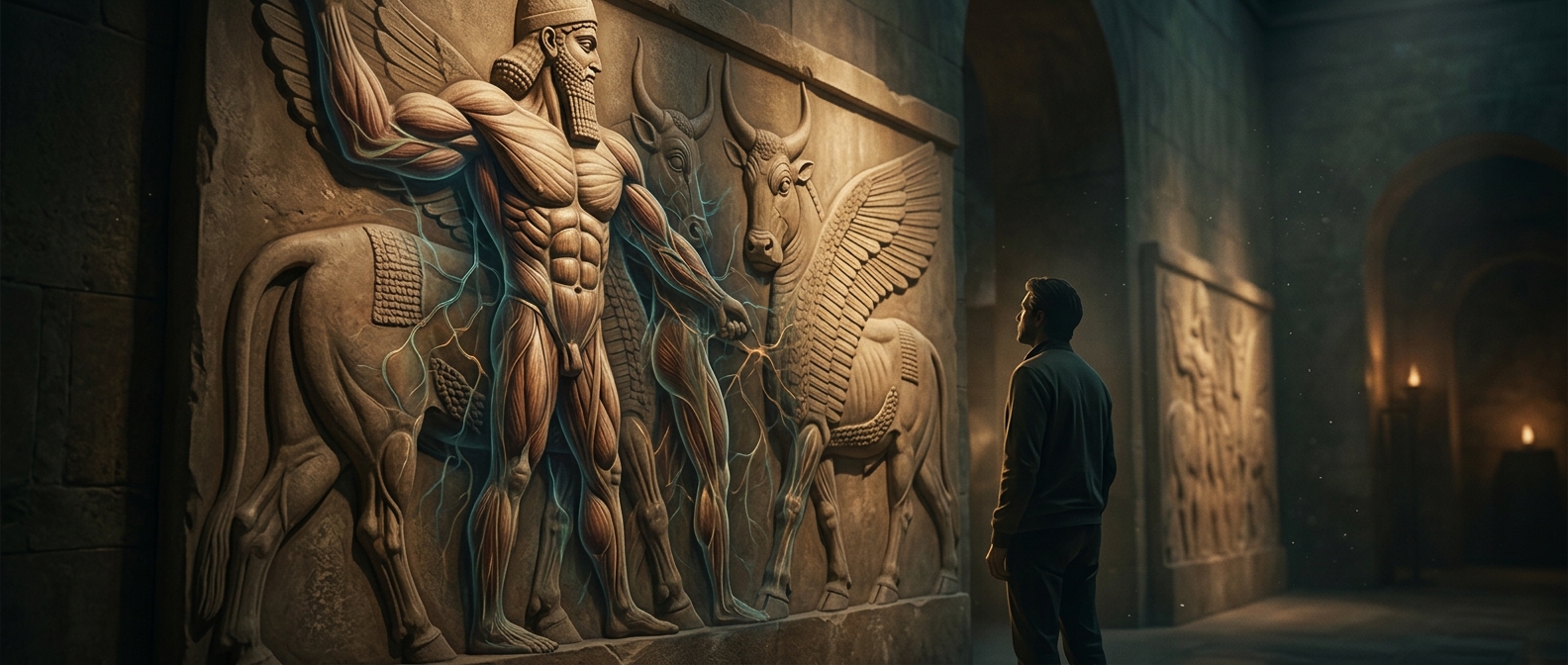
The powerful limbs in Mesopotamian palace reliefs were not simply attempts to record how people’s bodies looked. They belonged to a visual language that made authority visible. A thick forearm or sharply modeled calf could suggest readiness, endurance, and command—even when a figure was standing still.
That mattered in palaces decorated with scenes of rulers, soldiers, hunts, and ceremonies. Carved images turned the building’s walls into a lasting display of order and power. Strong bodies helped present the people serving that order as capable and formidable; the ruler, often placed at the center of the story, stood above them.
Stone Carving Favored Clear, Forceful Shapes
Reliefs project only partway from a flat background, so artists had to make forms readable from the room. They used firm outlines and defined anatomical features to keep bodies legible amid crowded scenes of weapons, animals, clothing, and movement. Enlarged muscles acted almost like visual shorthand: a viewer could recognize strength without needing subtle, naturalistic anatomy.
The same convention could appear in a figure doing little. That consistency is the clue: the carving was not documenting each person’s exertion in the moment. It was presenting an ideal of bodily power, repeated across different poses and activities.
The Effect Was Political as Well as Artistic
Palace reliefs joined individual scenes into a larger argument about who could command people, defeat enemies, and maintain control. Muscular bodies made that argument feel physical. Their strength was not just an anatomical detail; it helped turn political authority into something a visitor could see carved into the walls.