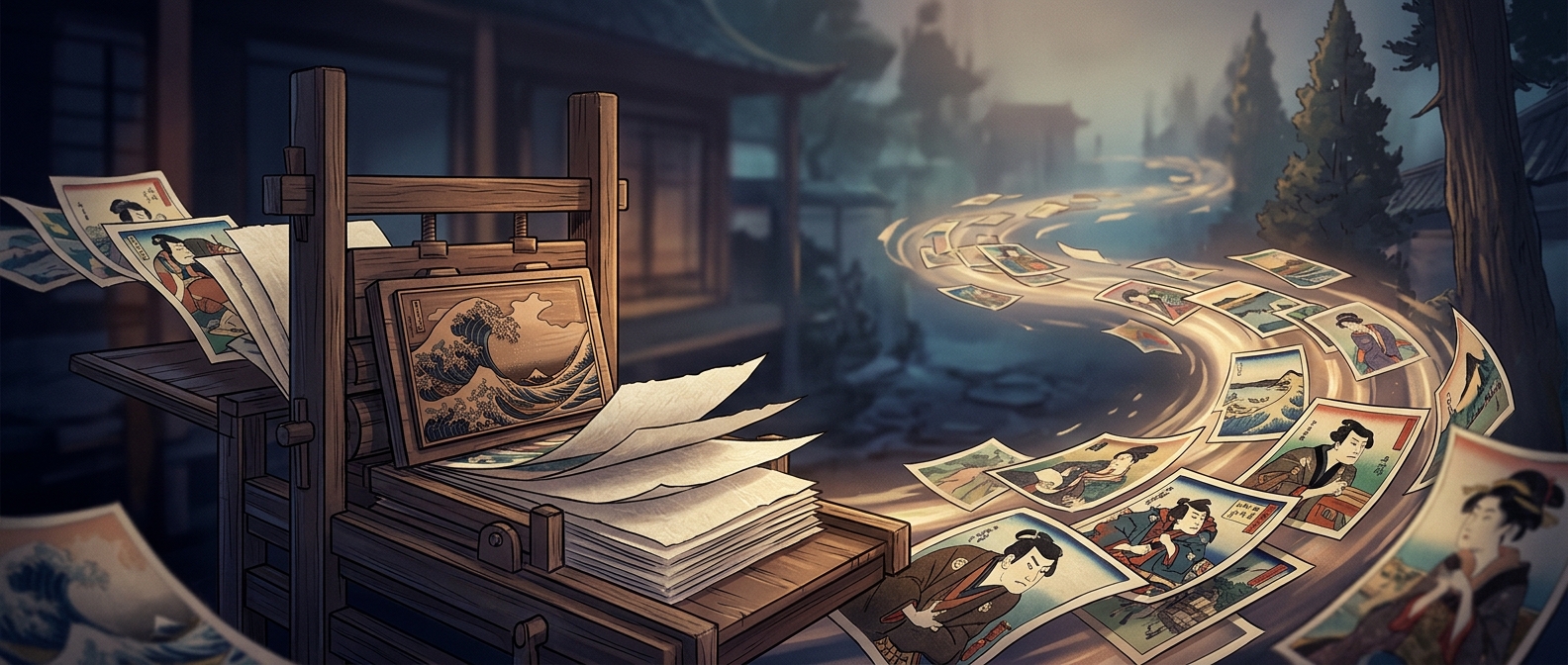
How a carved block became a publishing tool
Ukiyo-e—Japanese prints depicting the “floating world” of urban entertainment—grew alongside a market for affordable pictures. A single painting belonged to one owner; a print could be made in a batch and sold through shops, much like an illustrated book. That made images of actors, fashionable figures, and celebrated landscapes accessible to townspeople who could not commission original art.
The process depended on several specialists. An artist drew the design, a carver cut it into a wooden block, and a printer pressed paper against the inked surface. For a multicolored image, each color usually required its own block. Small alignment marks helped the printer place the sheet in the same position each time, so the colors would meet rather than drift apart.
Repetition without identical copies
The blocks did more than reproduce a picture: they divided its production into repeatable steps. Once carved, a block could print many sheets, while the printer controlled how much ink and pressure each received. Colors, paper, and printing choices could vary slightly from impression to impression, giving the finished works small differences despite their shared design.
That system also shaped what artists could make. Strong outlines and clearly separated areas of color translated well into carved surfaces; intricate detail remained possible, but it had to survive the limits of cutting and printing. The result was a collaboration in which the artist’s design became a practical object that carvers and printers could reproduce.
A wider audience changed the image
Because the expense of making the original blocks could be spread across many prints, publishers could offer pictures at a lower price than one-off paintings. The same image might circulate among buyers, be collected, or decorate a home. Ukiyo-e’s impact came not only from its vivid scenes, but from turning visual art into something reproducible—and therefore available to far more people.