A violent rupture behind Bernini’s portrait of Costanza
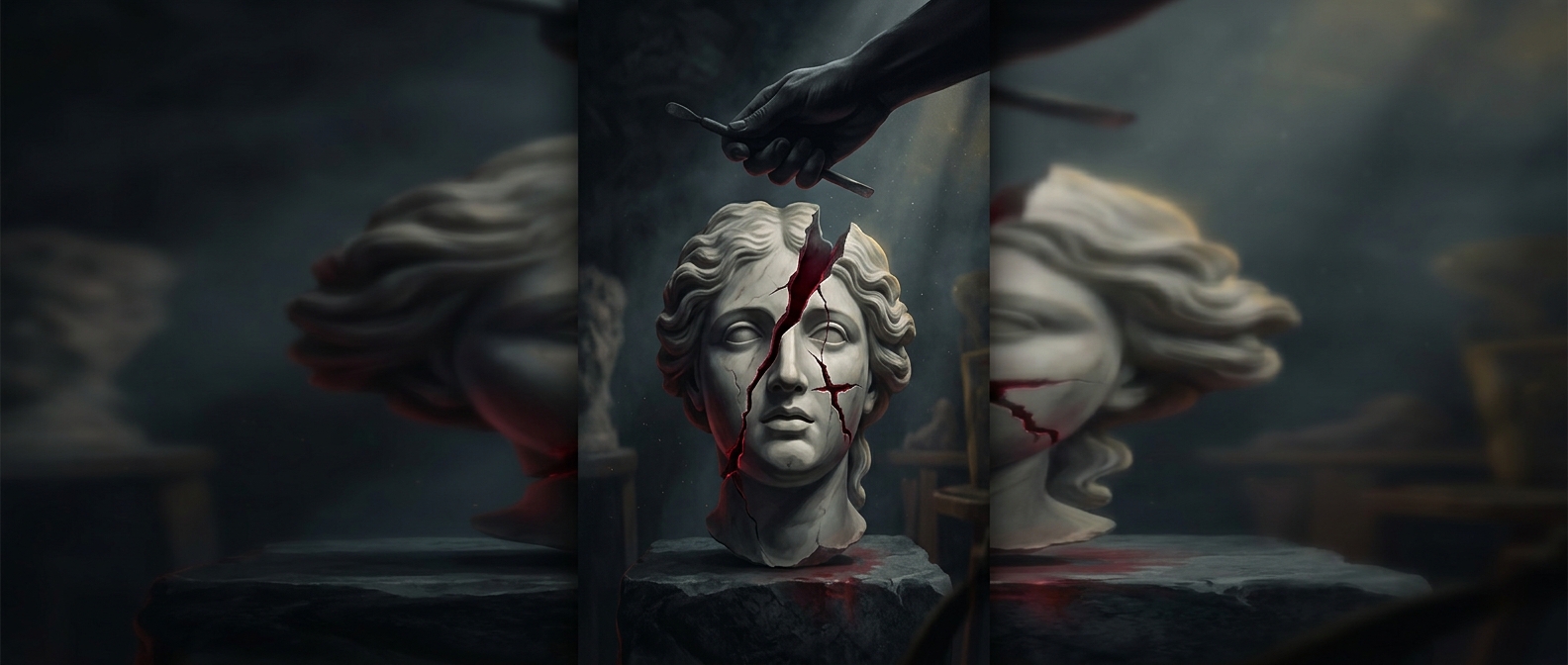
In 1638, Gian Lorenzo Bernini’s relationship with Costanza Bonarelli ended in an act of violence. After learning that she was involved with his brother Luigi, Bernini arranged for a servant to slash her face with a razor. The attack was not a private quarrel that simply disappeared: it became a scandal around one of the most prominent artists in Rome.
The portrait preserves a different moment
Bernini had already made a marble bust of Costanza, generally dated to the years just before the attack. Its force comes from how immediate she seems: her head turns, her lips part, and her loosely arranged hair and clothing suggest a person caught in an unposed moment. The sculpture records the intimacy of their earlier relationship, not the later assault.
That contrast changes how the bust can be seen. Its lifelike presence is still an achievement of sculptural technique, but it also carries the history of a relationship in which personal desire became a public exercise of power and violence.
A scandal with consequences
The episode drew intervention from Pope Urban VIII, Bernini’s powerful patron. Bernini faced punishment, but the pope’s favor helped him avoid consequences that might otherwise have threatened his career. The incident is a reminder that artistic reputation in seventeenth-century Rome depended not only on skill, but also on access to influential protectors.
The bust remains striking partly because it holds two histories at once: a vivid likeness made during intimacy, and the knowledge of what Bernini later did to the woman it depicts.