Yellow as a desperate shortcut to happiness
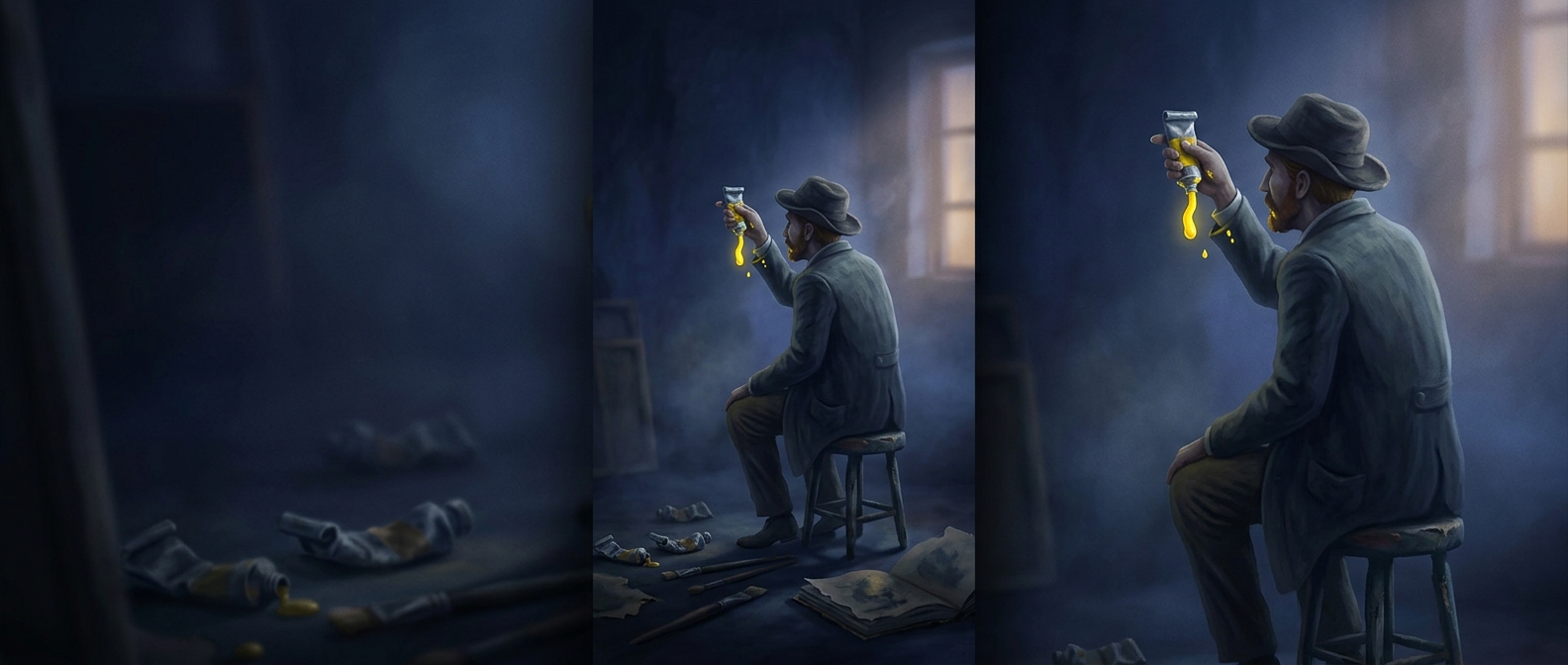
Van Gogh’s attraction to yellow was part of a larger effort to make color carry feeling. In his paintings, bright yellows could suggest warmth, light, and vitality—not merely reproduce the color of an object. During a period of severe depression, he reportedly swallowed yellow paint in the hope that its color might somehow bring happiness. The act turned an artistic symbol into a literal, dangerous remedy.
Paint cannot deliver what its color represents
A pigment can look sunny without having any effect on mood that resembles sunshine. Paint is a mixture of coloring material and substances that help it spread and dry; it is made for surfaces, not for the body. Swallowing it cannot reproduce the emotional meaning an artist gives it on canvas.
Some paints of Van Gogh’s era contained lead compounds. Lead is a toxic metal: once absorbed, it can harm the brain and other organs. The amount absorbed depends on the material and exposure, so the presence of lead does not by itself establish what any particular episode did to him. But it made the attempt more hazardous, not more therapeutic.
The risk behind the story
The episode is a reminder of the gap between a powerful artistic image and a safe treatment. Depression is not a shortage of one color or substance that can be swallowed away; it affects mood and functioning in ways paint cannot address. For Van Gogh, yellow could remain a vivid language for hope in his work even while the paint itself offered no relief—and could add poisoning to an already dangerous struggle.