When a Painting Failed, Cézanne Could Let the Weather Finish It
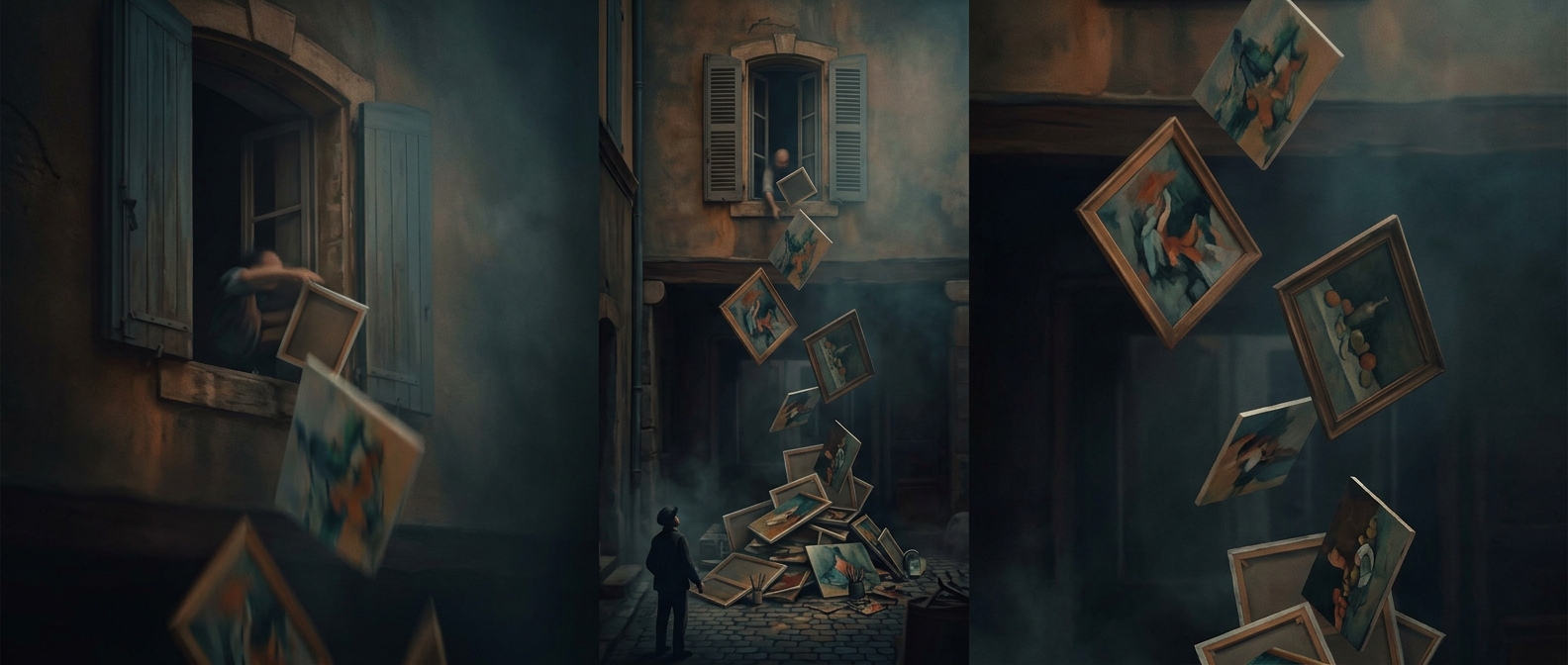
For Paul Cézanne, discarding a canvas could mean more than setting it aside. The account behind this detail describes unfinished paintings thrown from his studio window into the trees, where rain and time damaged them beyond use. It was a blunt end to work he had decided not to keep.
Rejection Was Part of the Work
A painting left unfinished is not necessarily a painting abandoned because its maker ran out of time. An artist may decide that a canvas is not becoming what they intended, or that continuing it is no longer worthwhile. In Cézanne’s case, the reported gesture suggests that some rejected work did not remain available for later revision: once it was out among the trees, weather could destroy it.
That matters because surviving paintings offer only a partial view of an artist’s work. Canvases that were kept can be studied; those discarded outdoors could disappear without entering a collection or leaving a finished image behind. The rain-soaked wreckage was, in effect, the unseen remainder of the process that produced the paintings people remember.
A Dramatic Kind of Editing
Throwing a canvas out the window makes rejection physical. Instead of preserving every attempt as a record, Cézanne could remove a failed effort from his working space—and, by leaving it exposed, make the decision difficult to reverse. The consequence is striking: some of his artistic history may have ended not in an archive, but in the trees outside his studio.