How Tanzania’s Tingatinga paintings made wildlife fill the frame
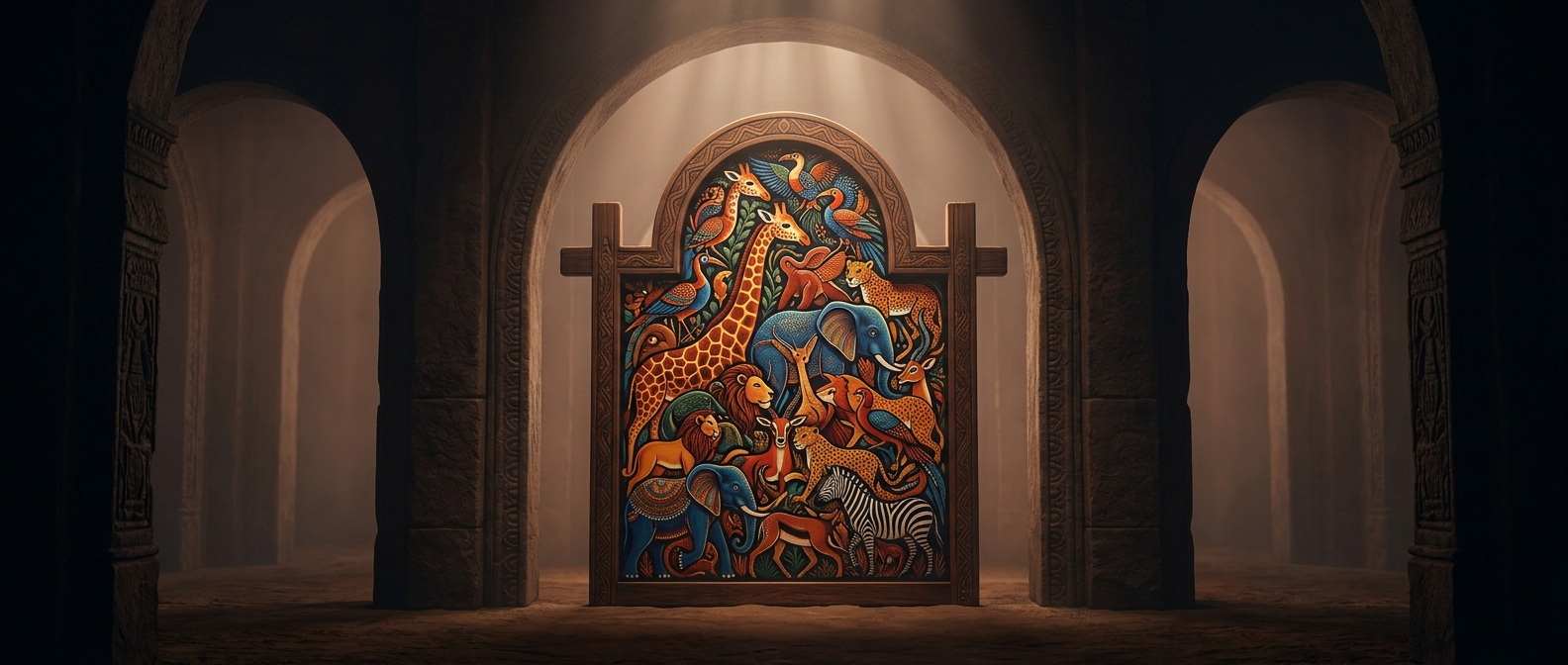
The crowded animal scenes are associated with Tingatinga art, a vivid painting style that emerged in Dar es Salaam in the late 1960s. Its founder, Edward Saidi Tingatinga, painted recognizable subjects—especially animals and birds—in simplified shapes, strong outlines, and bright, flat colors. Rather than suggesting a deep landscape with a distant horizon, many works bring their subjects forward against a plain background.
That choice turns a small board into a kind of visual inventory: a leopard, birds, and other creatures can share the same surface without being arranged like a naturalistic scene. Repeated spots, stripes, and feathers make each animal legible even when the composition is tightly packed.
A practical style that traveled
Tingatinga worked with accessible materials, including enamel paint on hardboard, a smooth manufactured panel. The compact format and bold imagery suited paintings that could be made and sold in an urban setting, including to visitors interested in Tanzanian wildlife. Other artists carried the style forward after Tingatinga’s death, adapting its subjects and techniques while keeping its direct, decorative impact.
The result is not simply a picture of animals in their habitat. It is a deliberately compressed world, where the canvas behaves less like a window onto a landscape and more like a patterned surface. The eye moves from one bright creature to the next—and the crowded arrangement makes the animals feel abundant enough to spill beyond the frame.