Ballet’s Workday, Seen From the Wings
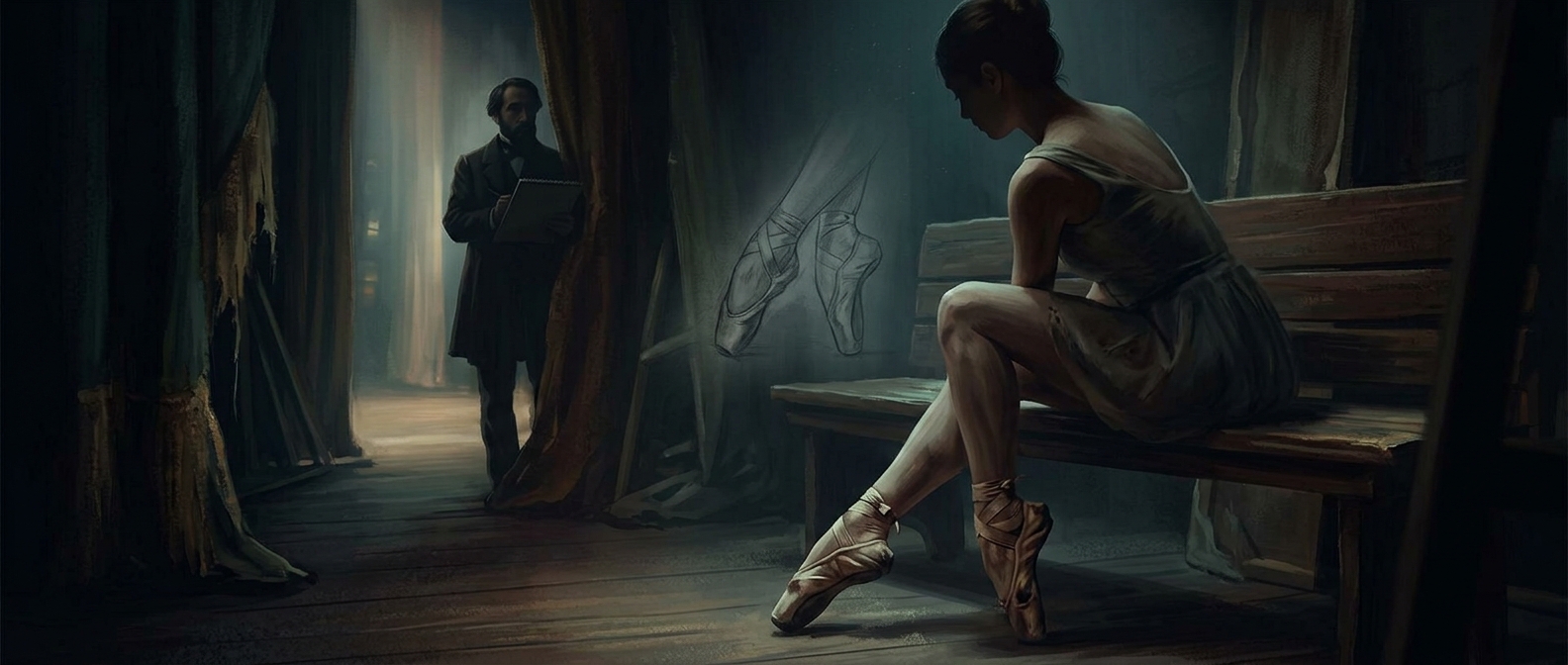
A dancer rubbing a sore foot is a far cry from the balanced, effortless figure audiences saw onstage. That contrast helps explain the force of Degas’s backstage scenes: they bring the physical labor behind ballet’s polished appearance into view. A performance might last only a short time, but dancers spent long hours rehearsing and repeating demanding movements. Soreness and fatigue belonged to that working routine.
The Pose Changes What We Notice
By drawing dancers in unguarded moments—bending, scratching, or tending to their feet—Degas shifted attention from the finished performance to the bodies that made it possible. These were not merely pauses between graceful poses. They revealed ballet as a discipline that required effort, repetition, and recovery.
The backstage setting also changed the viewer’s role. Instead of watching a dancer present herself to an audience, we seem to glimpse a private moment when the performance has temporarily fallen away. The sore foot makes the elegance onstage look earned rather than effortless.