A private house became the setting
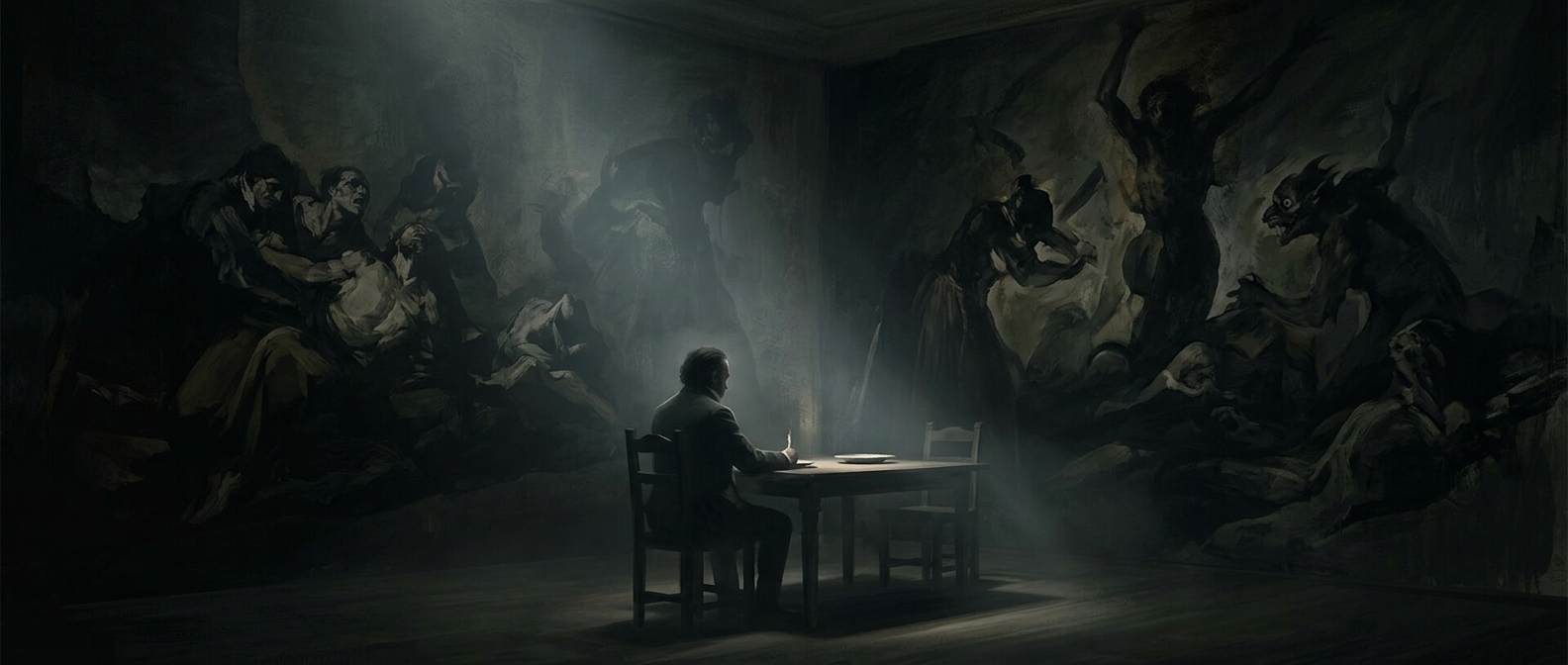
In the early 1820s, Francisco Goya covered the walls of his country house outside Madrid with a group of paintings now known as the Black Paintings. They were made in oil directly on plaster, rather than on portable canvases, and were arranged across rooms on the ground and upper floors. The dining room held some of the most disturbing images, including Saturn Devouring His Son.
That setting changes how the paintings read. These were not altarpieces, official portraits, or scenes intended to guide a crowd through a museum. They belonged to the rooms of a lived-in home, where images of violence and fear sat alongside ordinary domestic routines. Their original scale and placement made them part of the architecture: a visitor would encounter them as walls, not as separate framed works.
What the images meant—and what remains unknown
Goya left no clear explanation of the paintings. Their subjects draw on myth, popular imagery, and scenes of human cruelty, but it is difficult to assign each one a single message. The house was a private setting, not evidence of a fully documented program or a diary in paint. The unsettling effect comes partly from the mismatch between the images and their domestic surroundings.
The paintings were later removed from the walls and transferred to canvas, a process that altered their surface and separated them from the rooms they had been made to occupy. Today, viewers see them in a museum; originally, their most immediate context was a dining room where a mythic giant could loom over a meal.