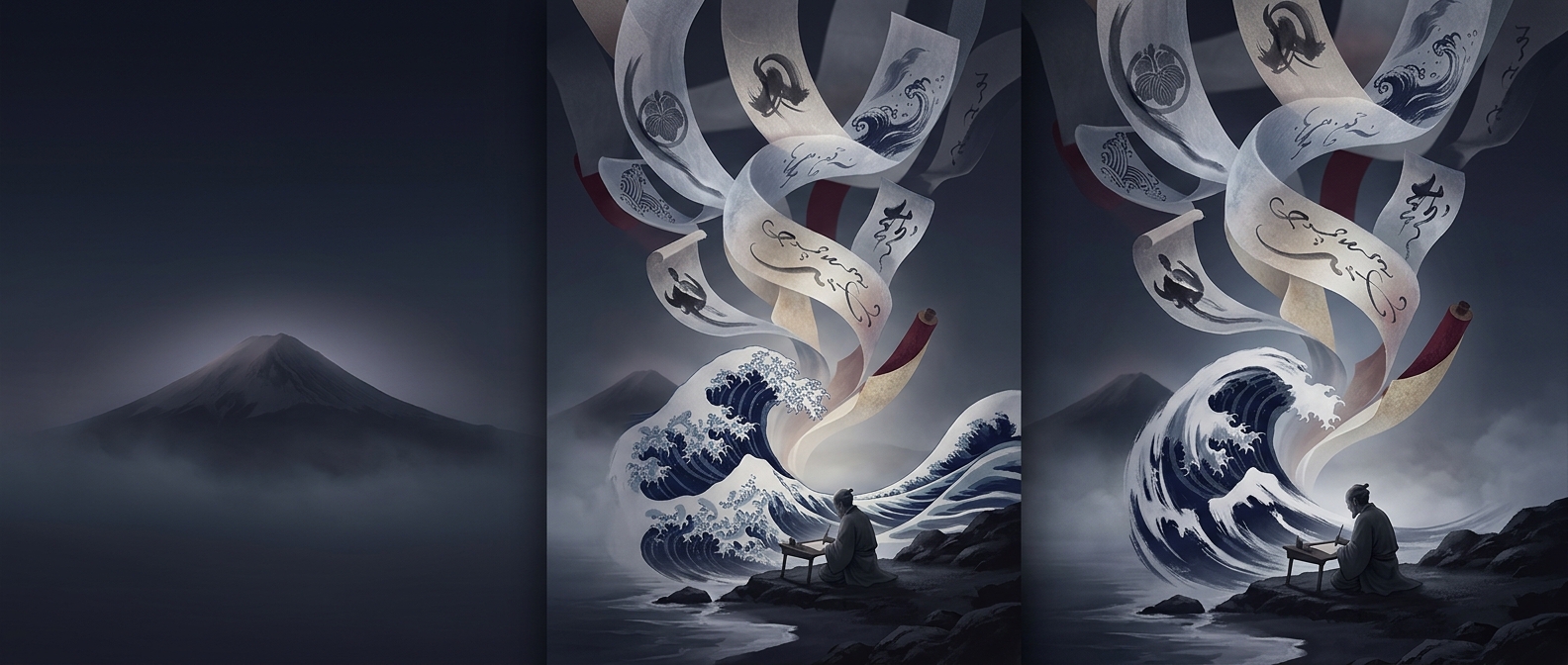
A New Name Could Mark a New Artistic Chapter
Hokusai’s many names were more than aliases. In Japan’s art world, an artist could adopt a different professional name over a career, and Hokusai repeatedly did so as his work and public identity evolved. Names such as Shunrō, Sōri, Taitō, Iitsu, and Manji appear at different points in his long career.
A name change could signal a shift in artistic direction, but it did not function like a precise label for one style. Hokusai kept experimenting, and the boundaries between periods were not necessarily tidy. The names are clues to how he presented himself—not a complete map of his development.
Signatures Made the Artist Harder to Track
Prints and paintings were often identified by the name written on them. When an artist changed names, a work signed “Hokusai” and one signed “Iitsu” could look, at first glance, as though they came from different people. Publishers, buyers, and later collectors had to connect those signatures to a single artist across time.
That task could be complicated further by the way Japanese artists’ names were used and passed on in professional circles. A name on a work mattered, but it was not always a permanent personal label in the modern sense. Researchers therefore rely on more than the signature alone, including the work’s style and context.
The Names Preserve a Career in Motion
For Hokusai, changing names let each stage of a lengthy working life take on a distinct public identity. The same habit that made his career difficult to follow also left a record of an artist continually remaking how he was known. More than 30 names turn a signature into something to investigate: not just who made the work, but which chapter of Hokusai’s career it belongs to.