A dispute on a Roman court turned deadly
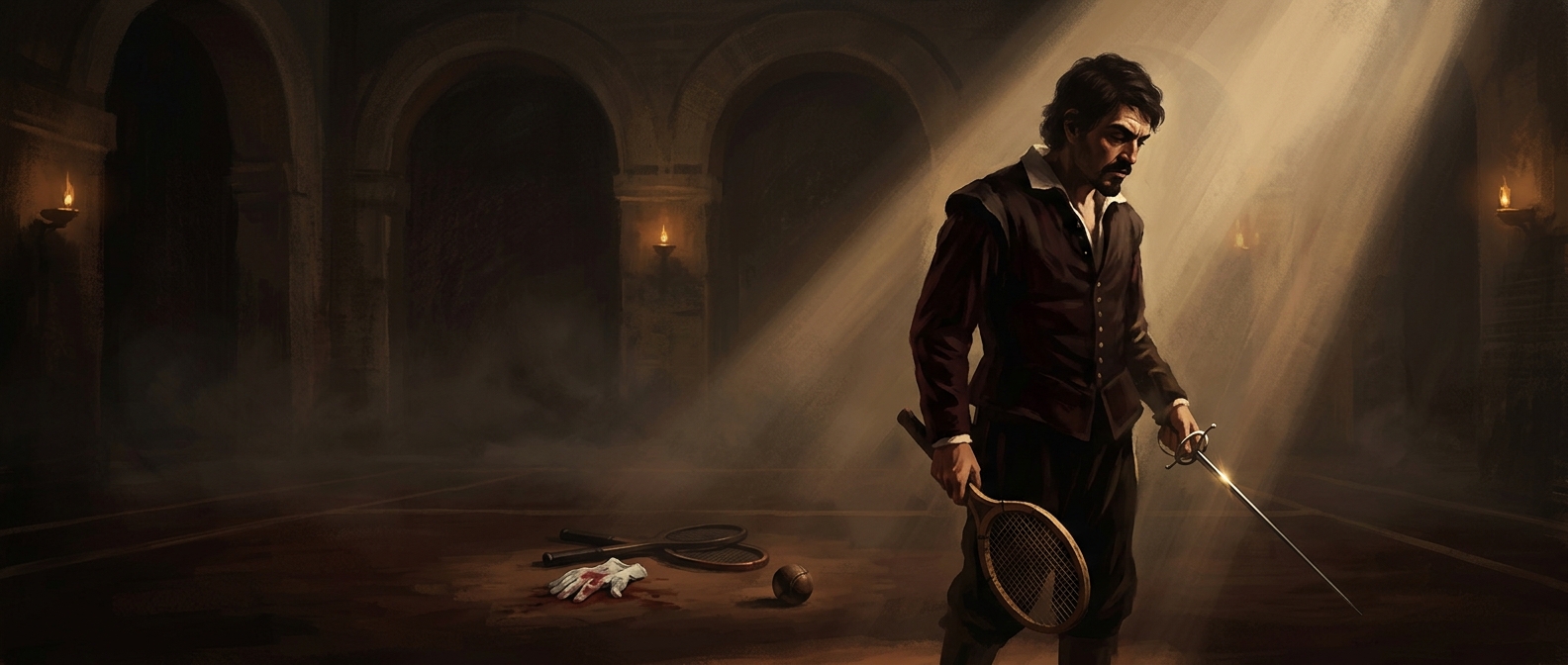
In 1606, Caravaggio killed Ranuccio Tomassoni during a clash in Rome. Accounts connect the quarrel to a game of pallacorda, a form of real tennis played in an enclosed court, where players struck a ball with the hand or a racket. It was not the lawn game familiar today: the court, walls, and scoring belonged to a different tradition. The argument reportedly involved the score, though the precise cause of the confrontation is not certain.
The game was the setting, not an adequate explanation for what followed. In a city where personal honor and armed retaliation could shape disputes, the quarrel escalated into a sword fight. Tomassoni died of his wounds; Caravaggio was injured and fled.
Flight reshaped his final years
Rome’s authorities condemned Caravaggio in absentia, meaning he was punished while away and could not answer the sentence in court. He became a wanted fugitive, moving through Naples, Malta, and Sicily. Powerful patrons and his reputation as a painter helped him find shelter and commissions, but they did not erase the danger of returning to Rome.
He continued to paint, often producing works for churches and influential patrons while seeking a way back. In 1610, after years away, he died on the journey north toward Rome. The old court quarrel had become a turning point: a single violent encounter forced one of Europe’s most celebrated painters to pursue his career in exile, with the hope of pardon never realized.