A child’s body, an adult’s authority
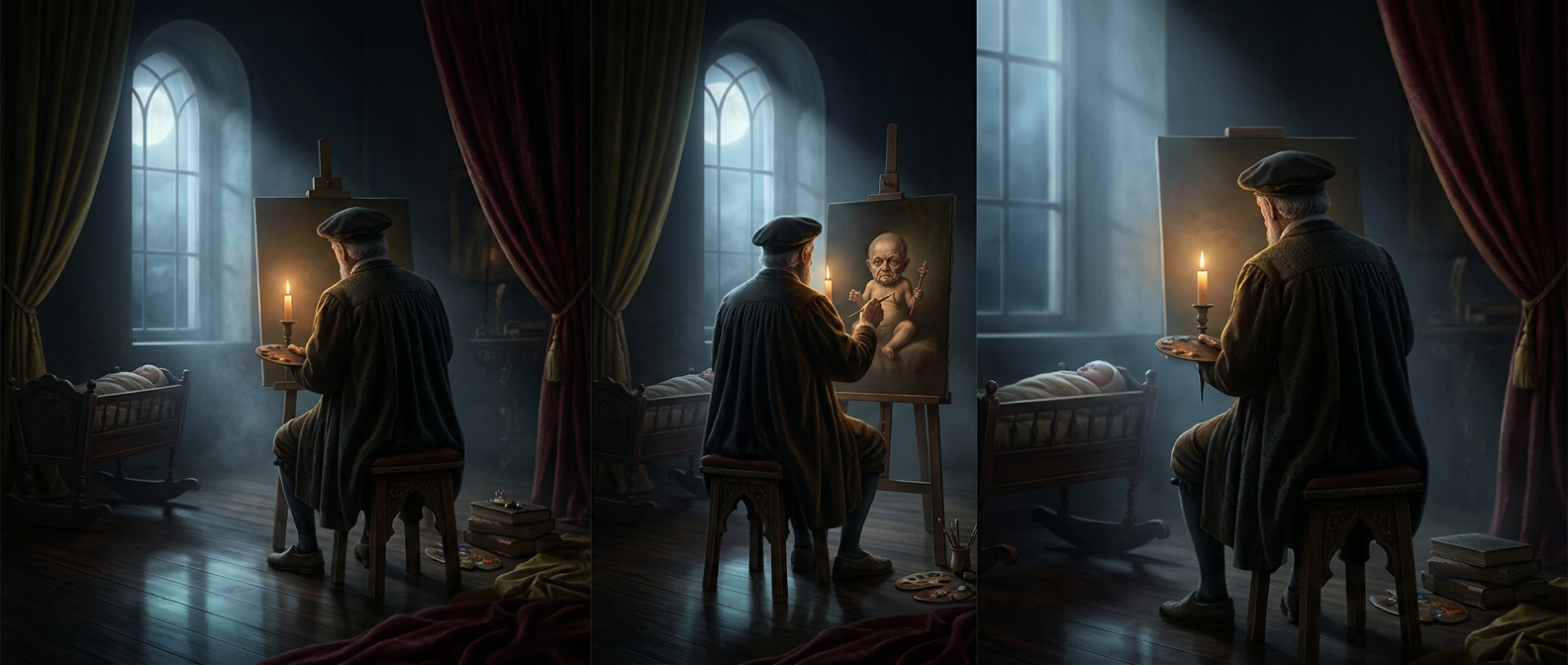
In many medieval images of the infant Jesus, the face is not meant to record what a baby looked like. It is a visual argument about who Jesus was. Christian teaching held that he was divine and wise from the beginning, not a child who gradually acquired spiritual understanding. Artists could therefore show a small body with an older-looking face, a composed gaze, or the gestures of a teacher and ruler.
The contrast made the image legible at a glance: this was an infant, but not an ordinary one. A blessing hand, a scroll, or a formal seated pose could reinforce the same idea. These were signs of authority, not attempts to portray a baby’s everyday behavior.
Why the convention changed
Medieval religious art often prioritized clear meaning over lifelike anatomy. A figure’s pose, clothing, and expression could communicate sacred status more effectively than realistic proportions. The mature-faced Christ—sometimes called the “adult Christ child”—made divine wisdom visible even when the subject was physically tiny.
As artists in later centuries placed greater emphasis on observation, bodily movement, and intimate human relationships, the infant Jesus was increasingly shown with more recognizably childlike features. The theological meaning did not have to disappear; it could be carried by the surrounding symbols and the scene itself. The old-looking face is a reminder that these paintings were not simply snapshots of childhood: they were designed to show, in one image, both a baby and the sacred authority believers understood him to possess.