A portable studio in the open desert
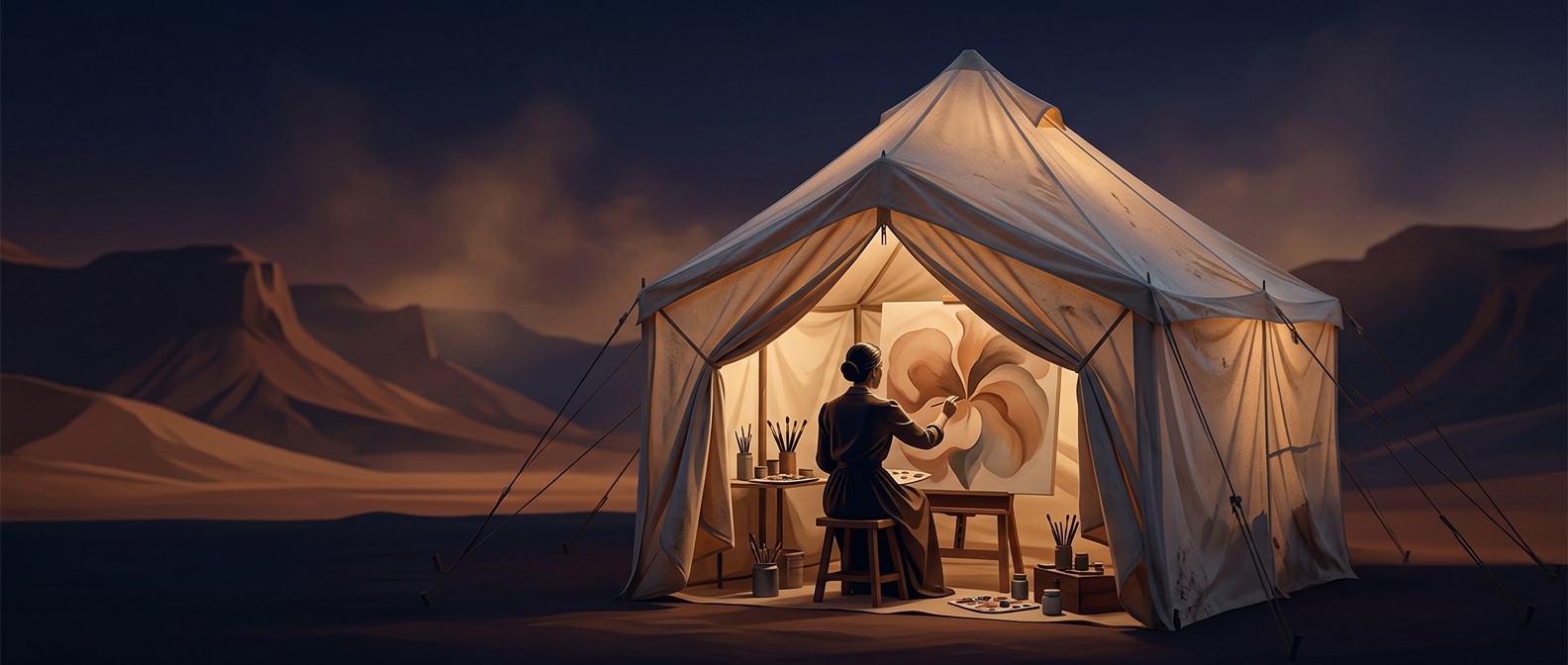
Painting outdoors meant working with conditions that could interrupt the work as much as inspire it. In New Mexico, intense sun and heat made an exposed spot difficult to use for long, while bees could crowd the same landscape O’Keeffe was trying to study. A custom canvas tent gave her a practical middle ground: she could set up in the environment she wanted to paint without having to work entirely exposed to it.
The tent’s main advantage was not that it recreated a conventional indoor studio. It made a patch of shade and a place for her materials, allowing her to remain near the terrain while gaining some shelter from the desert sun. That mattered when she was working from subjects such as the region’s broad, dry landscapes and animal bones—forms whose appearance depended on their surroundings and the light falling across them.
Shelter shaped the way she could work
A portable setup also offered flexibility. Rather than treating the desert as a backdrop to visit briefly, O’Keeffe could make a workable station outdoors and spend time observing what was in front of her. The tent did not remove the heat or the bees; it made the conditions more manageable.
That small piece of practical equipment helps explain how an artist could pursue close contact with a demanding landscape. The studio was not separate from the place she painted—it was a shelter she brought into it.