Why a portrait could take so long
For Cézanne, a sitting was not simply a matter of keeping a model in place until he had drawn the outline. He built a portrait through repeated decisions about how colored areas met: the curve of a cheek against the background, the tilt of a shoulder, the balance of the head within the canvas. Those relationships had to feel right together, so a pose might be studied and adjusted over many sessions.
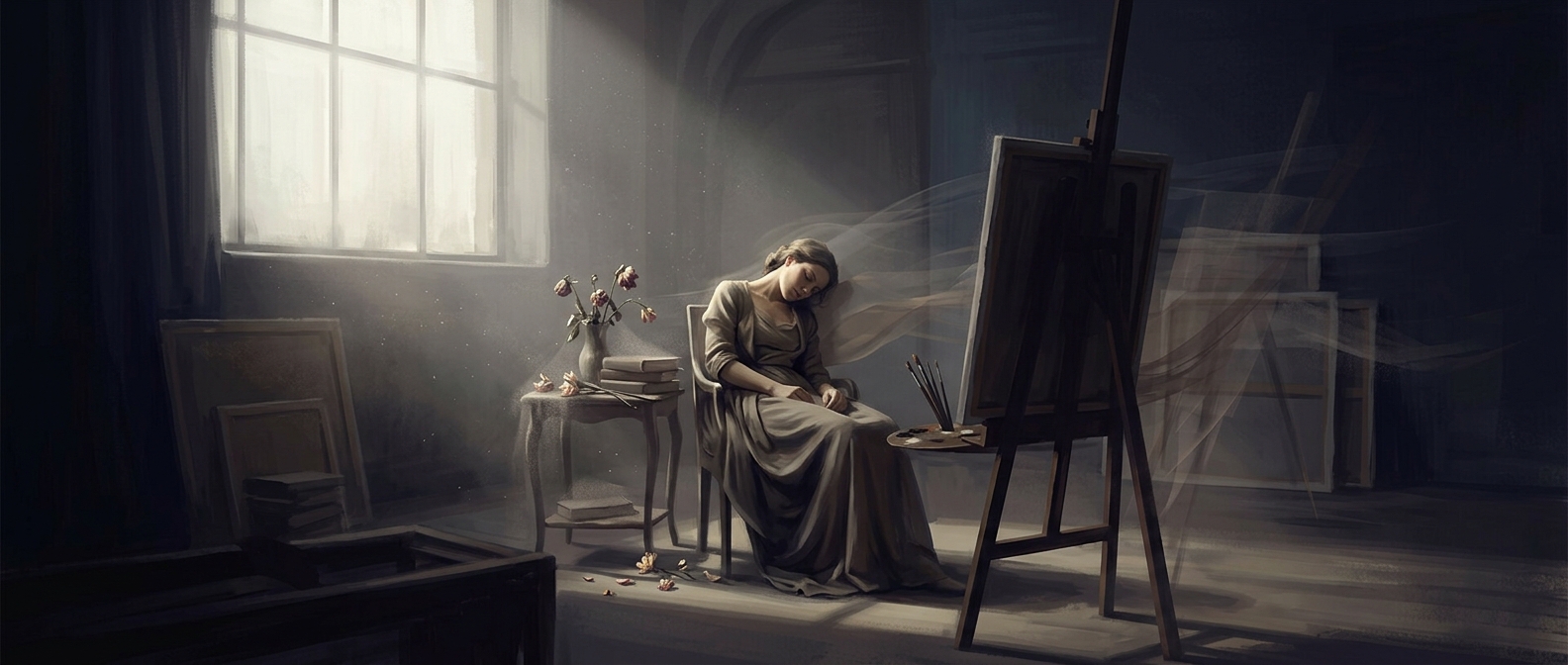
That method made stillness useful—but also demanding. Remaining in one position for hours is tiring, and a person who drifts off may simply be responding to the monotony and physical strain of posing. His wife, Hortense, was not a decorative prop so much as the living subject around whom the painter kept organizing the picture.
The model’s stillness, the painter’s revisions
Cézanne’s slow pace changed the practical meaning of a portrait sitting. The model supplied a stable arrangement of body, clothing, and light; the painter used it as a point of reference while working out the image. If the arrangement shifted, even slightly, it could disrupt the relationships he was trying to establish. A sleeping sitter, by contrast, could remain still—though not necessarily comfortably.
The episode makes the labor behind his portraits easier to imagine: not a dramatic exchange between artist and muse, but long stretches of waiting while the painter scrutinized and reworked what he saw. In that kind of session, falling asleep was less a rejection of the task than one of its ordinary consequences.