When chance became part of the composition
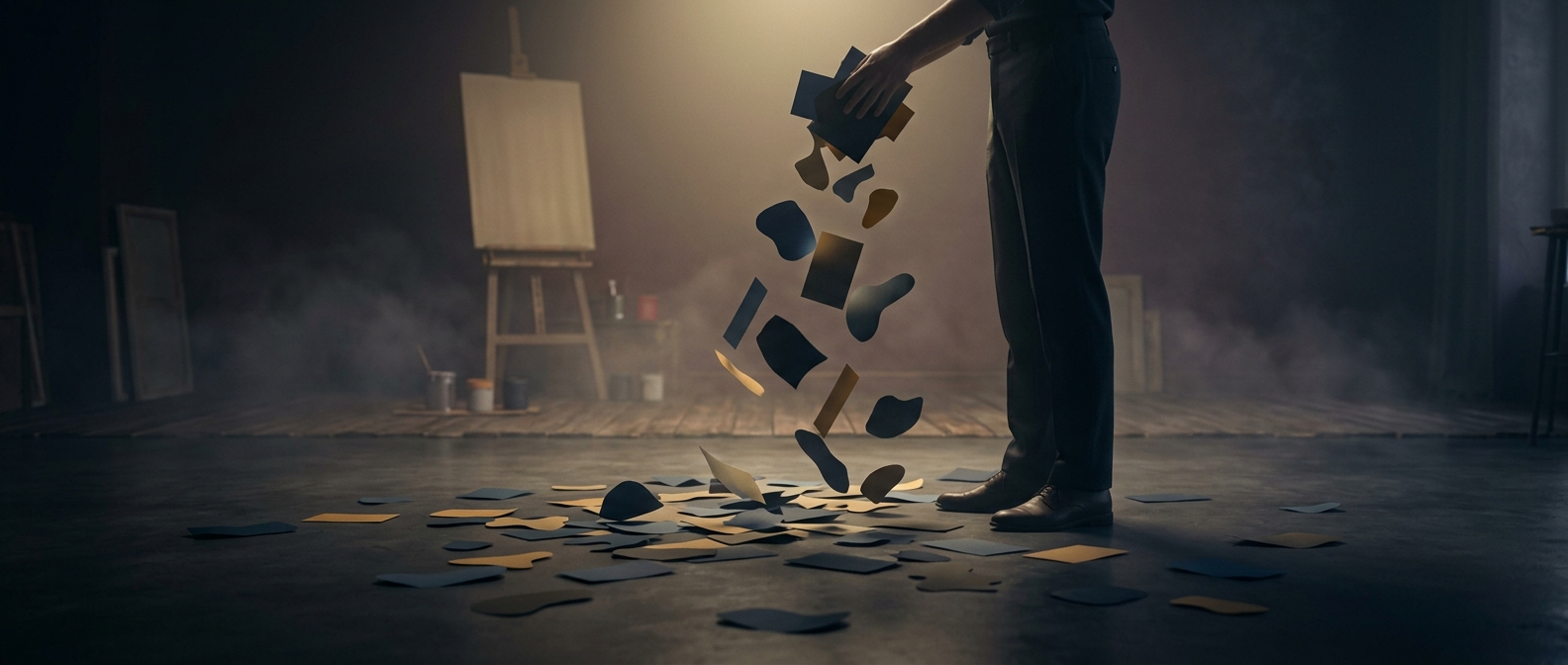
In his chance collages, Hans Arp made an unusual change to an artist’s role: he set up the materials, then let their fall help decide where they belonged. Rather than arranging each paper square by eye, he dropped the pieces onto a surface and fixed them in place where they landed.
That did not remove the artist from the process. Arp still chose the paper, its colors and shapes, and the surface beneath it. The deliberate decision was to stop short of controlling every position. Gravity supplied an arrangement that intention alone might not have produced.
A Dada challenge to careful order
Arp’s experiments are associated with Dada, an avant-garde movement that took shape during the upheaval of World War I. Dada artists questioned established ideas about art and rational order. Chance offered one way to unsettle the expectation that a composition had to show the artist’s careful hand arranging every part.
The result was not simply randomness on display. Once the pieces fell, Arp chose to preserve that accidental pattern rather than adjust it into a more conventional design. The artwork’s composition included both an unpredictable event and the decision to accept its outcome. A dropped square could land at an awkward angle or leave an unexpected gap; instead of treating that as a mistake to correct, the method made it part of the work.