A frozen moment became a working reference
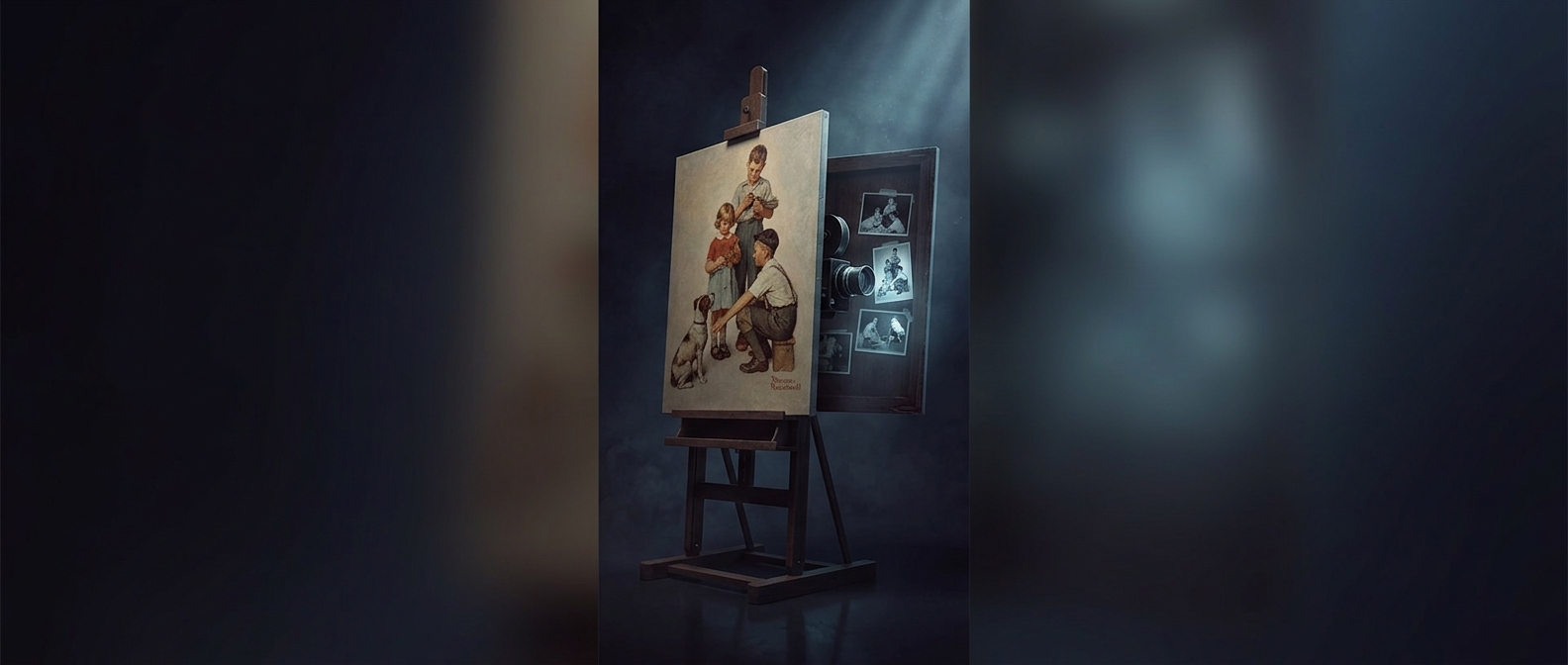
A staged photograph gave Rockwell something a live model could not: a moment held still. He could study a hand, a tilted head, or the way clothing folded without asking someone to repeat a pose. The image also let him compare several people and objects within one arrangement, helping him work out how a small gesture could make a scene legible.
That mattered for magazine covers, where a viewer might encounter the picture briefly and needed to grasp its situation quickly. A reference image could preserve the physical details of a pose while Rockwell considered how the parts of the scene should guide the eye.
The photograph was not the finished picture
Rockwell’s process joined photographic observation to deliberate painting. A camera recorded the staged scene, but the painting could reshape it: he could adjust a figure’s expression, clarify an action, or emphasize a detail that carried the story. The photograph supplied evidence about appearances; it did not make the artistic decisions for him.
This approach also changed what “working from life” could mean. Instead of relying only on memory or a model’s ability to hold still, he could return to a visual record while building the image. The camera helped preserve the pose; Rockwell’s choices turned that pose into a magazine-cover story.