A sculptor’s commission from a demanding pope
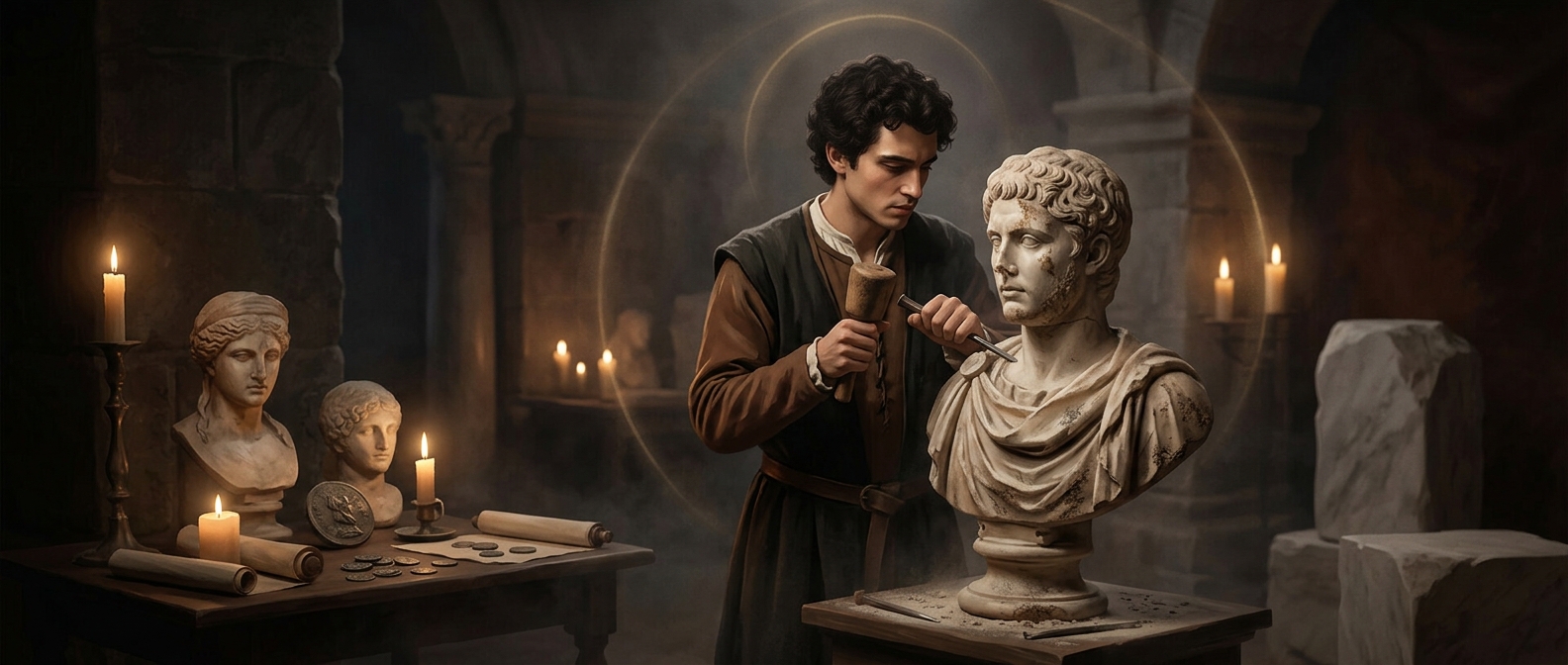
Michelangelo’s reluctance was about more than discomfort. He saw himself primarily as a sculptor, while painting a vast ceiling was a different kind of work—and Pope Julius II wanted him to take it on. The commission began in 1508 and occupied years of his life, keeping him from the marble sculpture he preferred.
The pope’s insistence did not mean Michelangelo simply obeyed without shaping the project. The ceiling’s design grew far beyond a straightforward decorative job, becoming an ambitious sequence of biblical scenes and figures. That gave the artist room to bring a sculptor’s sense of mass and form to painted bodies, even as he worked in a medium he had not chosen.
What overhead painting demanded
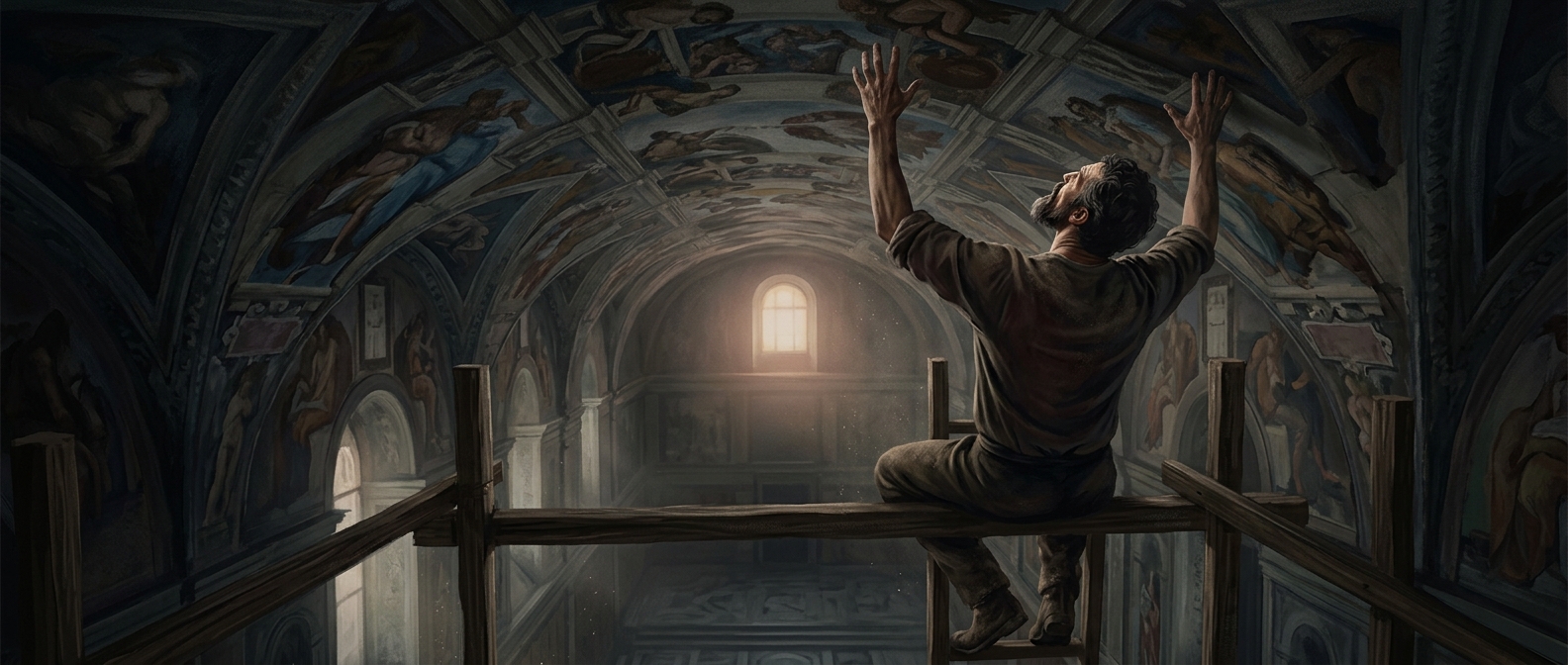
Michelangelo worked from scaffolding raised beneath the ceiling, not while lying flat on his back. He painted in fresco: applying pigment to fresh, damp plaster so the color bonds to the wall as it dries. Because the plaster cannot stay workable indefinitely, each section had to be planned and completed in a limited window.
In a bitter poem about the work, he described the physical strain and the paint running over him. The complaint makes the achievement feel less like effortless inspiration than a long, uncomfortable negotiation between a demanding commission and an artist’s own ambitions.
The job outlasted the grievance
The ceiling became one of the defining works of Renaissance art, but its fame should not erase the conditions of its making. Julius II got the monumental project he wanted; Michelangelo turned an unwanted assignment into a work that displayed his command of the human figure. The striking irony is that a commission imposed on a sculptor became famous partly because it makes painted bodies seem almost carved from stone.