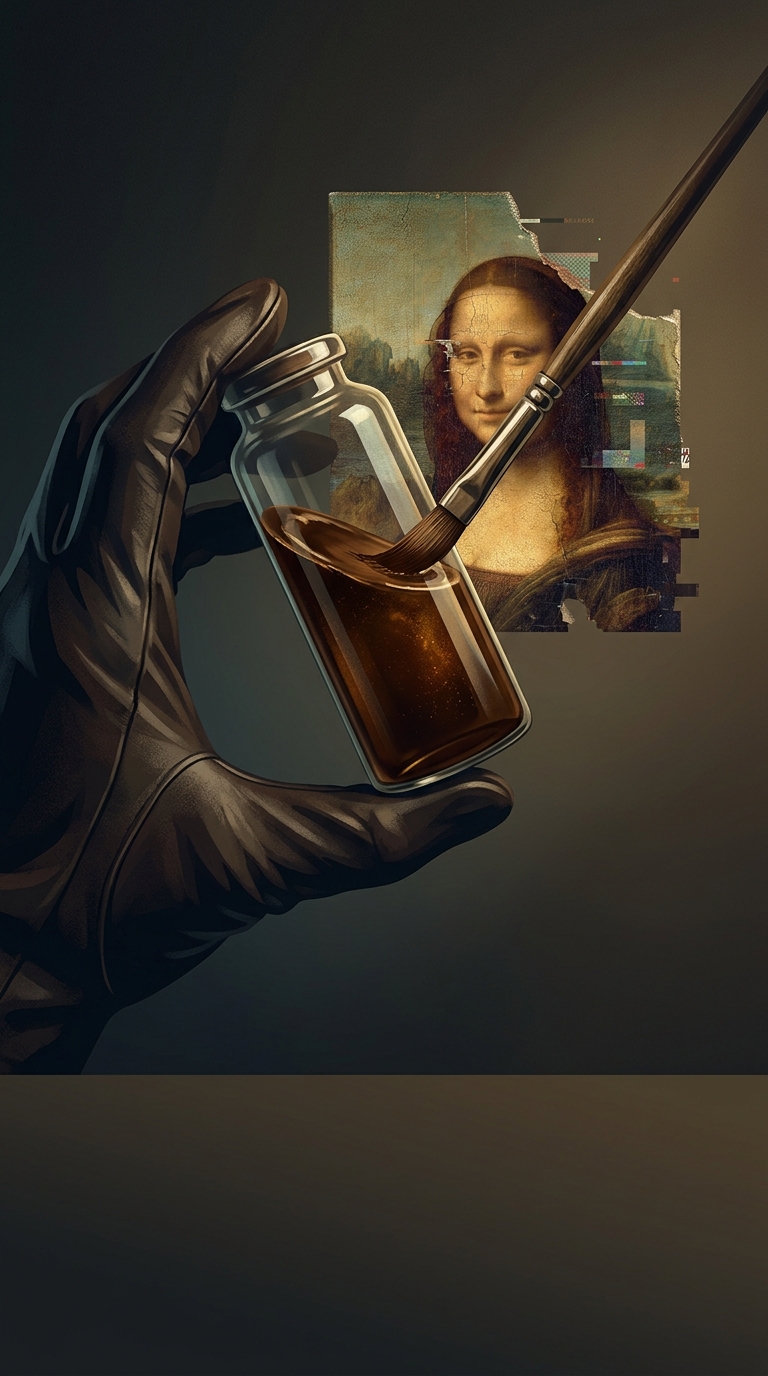
“Mummy Brown” Was Made From Mummified Remains
The pigment known as Mummy Brown was produced using material from Egyptian mummies—often ground-up human remains, though some accounts and products involved animal mummies. The remains were processed into a brown pigment that could be mixed with a binder and used in paint. Its color varied, but it was prized for a warm, transparent brown useful for shadows, glazes, and underpainting.
The practice grew out of a wider European trade in Egyptian antiquities and mummified remains. Mummies were taken from Egypt and sold in Europe for several purposes, including supposed medicinal uses and, eventually, as ingredients for artists’ materials. The pigment’s name was not merely a fanciful label: in at least some cases, its source was exactly what it suggested.
A Pigment With a Troubling Supply Chain
“Mummy Brown” was one option among many brown pigments, not a secret ingredient used by every famous painter. Its composition and quality could differ from one batch to another, and the name alone does not establish that a particular artwork contains human remains. Still, its existence shows how the European art market could turn distant cultural objects—and even bodies—into commodities.
As knowledge of the pigment’s origin spread and attitudes toward the use of human remains changed, the practice became harder to defend. The enduring shock is not just that artists could paint with mummy-derived color, but that the materials trade made a person’s preserved body available as an ordinary studio supply.