At Giverny, the garden was part of the studio
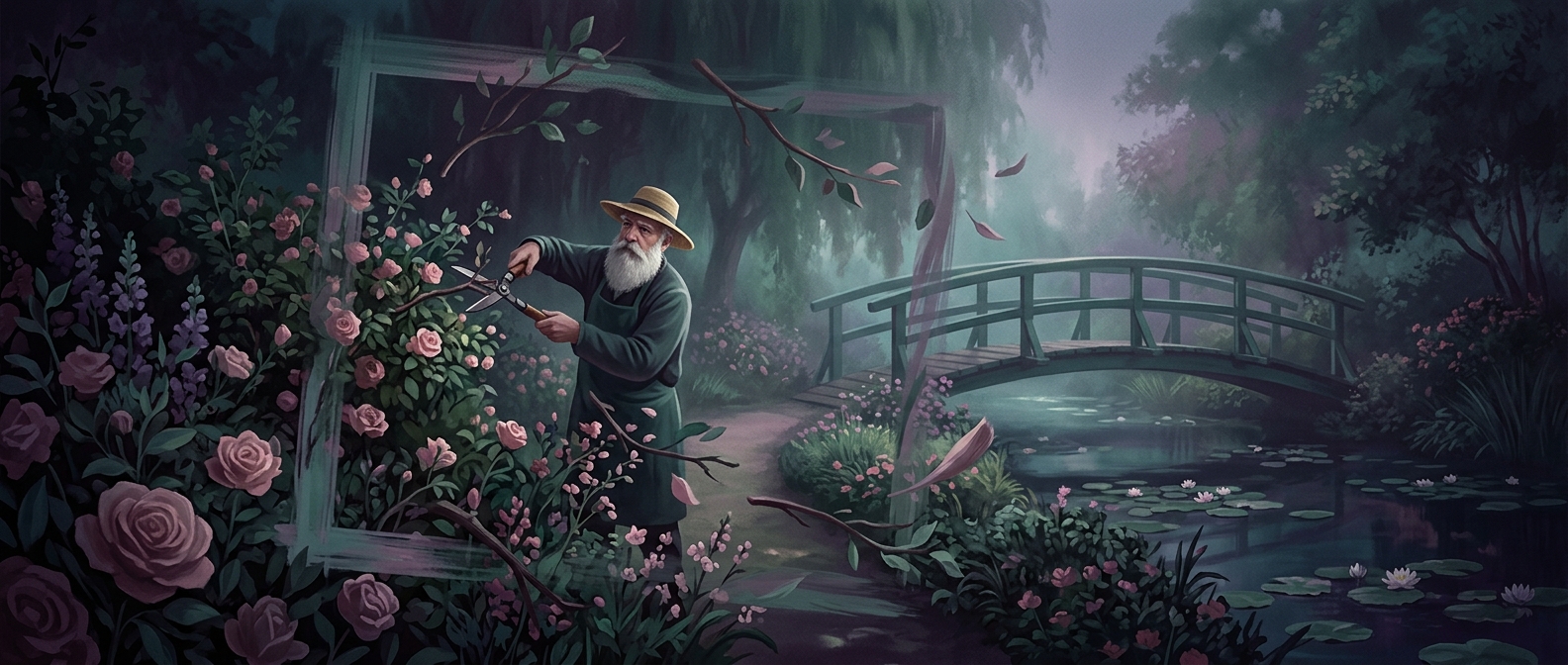
Monet’s garden was not simply scenery he happened to find. At his home in Giverny, he shaped paths, flower beds, and a pond into subjects he could return to and paint repeatedly. That gave him unusual control over what entered the view: a plant could be moved, a stem trimmed, and a reflection revisited as the light changed.
The garden’s layout mattered as much as its flowers. The pond, water lilies, and Japanese-style bridge offered recurring forms and reflections, but they did not stay visually fixed. Leaves spread, blooms faded, and branches altered the view. Gardening let Monet manage those changes rather than accept every wild growth as part of the scene.
A living composition, not a frozen one
Pruning is the act of cutting back selected growth. In an ornamental garden, it can direct a plant’s shape; for a painter, it can also clear a sightline or keep one form from crowding another. The care described at Giverny—down to removing dust from lily pads—shows how closely the cultivated pond was maintained as a visible subject.
That control did not make the garden identical to a finished painting. Water and light kept shifting, so the same arrangement could look different from one moment to the next. The garden supplied a framework; observation supplied the changing color and reflections. Monet’s landscape was both something he painted and something he continually composed in real life. A clipped branch could change not just the garden, but the picture available to him.