A street became a studio
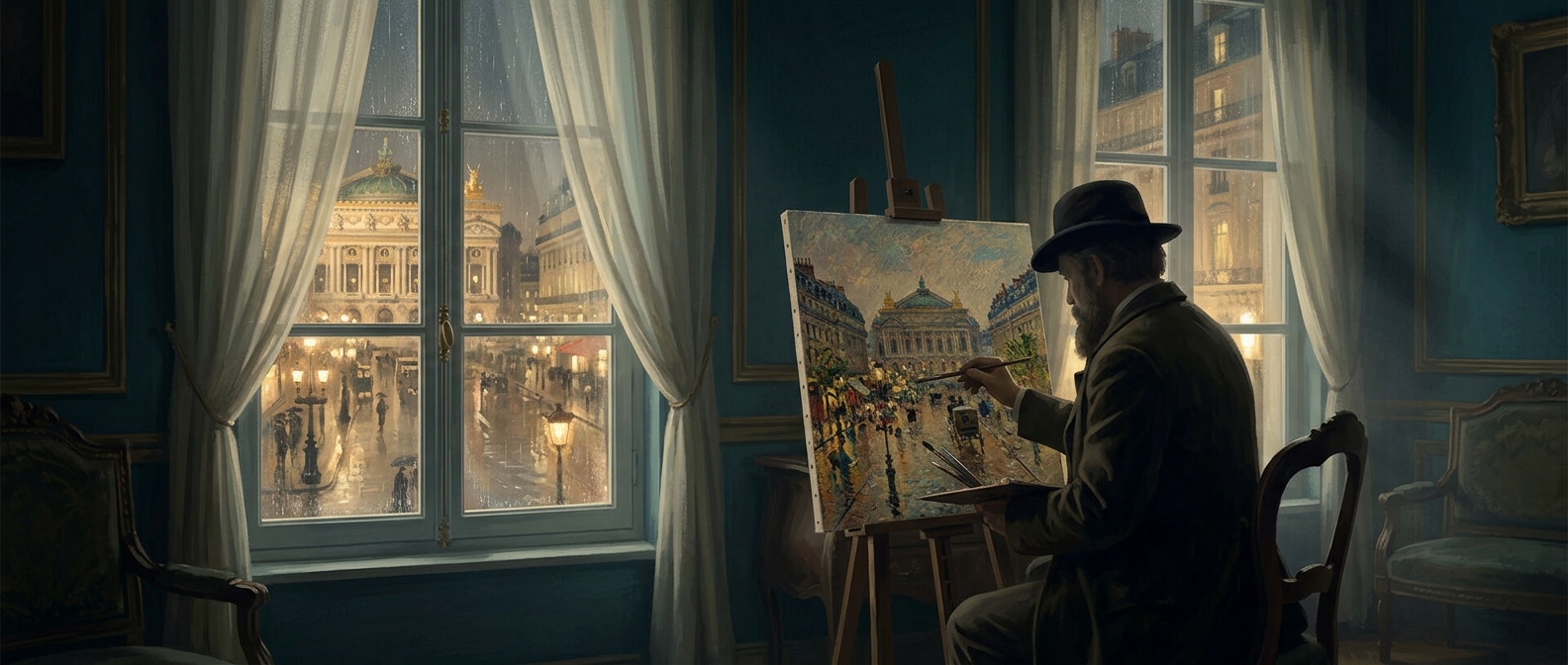
In the 1890s, Camille Pissarro repeatedly rented rooms overlooking busy Paris streets and painted what he could see from the windows. The arrangement answered a practical problem: recurring eye trouble made it difficult for him to work comfortably outdoors, where wind, dust, and changing conditions could aggravate his eyes.
A hotel room offered shelter without cutting him off from the city. From above the pavement, he could watch traffic, pedestrians, and shifting light while keeping his materials close at hand. The view was fixed, but the scene never was: carriages and people moved through it, and weather and daylight continually altered its colors and atmosphere.
Repetition made change visible
Pissarro returned to the same views in multiple paintings, including scenes of the Boulevard Montmartre. Repeating a subject let him treat the street almost like an experiment: the buildings stayed in place while the hour, season, and weather changed what the eye could see.
The elevated viewpoint also transformed an ordinary avenue into a pattern of rooftops, façades, and moving figures. The constraint of painting indoors became a way to study the city from a new angle. His Paris scenes preserve not just a recognizable street, but the fleeting conditions under which it appeared from his window.