How Tintoretto made speed look like a shortcut
In 16th-century Venice, a large painting was not simply a bigger version of a small one. The artist had to make figures, gestures, and dramatic action legible across a broad surface—and often from a particular viewpoint in a church or public building. Tintoretto’s startling pace challenged the usual visible signs of labor: the layers of careful drawing and adjustment that viewers and competitors expected to see.
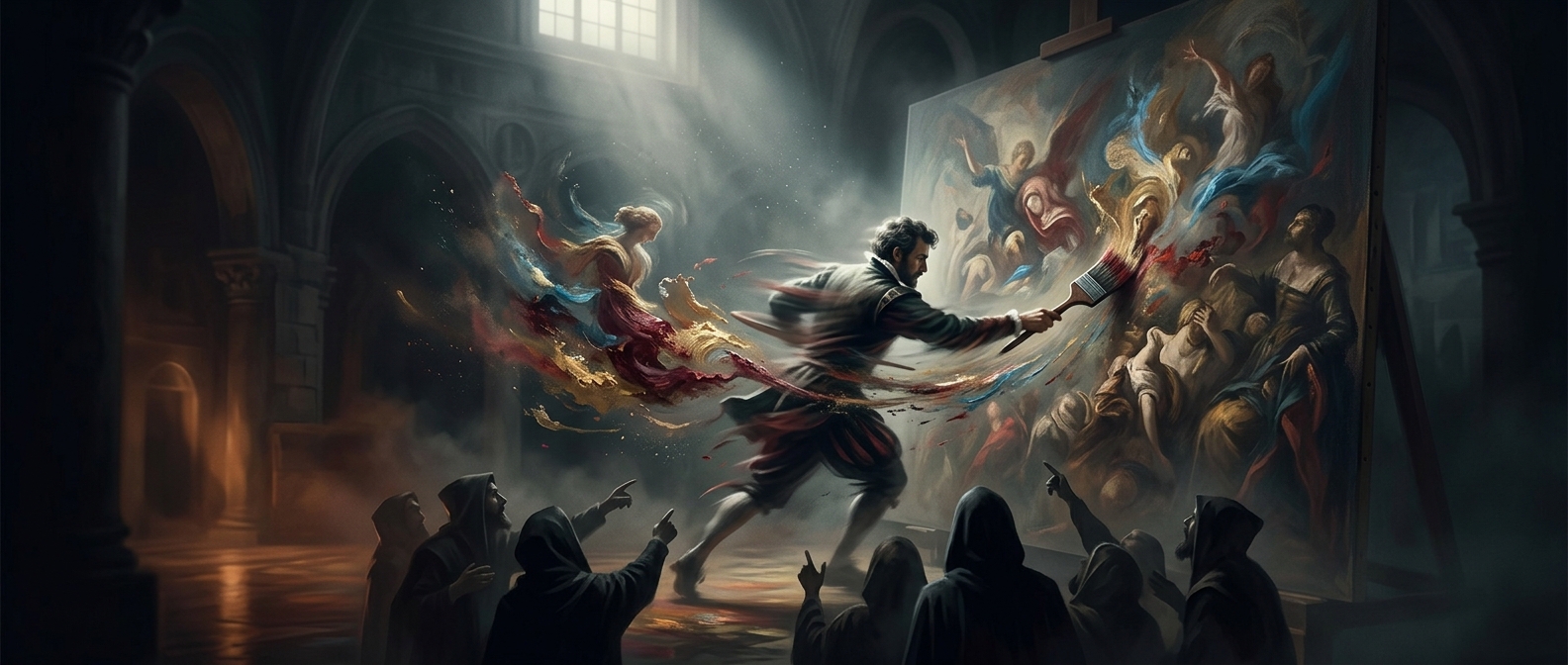
His speed did not mean he worked without preparation. Tintoretto was known for planning complex scenes with small models, arranging figures and lighting before carrying the composition onto the canvas. That let him settle major decisions early. Once painting, he could use forceful, economical strokes rather than slowly describing every form. What looked improvised at a glance could rest on a carefully organized design.
Why rivals saw an unfair advantage
Painters competed for commissions, and a finished work was also a public demonstration of skill. If Tintoretto could deliver a large, ambitious canvas while others were still developing their designs, rivals had reason to wonder whether he had skipped steps—or whether the appearance of speed concealed methods they could not see. The suspicion was about more than working hours: it challenged the idea that painstaking visible labor was the clearest proof of artistic merit.
Tintoretto’s approach helped make his paintings feel urgent. Strong contrasts and sweeping movement carry the eye quickly through a scene, while less polished passages can seem to preserve the energy of the act of painting. The speed was not merely a way to finish sooner; it became part of the effect. His rivals saw a possible shortcut, but viewers could see a different kind of control: preparation hidden behind a painting that seemed to arrive in a rush.