Making images in the dark
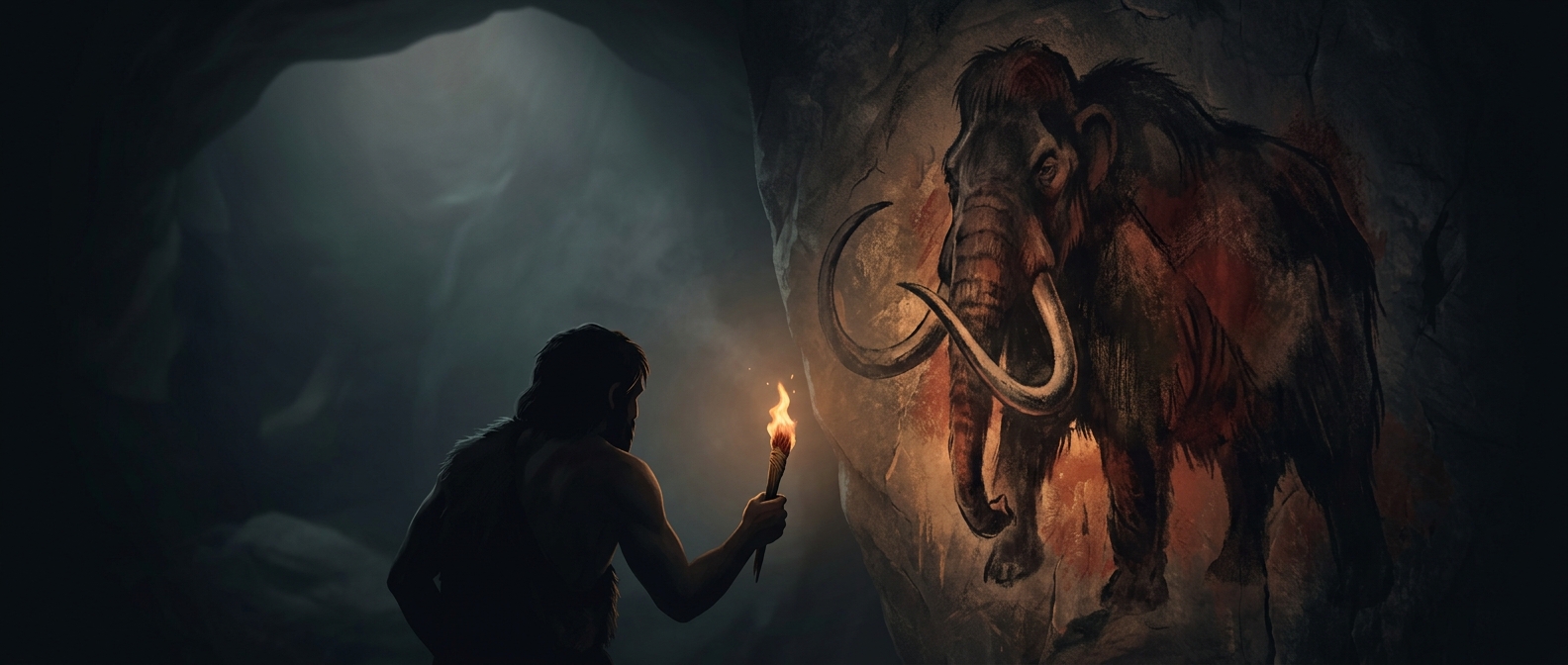
Far inside a limestone cave, an artist had to bring the means of seeing as well as the means of painting. A small lamp fueled by animal fat could keep a flame burning, but its wavering light revealed only a patch of wall at a time. The work therefore unfolded in close quarters: find a surface, light it, and apply pigment before moving on.
Crushed minerals supplied durable colors. Artists could spread pigment with their fingers or other simple tools, and the cave wall itself helped shape the image: a ridge or bulge could become the shoulder or flank of an animal. The finished figures were not simply scenes glimpsed from everyday life. They were carefully made images in places where daylight could not reach.
Why go so far underground?
Reaching those walls took effort. Visitors had to navigate uneven passages while carrying light and materials, and the darkness made every step dependent on the lamp. That setting tells us the paintings were made deliberately, but it does not reveal exactly why. They may have held different meanings for the people who made or encountered them; the images alone cannot settle the question.
What they do show is a striking combination of practical skill and attention. Woolly rhinos and cave bears were rendered in a world where the artist could see only by firelight—and where a flame’s movement could make the painted animals seem to shift as the viewer moved through the cave.