A Room That Could Be Rearranged
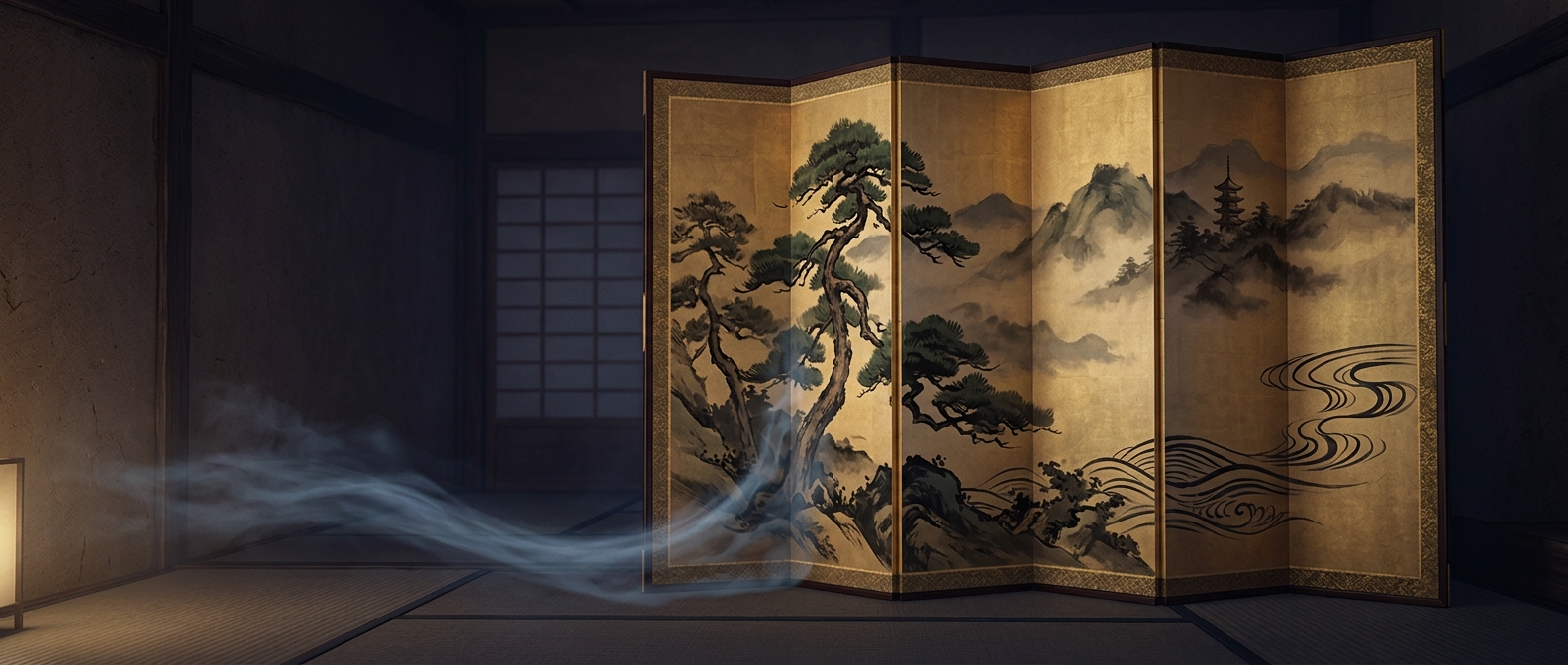
A byōbu was useful because it could be moved when a room’s needs changed. Its hinged panels folded inward for storage or opened to screen off part of a larger space. Unlike a permanent wall, it could shape a temporary boundary without altering the building. Set near an opening or across a breezy part of a room, the screen also interrupted the flow of air. It could soften a draft, though it was not an airtight barrier.
That flexibility mattered in interiors where one space might serve different purposes at different times. A screen could provide privacy, shelter a seated area, or mark a setting for a gathering, then be folded away when the arrangement changed.
Paintings Made for a Moving Surface
The panels offered artists a broad surface, but one divided by hinges. Painters could compose a scene so that it appeared to continue from panel to panel when the screen was opened. Yet the folds also gave the image a physical rhythm: a landscape or procession bent slightly as the panels were angled, and its appearance shifted when the screen was repositioned.
The same object therefore did two jobs. It adjusted the room’s boundaries and airflow, while turning that temporary boundary into a large, changeable artwork. A byōbu was not simply a picture placed in a room; it helped determine how the room was used and what people saw within it.