A working studio, not a protected gallery
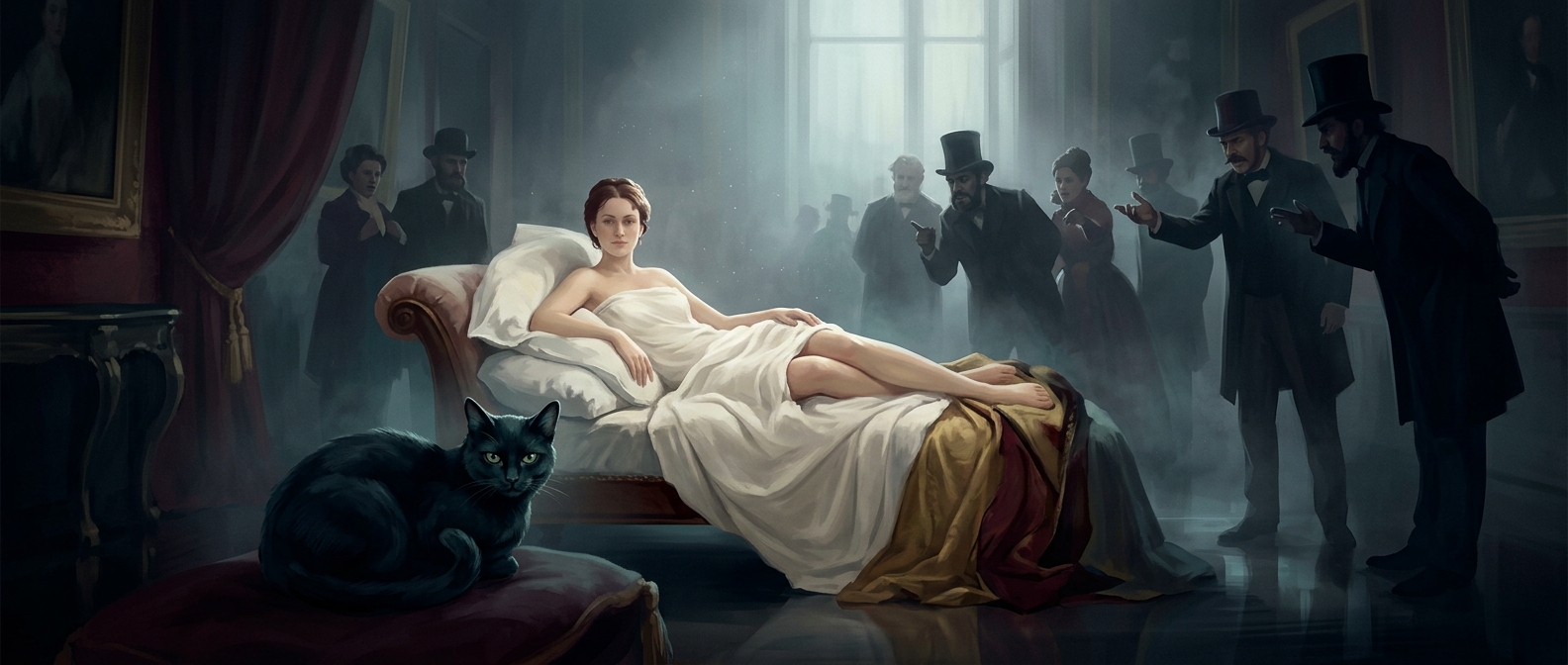
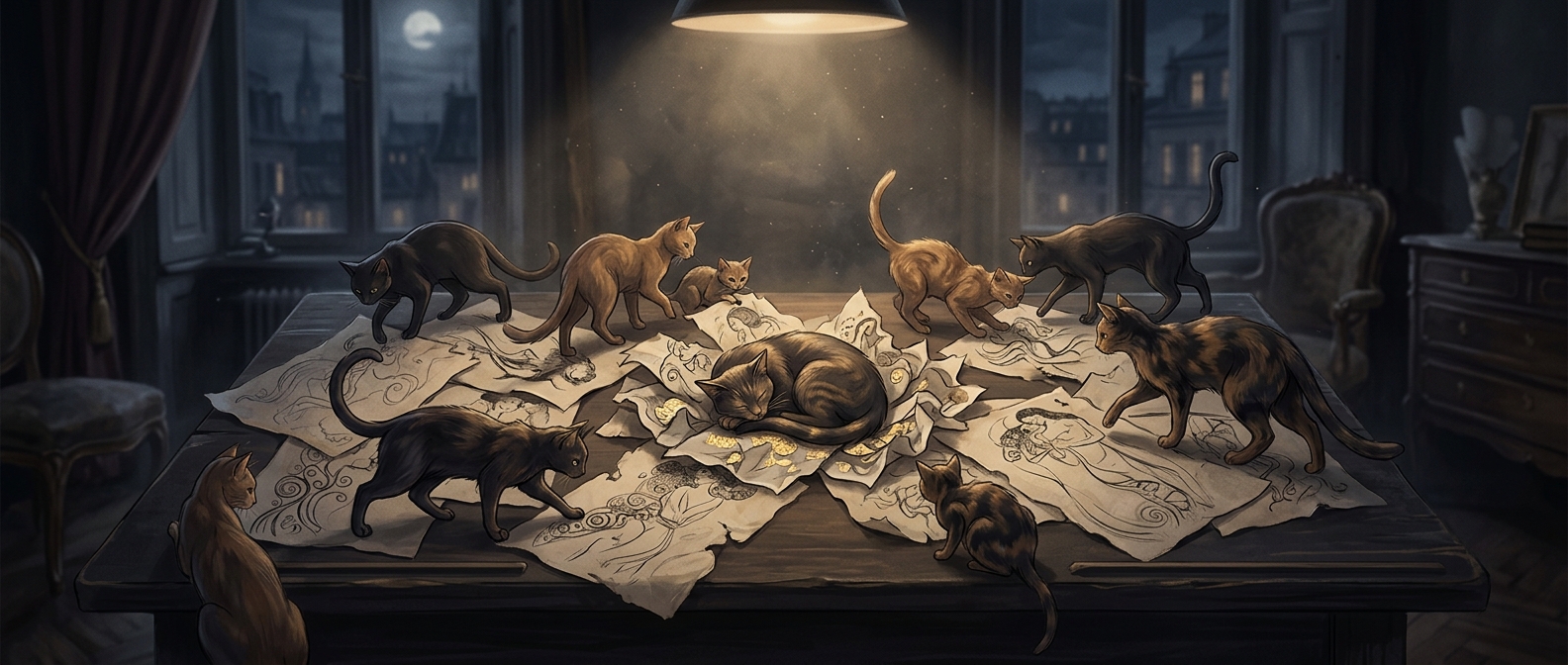
Gustav Klimt’s studio was a place where art was being made, not a room arranged to preserve finished pictures. Sketches and painting materials shared space with the stray cats he allowed to roam there. That made the studio’s disorder more than a matter of appearance: work in progress could be exposed to animals moving freely through the room.
The cats could damage what Klimt was making, yet he did not keep them away. The contrast is striking because we tend to imagine important art surrounded by careful protection. In a working studio, however, a drawing or painting was part of the everyday surroundings—and vulnerable to them.
The cost of letting them roam
A cat’s presence did not have to leave a dramatic mark to matter. Simply allowing animals among sketches and paints meant accepting some risk to the work. The anecdote offers a glimpse of a studio where artistic labor and ordinary life overlapped, rather than being kept in separate, carefully controlled worlds.
It does not tell us exactly why Klimt made that choice. What it does show is the tradeoff: the cats had room to roam, while the artwork had less protection than the masterpieces we now associate with his name.