A village funeral on the scale of a monument
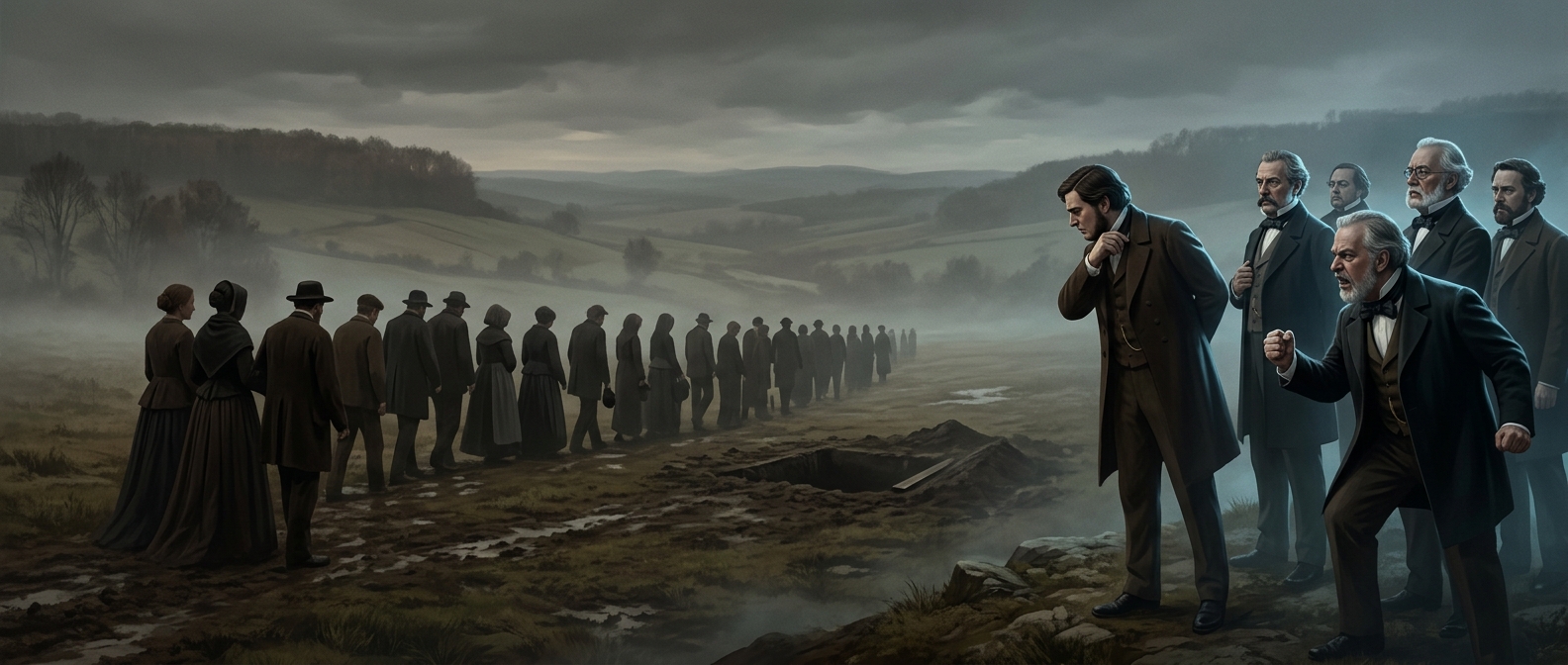
In 1849–50, Gustave Courbet painted A Burial at Ornans, a vast canvas showing a funeral in his hometown in eastern France. Its scale mattered as much as its subject. Large paintings had traditionally been associated with history, religion, and exceptional people; Courbet gave that visual importance to a local ceremony and the ordinary people who gathered around it.
The scene offers no obvious hero. Mourners stand in a long, uneven line, dressed in the clothes of their time. A priest and other figures connected to the burial appear among townspeople whose faces and postures resist the idealized uniformity of conventional grand painting. The event is solemn, but the composition does not turn it into a neatly staged lesson about virtue or salvation.
Why the choice unsettled viewers
Courbet’s approach challenged a hierarchy built into the art world: some subjects were considered worthy of monumental treatment, while everyday life was expected to stay small or picturesque. By making a provincial funeral occupy an immense canvas, he argued through the painting itself that contemporary people and events deserved the attention once reserved for sacred or heroic stories.
That did not mean everyone had to admire the result. The crowd could seem deliberately unidealized, and the lack of a single elevated protagonist made the painting harder to read by familiar standards. Its challenge was not simply that it showed a funeral, but that it treated this ordinary funeral as a subject of public consequence.
The painting helped make Realism—a movement that turned toward contemporary life rather than idealized subjects—a conspicuous artistic position. Its lasting provocation is built into its proportions: the villagers are not background figures around a hero. They are the reason the enormous canvas exists.