A mosquito turned into an enemy soldier
During World War II, malaria was a practical threat to troops serving in mosquito-infested regions. The disease could leave a soldier too sick to fight, so preventing it mattered to military operations as well as individual health. Taking anti-malaria pills was one part of that effort—but a pill works only if people actually take it.
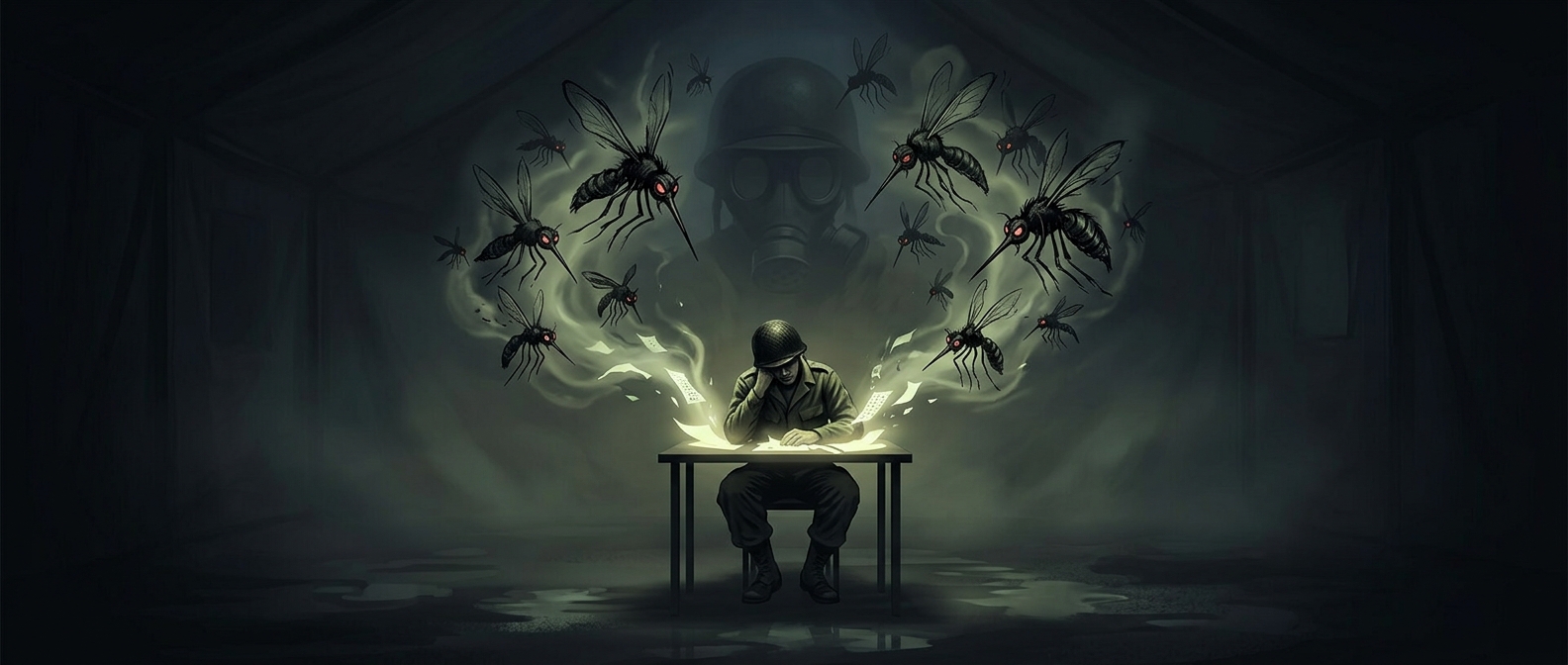
The Army’s cartoon “Ann D.N.O. Mosquito,” made by Theodor Geisel before he became famous as Dr. Seuss, gave that routine a memorable antagonist. The mosquito was not just an irritating insect: it was cast as a bloodthirsty enemy, making the danger of malaria easier to picture than an invisible infection.
Making a daily dose feel urgent
The cartoon’s logic was simple: a missed dose could leave a soldier more vulnerable to illness, so skipping the pill was a risky gamble. Turning the mosquito into a villain connected an ordinary act—taking medicine—to the larger wartime struggle. Rather than relying only on instructions, the Army used caricature and menace to make the warning stick.
That approach suited a mass audience of servicemen who had to absorb practical health advice amid the demands of military life. The cartoon made prevention feel immediate: the threat could be lurking nearby, and the small pill was part of the defense. Its frightening tone was the point, not a departure from Geisel’s later talent for playful drawings. In wartime, the same visual imagination could make a health lesson hard to forget.