A finished painting was not always finished for Bonnard
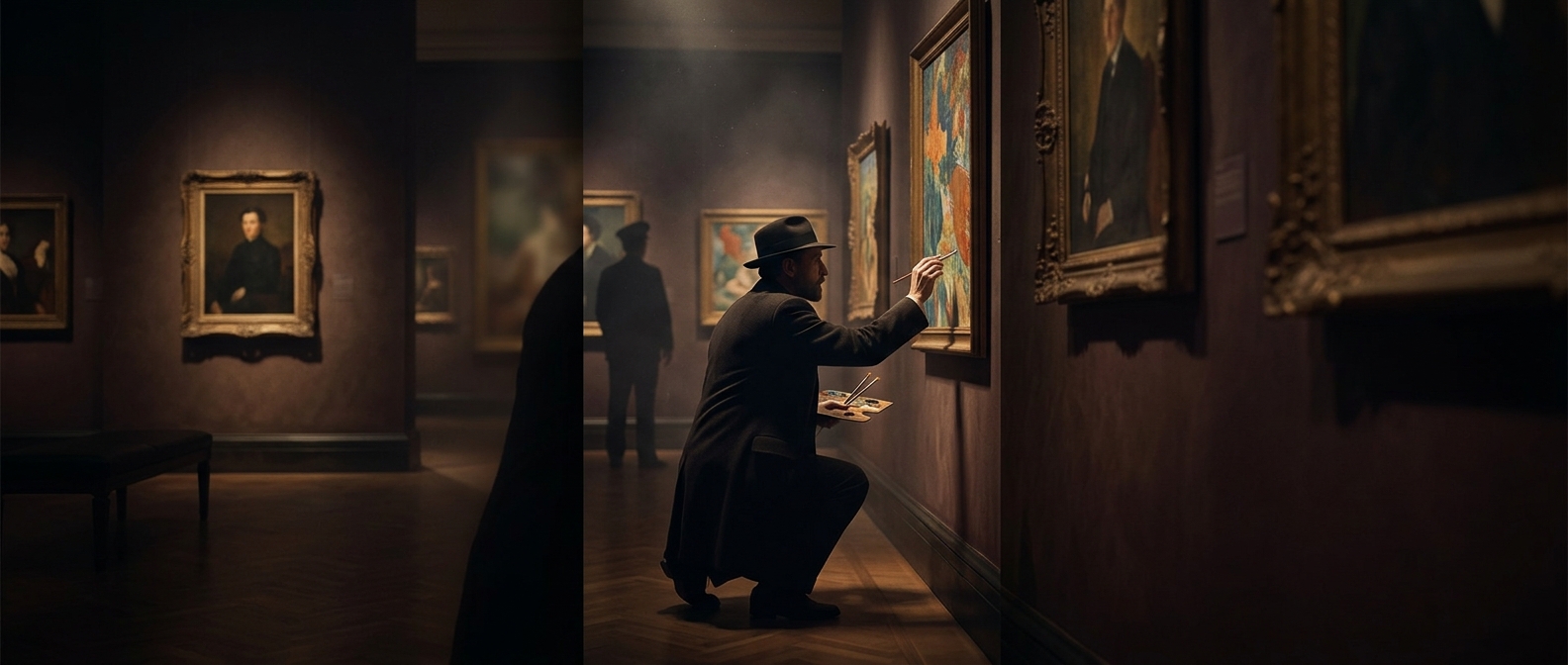
Pierre Bonnard’s museum visits exposed a tension between two ideas of an artwork: a completed object, ready for display, and a work an artist might still feel compelled to change. Once a painting left his studio, Bonnard apparently did not always accept the museum’s decision that it was done. He returned with a small brush and added touches when he could.
That habit fits a painter deeply concerned with how color and light read across an entire scene. A small adjustment could alter the balance between neighboring colors or make a passage sit differently within the composition. What looked settled on a museum wall could still seem wrong to the person who had made it.
The museum wall became part of the studio
The covert visits turned a private artistic judgment into a practical problem. Museums treat paintings as objects to preserve; an artist making a new mark changes the object the institution is responsible for. Bonnard’s brush therefore crossed a boundary as well as a varnished surface: the painting belonged to a public collection, but he still regarded it as his work to revise.
The episode is memorable because it makes artistic completion feel less like a date on a label than a decision someone has to enforce. For Bonnard, apparently, the last word could still be a tiny stroke made after the guards looked away.