How three operators animate one Bunraku puppet
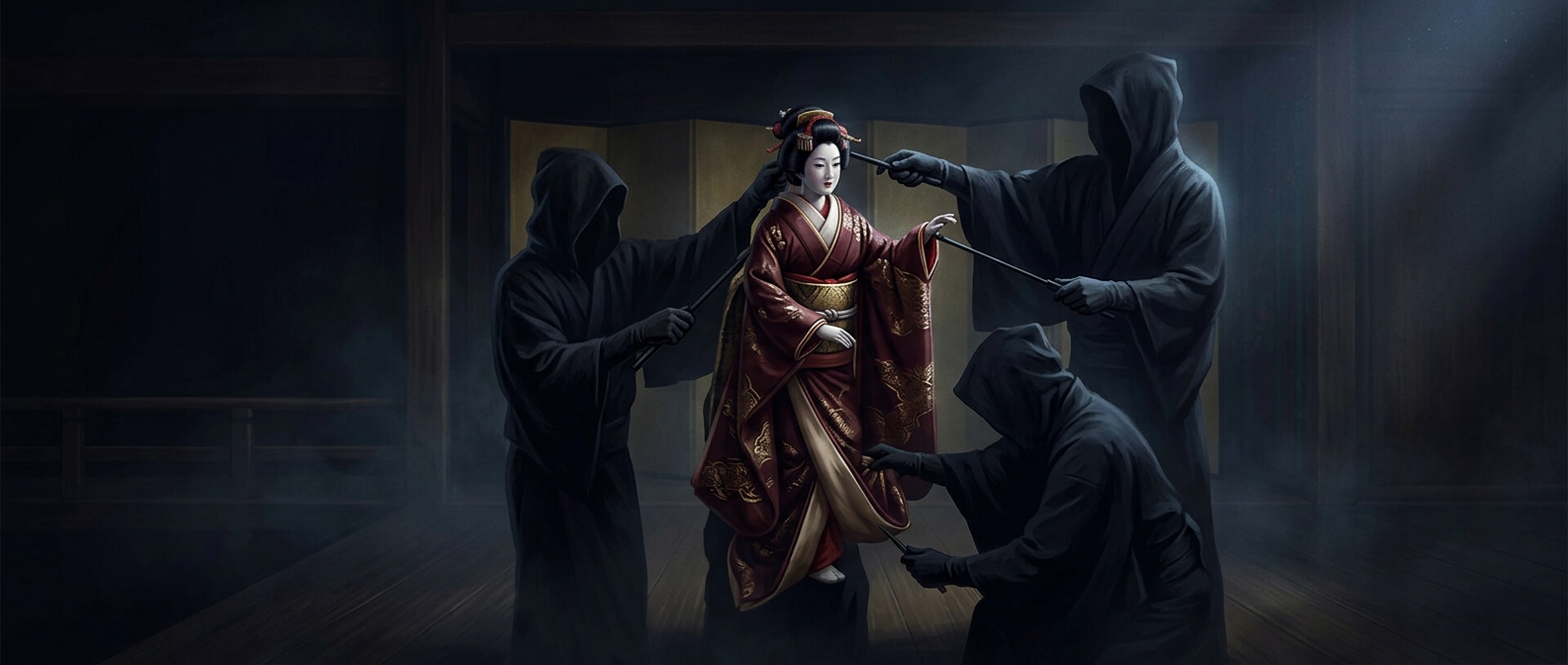
A Bunraku puppet is not a small figure manipulated from above by strings. It is a substantial, articulated puppet whose head and limbs need separate, precise movements. For a major character, three puppeteers share control: the lead operates the head and right arm, a second works the left arm, and a third moves the feet. The arrangement gives the puppet enough independent control to gesture, turn, and walk without asking one person to manage every joint at once.
A hierarchy built into the movement
The lead puppeteer, or omozukai, is responsible for the character’s most expressive actions, especially the face and right hand. The other two operators are known as the hidarizukai (left-hand operator) and ashizukai (foot operator). Their roles are distinct, but the movements must read as a single intention: a turn of the head should lead naturally into a gesture or a step, rather than look like three separate actions.
That coordination is learned over time. Traditionally, a performer begins with the feet, advances to the left arm, and only later takes the lead role. The progression turns basic movement into practice in timing and responsiveness: each operator must follow the same character’s action while letting the lead’s choices shape the whole figure.
The visible team is part of the form
Bunraku does not depend on pretending that the operators are absent. They are visible onstage, often dressed in black, while the audience’s attention follows the puppet and the story. The effect comes from coordinated movement and theatrical convention, not from hiding every hand. Dividing the work makes the puppet’s gestures more controlled—and makes the unity of the character something the performers create together, moment by moment.