A flat figure built for a moving shadow
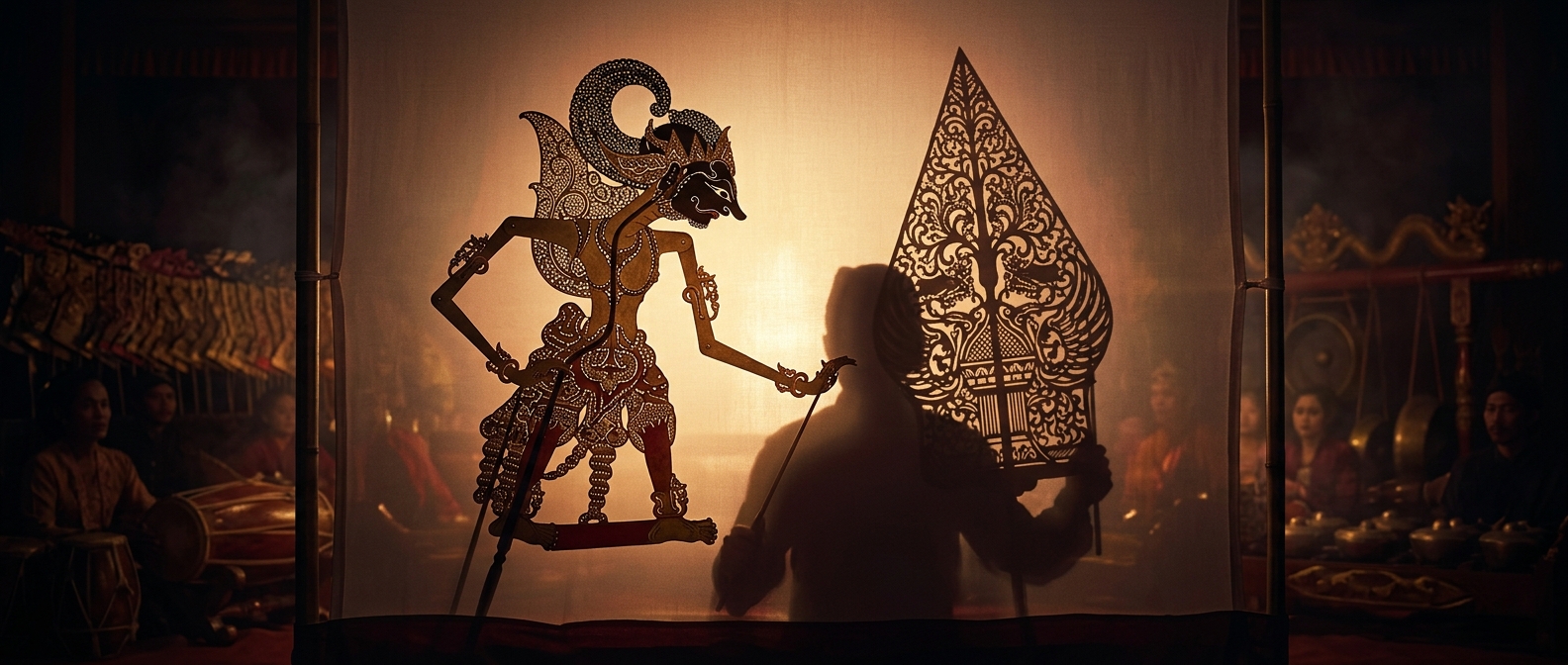
In Indonesian wayang kulit—literally, “leather puppetry”—the figure’s flatness is part of the design. A puppeteer, called a dalang, holds each carved hide figure against a lit screen and moves it with slender rods. The audience sees the shadow, not a miniature body viewed from different angles. A figure’s outline and position do the work that depth and perspective would do in other kinds of puppetry.
The hide is pierced with fine patterns rather than left as a solid silhouette. Light passing through those openings makes clothing, jewelry, and facial features legible as bright marks within the darker shape. The rods also let the dalang move a figure’s arms independently, giving a still-flat body gestures that can suggest greeting, argument, or combat.
One screen, two kinds of performance
The screen separates the shadow-play from the visible craft behind it. On the audience side, characters appear as sharply defined images; on the other, the dalang handles the figures and controls their entrances, exits, and movement. The same object is therefore both a carefully worked piece of leather and a tool for making a changing image.
That constraint gives the performance its distinctive visual language. Instead of turning a puppet to show its back or profile, the dalang communicates through silhouette, pose, spacing, and motion. A tiny shift can change a character’s attitude, while a procession of flat figures can turn the screen into a whole dramatic world—without any of them ever becoming three-dimensional.