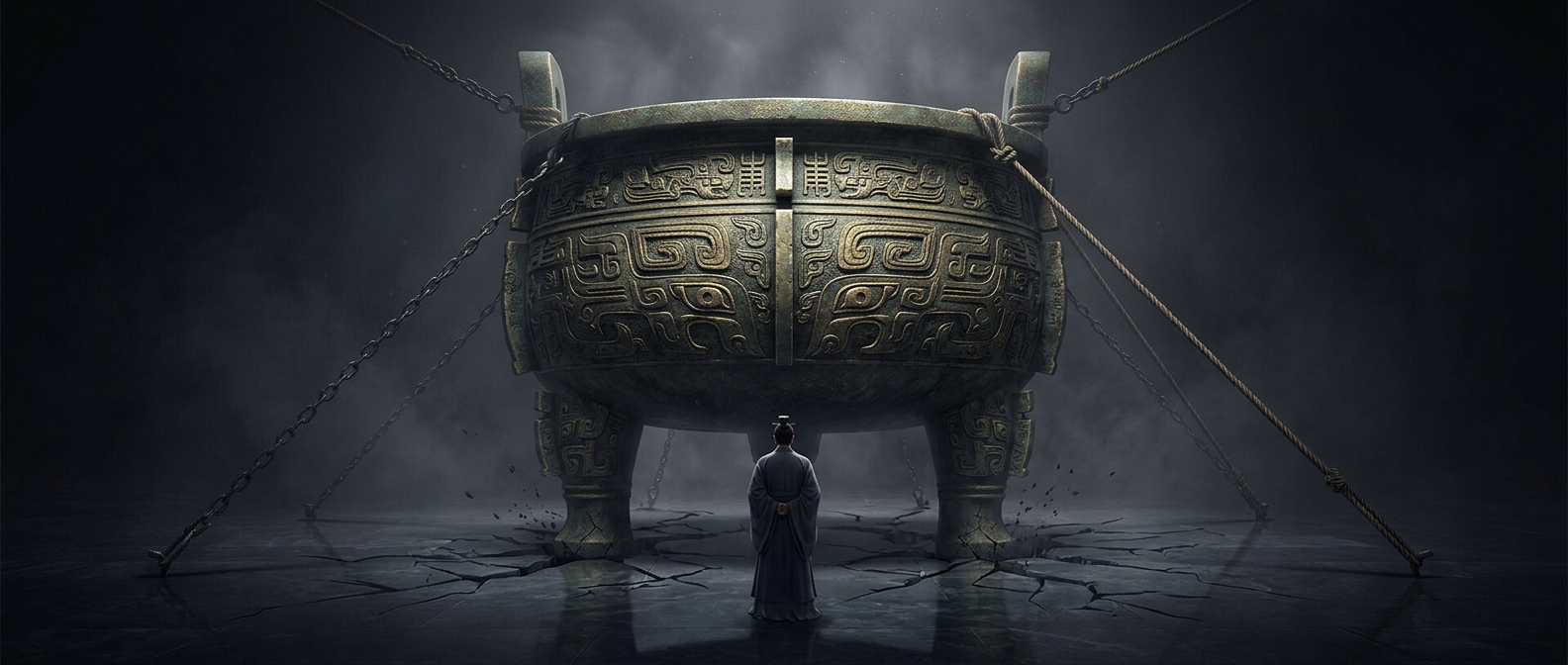
A bronze vessel built to command a room
An enormous ceremonial cauldron was more than an oversized cooking pot. In ancient China, bronze vessels such as the ding were used in formal rites, including offerings connected with ancestors. Their scale and elaborate surfaces made them visible signs of rank: a powerful vessel suggested access to the materials and skilled labor needed to produce it.
Casting demanded coordination
Many ancient Chinese bronzes were made with piece-mold casting. Craftspeople shaped a clay model, formed clay sections around it, then removed the model so molten bronze could be poured into the space left behind. For a very large vessel, the process called for far more than a talented metalworker: bronze had to be prepared and poured, molds had to be made and assembled, and the work had to be coordinated at a demanding scale.
The finished cauldron presented a different challenge. Weighing thousands of pounds, it could not simply be carried by a few people. Moving it required a coordinated team of laborers, with many hands applying force together and keeping the load under control. A short relocation became a planned operation.
Weight made status tangible
That difficulty mattered. A monumental vessel announced its importance not only through its decoration, but through the resources embodied in its making and handling. Its mass also tied it to a particular place: bringing it into position took collective effort, and moving it again took the same. The cauldron’s weight was therefore part of its public meaning—a ritual object whose presence made authority hard to overlook.