A studio that kept the work in view
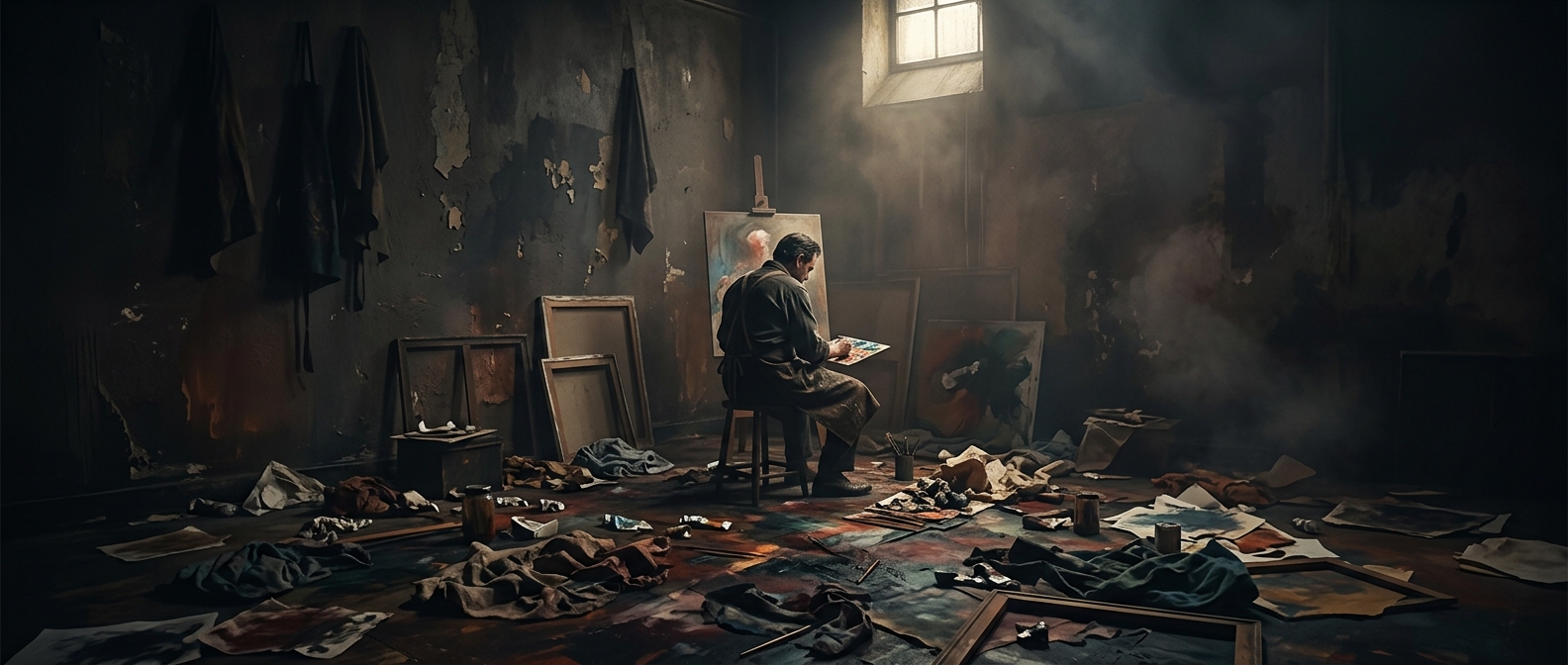
For Francis Bacon, the studio’s disorder was not simply a failure to tidy up. He believed the surrounding chaos helped inspire his painting. The room held the leftovers of making—used materials, damaged books, stained cloth—and left the business of painting physically present rather than tucked away between sessions.
That kind of environment can matter because artists do not work only on a blank canvas. They respond to what is around them: tools within reach, scraps that recall earlier attempts, and objects that interrupt a settled routine. In Bacon’s case, the studio’s accumulated clutter fit his reliance on an unsettled working atmosphere. The mess was part of the conditions in which he thought and worked, not just background to the finished pictures.
Disorder as a working condition
There is a useful distinction between chaos that obstructs work and disorder that feeds it. A pile of materials can make a studio harder to navigate, but it can also keep past experiments close at hand. Bacon’s belief was that this surrounding disorder had creative value; it does not mean every artist needs a messy room, or that the rubbish itself dictated what he painted.
The studio therefore offers a glimpse of process that a finished canvas cannot: painting took place amid residue, interruptions, and unfinished business. Its striking implication is that, for Bacon, inspiration was not confined to the moment of looking at a blank surface. It could come from living inside the remains of work already done.