A familiar pose, with an unsettling change
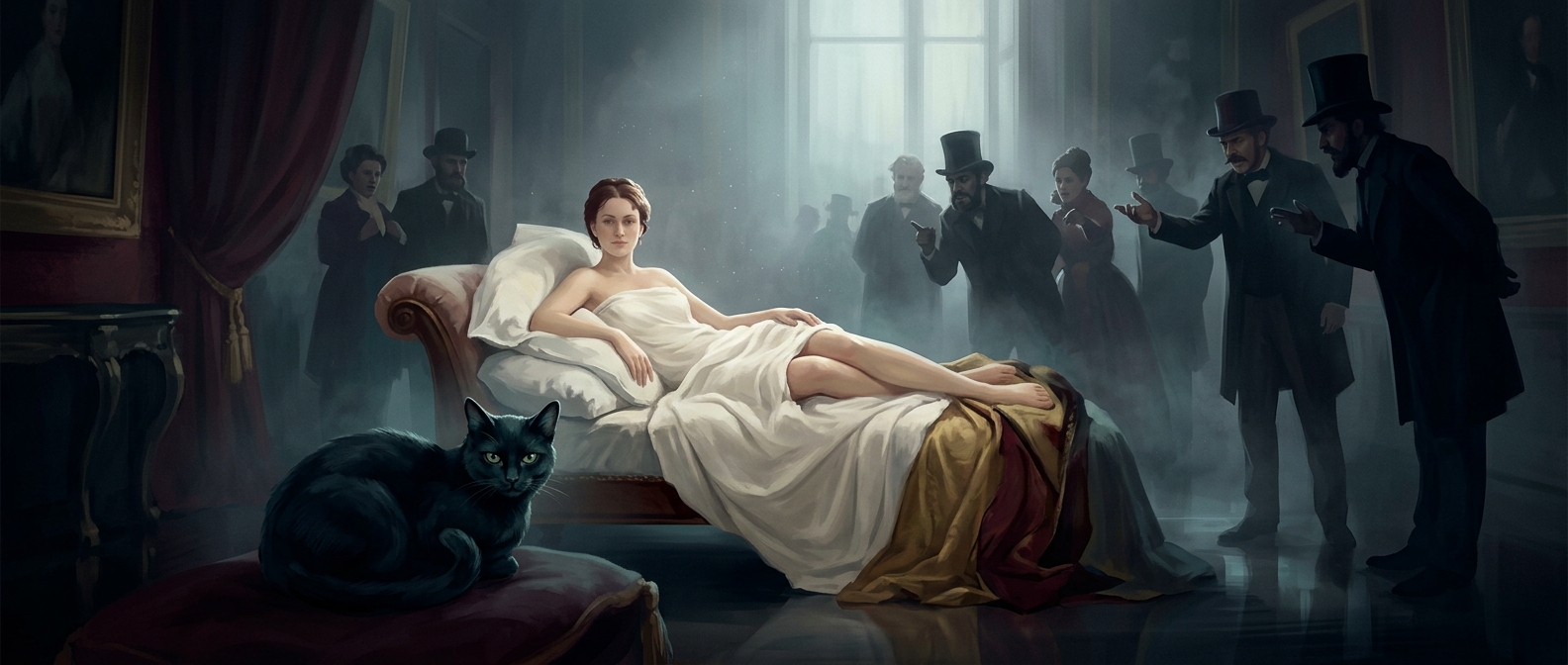
In Olympia, Manet borrowed the reclining pose of earlier nudes, most famously Titian’s Venus of Urbino. But he changed the scene’s signals. Where Titian placed a small dog at the woman’s feet—a traditional emblem of fidelity—Manet put a black cat, its back arched and tail raised.
That swap helped make the image feel less like a timeless myth and more like a charged encounter in contemporary life. The woman looks directly at the viewer; a maid brings her flowers, suggesting a visitor has sent them. The title Olympia was also associated with the world of fashionable courtesans.
Why the cat drew attention
The cat did not offer the reassuring symbolism of a loyal dog. Its alert, tense posture made it an active presence in the bedroom, while black cats carried suggestive associations with nighttime and sexuality. The animal therefore sharpened the painting’s erotic charge without turning the scene into a conventional romantic fantasy.
Manet’s choices confronted viewers with a woman who seemed aware of being looked at—and with the social reality implied by the flowers and setting. The cat became an easy detail for critics to seize on, but it was part of a broader challenge to respectable expectations about how a nude should behave and what kind of story a painting should tell.
A small detail with a large effect
The cat’s importance lies partly in its contrast with the old artistic formula: the familiar pose remained, but its comforting symbols were gone. That made the animal memorable, and helped critics fixate on it as they argued over a painting that refused to keep its subject safely in the realm of myth.