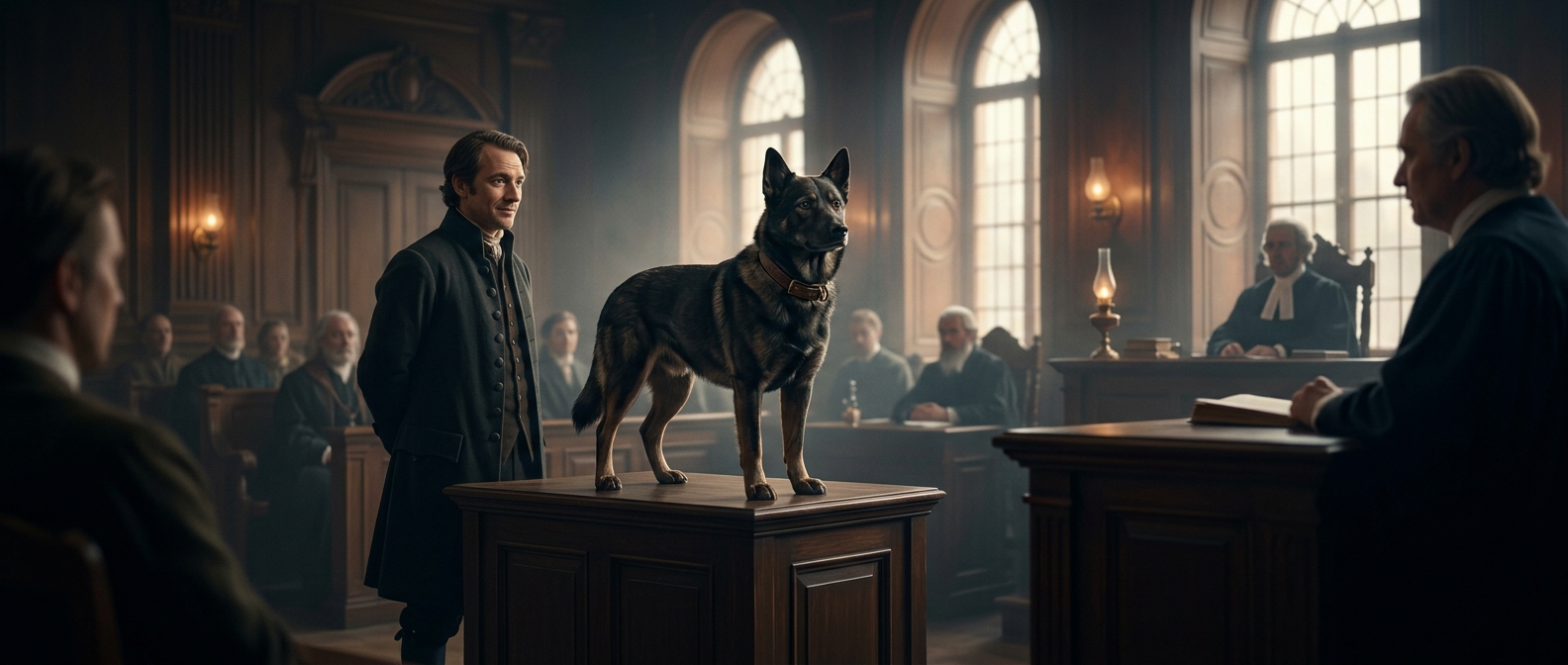
A punishment aimed at the audience
A public scolding could not teach the dog a rule it was unable to understand. Its purpose was symbolic: officials performed the judgment where townspeople could see it. The square turned a private ruling into a public demonstration that the court had responded to the offense.
That distinction matters. The dog was the named defendant, but the sentence’s meaning depended on human spectators. They could recognize the ritual of reprimand even if the animal could not. The punishment therefore worked less through the defendant’s remorse than through the community’s reaction to a visible act of authority.
When the ceremony mattered more than the penalty
By ordering officials to deliver the scolding rather than impose a punishment that would kill the dog, the judge chose a sentence whose force was theatrical. It gave the court a way to mark the case as settled while making the decision—and its limits—visible to the town.
The oddity is the point: the dog could not understand its sentence, but the crowd could understand what the sentence was meant to show.