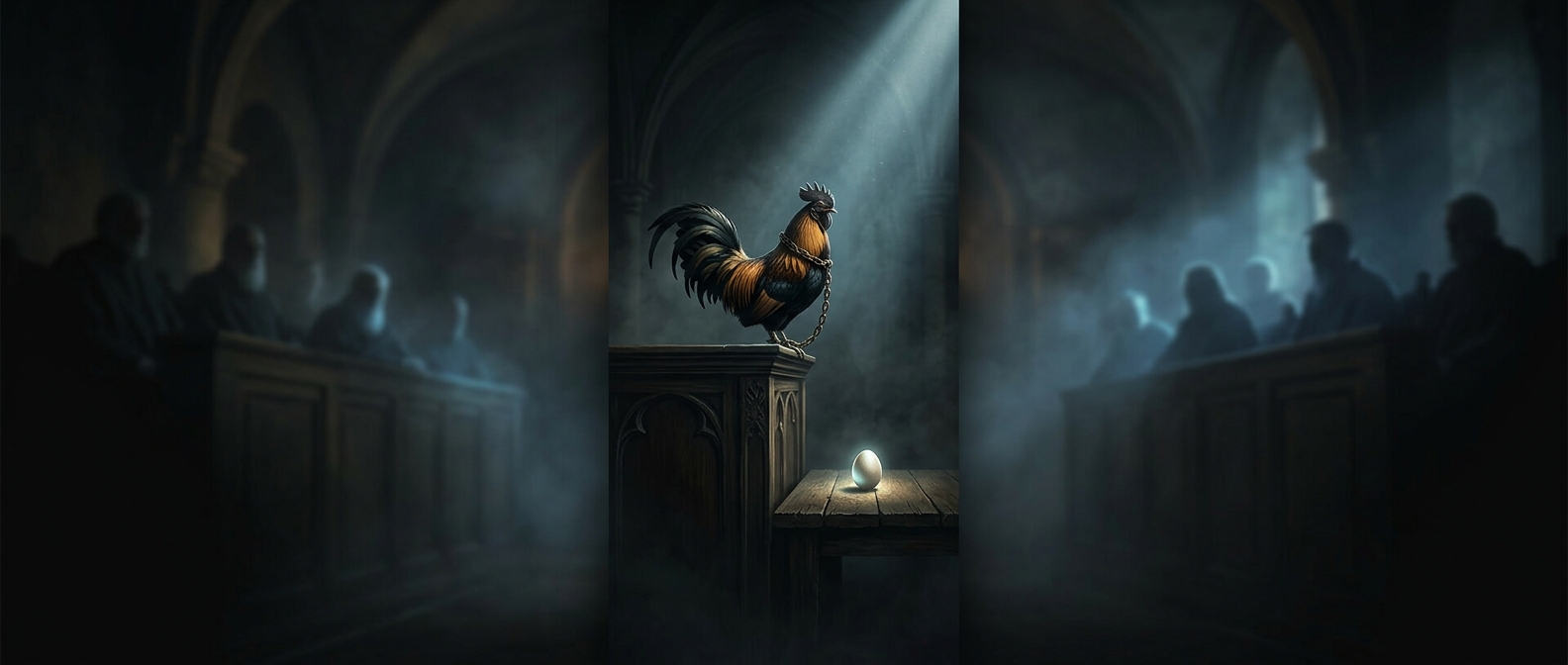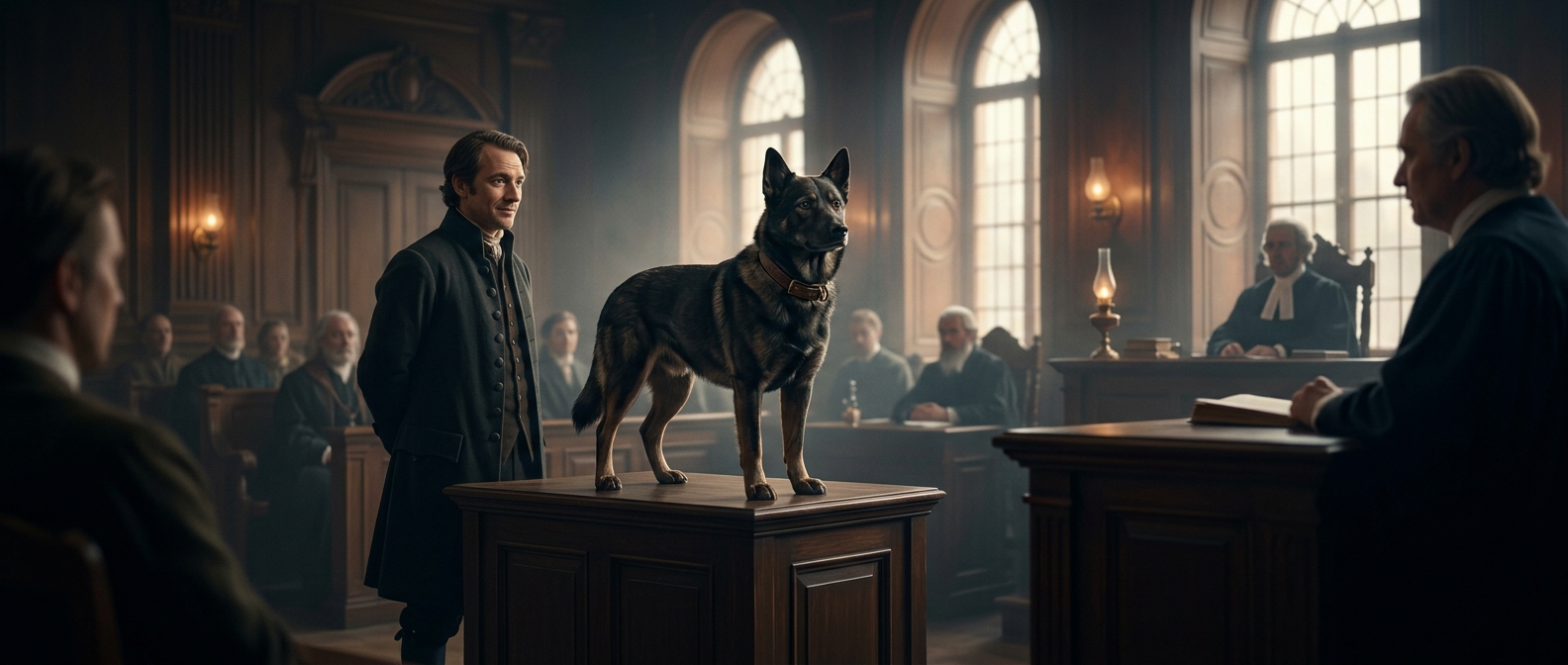
When a Bark Became Testimony
The unusual step in this case was not merely that people disliked a noisy dog. Witnesses said its barks sounded like human curses, and those claims were treated seriously enough to bring the animal before a court. That turned an ordinary sound into a question of evidence: what had the witnesses actually heard, and what did it mean?
A bark has no words on its own. People can nevertheless hear familiar speech in ambiguous sounds, especially when they expect to hear it. In court, the witnesses’ interpretation gave the noise a meaning the dog could not explain or deny.
A Legal Problem With Four Legs
In early modern Europe, animals sometimes appeared in formal legal proceedings. Such cases reflected a world in which courts could treat an animal’s harmful conduct as a public offense, rather than limiting legal action to the person who owned it. The dog’s alleged curses made the problem especially strange: the charge depended on hearing human language in an animal’s voice.
That did not make the barking proof of an intention to curse. It shows how testimony could shape a legal case—and how far a court might follow that testimony. The striking detail is that the dog’s sound became a matter for judgment before anyone could ask the accused what it meant.