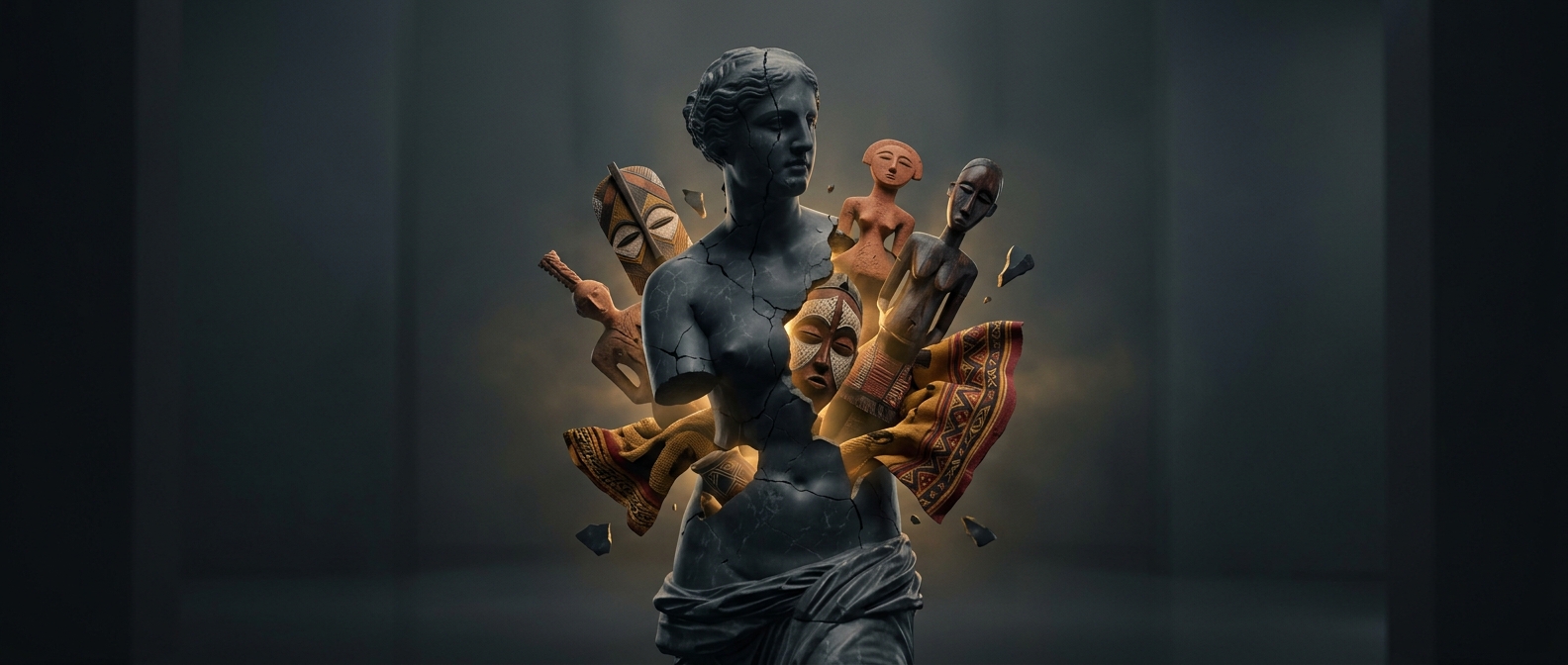
Building a visual language after independence
Political independence did not automatically change the way African art was judged. European schools and galleries had long treated European styles as the standard, while African sculpture, textiles, and symbols were often classified as craft or folklore. For Senegalese artists, the challenge was to make work that could speak to a modern nation without measuring its worth by those inherited categories.
Tradition became material, not a template
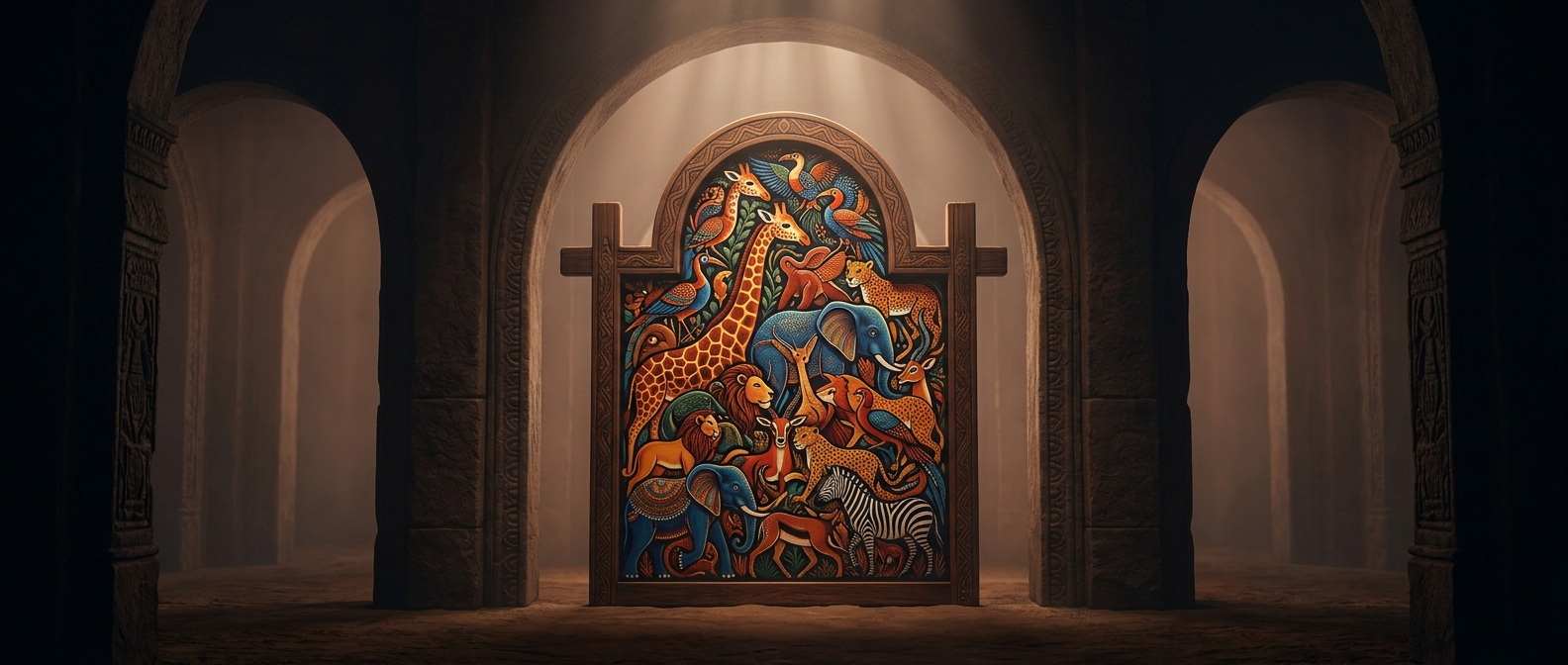
Artists associated with Dakar’s post-independence art scene drew on forms familiar from Senegalese and wider African visual culture: the strong patterns of woven cloth, the compressed shapes of masks and figures, and symbols linked to local histories and beliefs. They did not simply copy these forms. In paintings, such elements could be enlarged, rearranged, or combined with modern techniques, creating images that felt rooted in African experience without being reconstructions of the past.
That distinction mattered. A tapestry-like surface or bold symbol was not just decoration; it could make the painting’s structure itself an alternative to European ideas of perspective and realism. The result was a visual language in which color, pattern, and sign carried meaning as forcefully as recognizable figures.
A national project—and an artistic debate
The new state helped give this search a public stage. Senegal’s first president, Léopold Sédar Senghor, promoted cultural identity as part of nation-building and supported the arts. That support gave artists visibility, but it also connected their work to official ideas about what a distinctly Senegalese culture should look like. Artists did not all share the same approach, and the search for an identity was never a single style agreed upon by everyone.
The lasting consequence was not one definitive image of Senegal. It was the claim that modern African art could draw on its own visual inheritances on its own terms—without having to disguise them as European modernism to be taken seriously.