The portrait was an argument, not a medical record
A royal portrait had to make a claim: this person was fit to rule. That did not mean every painting erased illness or injury. It meant the artist and patron could choose which details mattered—and which might distract from the image of command.
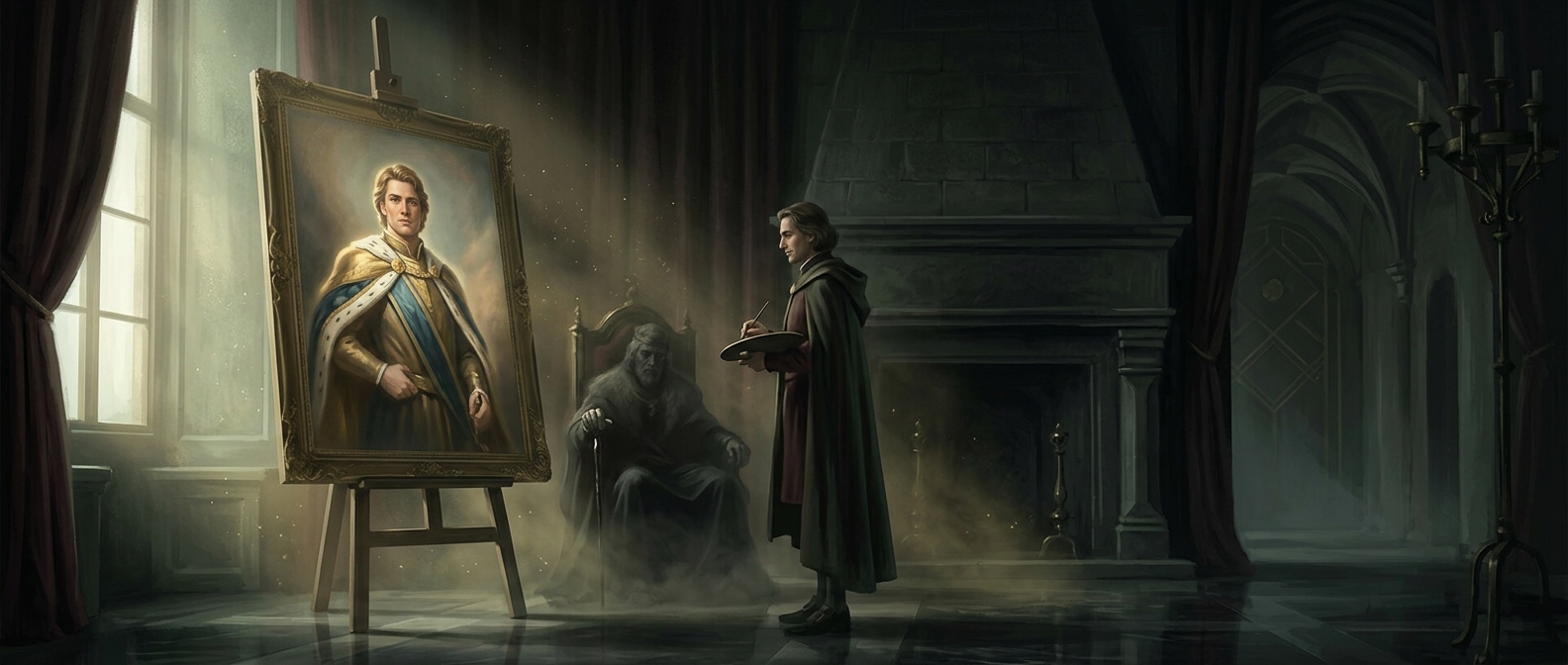
The likeness was shaped before the brush reached the face. A ruler or court official could approve a pose, costume, setting, and degree of resemblance. Painters might soften a scar, reduce the prominence of a swelling, or avoid an angle that emphasized a deformity. A composed expression and upright posture could make the body seem controlled even when it was not entirely healthy.
Authority came from the whole composition
The face was only one part of the message. A crown, armor, ceremonial robes, a throne, or a setting associated with government could signal rank and continuity. Such symbols did not prove that a ruler was strong; they gave viewers a familiar visual language for reading the figure as sovereign.
That mattered because portraits circulated beyond the room where they were painted. They could be displayed at court, sent to another royal household, or reproduced in other forms. For distant viewers, the image might be their main encounter with the ruler. A carefully managed appearance helped make authority visible at a distance, while an unflattering detail risked becoming the detail people remembered.
Idealization had limits
A portrait still needed to be recognizable, especially to people who knew the sitter. Artists therefore worked within a tension: preserve enough likeness to identify the ruler, but shape that likeness into an image suited to public power. The result was not simply a false face. It was a selective one—an official version in which the ruler’s title and presence were made more prominent than the body’s vulnerabilities.