A painter’s most final revision
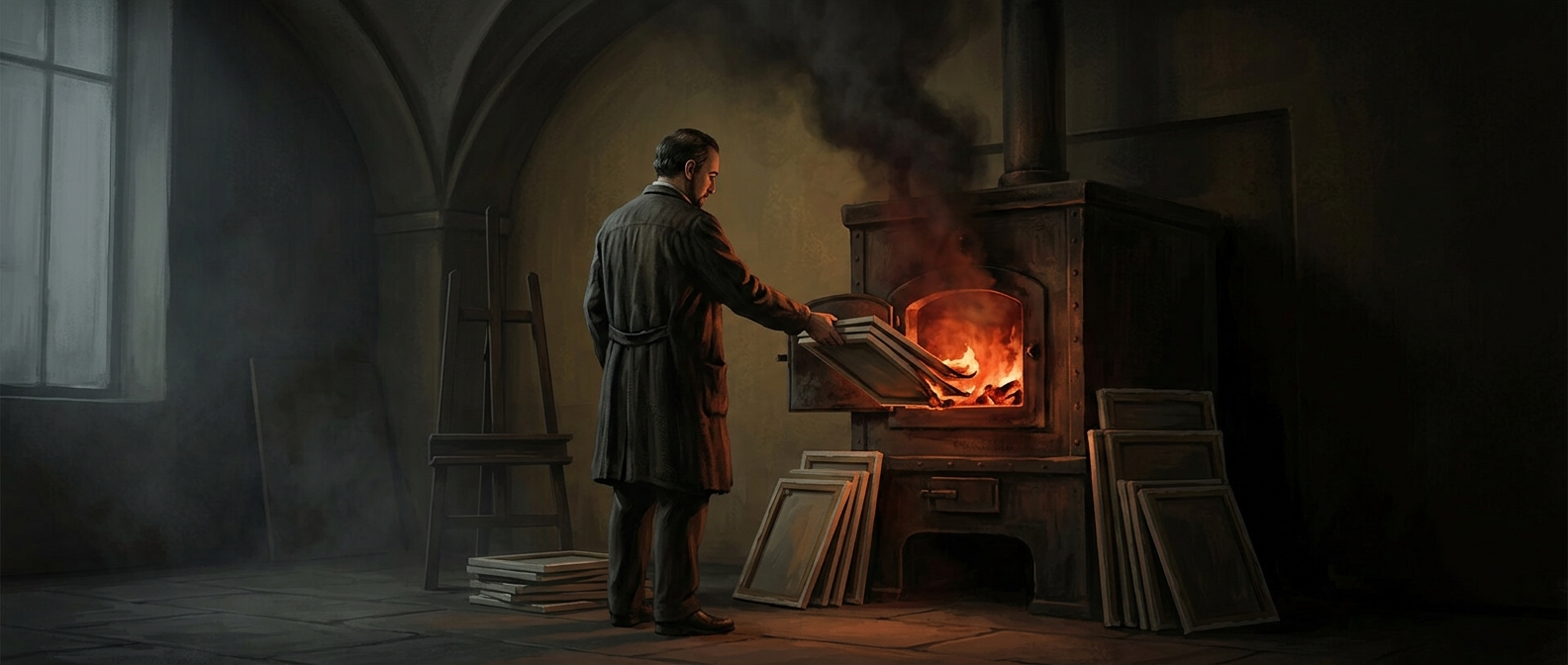
When Georges Rouault burned 315 of his earlier paintings, he made revision irreversible. A canvas can be repainted, set aside, or shown despite its maker’s doubts; fire removes all those options. The decision treated the works not as a record of his progress but as paintings that no longer deserved to remain in circulation.
That distinction matters because an artist’s standards can change after a work is finished. What once seemed complete may later look unresolved or fall short of what the painter wants to achieve. Destroying the canvas turns that private judgment into a lasting act: Rouault did not merely reject the paintings in his mind; he eliminated the objects themselves.
What destruction changes
The act also narrowed what later viewers could encounter. A surviving painting can be reconsidered by people who do not share its creator’s verdict. A burned one cannot be exhibited, studied, or judged on its own terms. Rouault’s self-criticism therefore shaped not only his body of work, but also the record available to everyone who came after him.
The striking point is how much authority the decision gave the artist over that record. By destroying paintings he believed fell short, Rouault made his standards visible through absence: some works would never get the chance to speak for themselves.