A film built from looking, not plot
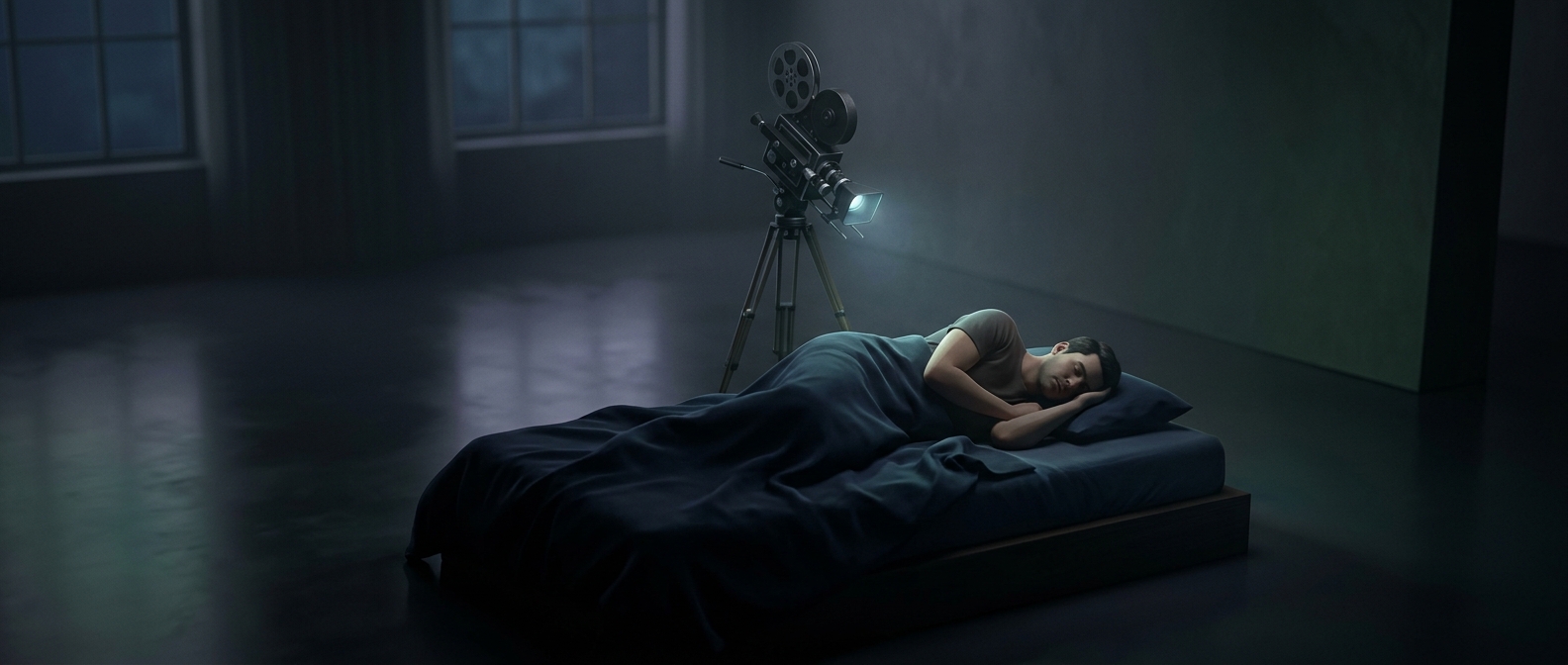
Warhol’s Sleep (1963) turns a familiar cinematic promise on its head. Instead of using images to move a story forward, it holds on one ordinary action: poet John Giorno sleeping. The silent black-and-white film gives viewers no dialogue, musical cues, or sequence of events to follow. A shift in posture or the rise and fall of a body becomes the change they have to notice.
That stillness is not the same as an unbroken recording. Warhol assembled the film from separate shots, and some footage appears more than once. Editing and repetition help make a feature-length work from material that offers little conventional action. They also make time itself visible: viewers begin to register not just what Giorno does, but how long they have been watching.
The audience becomes part of the experiment
In ordinary narrative movies, editing compresses time and directs attention toward important moments. Sleep withholds those signals. Its slow pace leaves viewers to decide whether to keep watching, look away, or attend to details they might otherwise miss. The film’s subject is therefore partly the spectator’s own attention—how it changes when a movie refuses to hurry.
That choice placed Sleep far from Hollywood’s plot-driven entertainment, but it also made a simple production decision carry unusual weight. By declining to cut sleeping into a brief sign of nighttime, Warhol made duration a material the audience had to experience for itself. The most dramatic event is not a sudden movement on screen; it is the moment a viewer realizes how differently time feels when a film stops telling them what matters.